
Custom Keychain Attachment Types Explained (How to Choose Correct Keychain Attachments)
A complete beginner’s guide to the three most popular keychain attachment types — what they are, how they work, and which one is right for your custom keychain project.
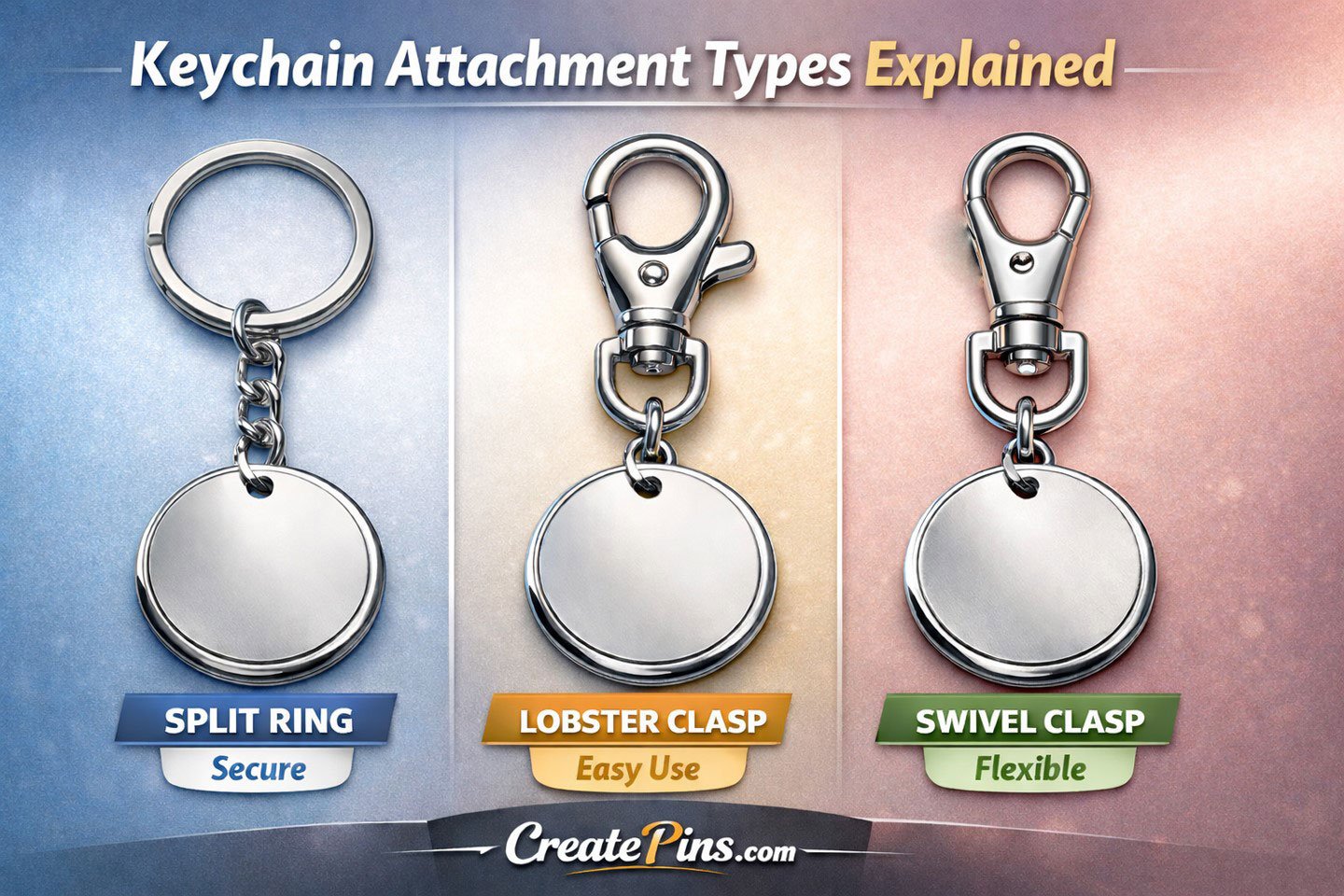
When designing custom keychains, most people focus on shape, material, and printing — but the attachment type is just as important. It directly affects usability, durability, and how your product feels in everyday use.
Whether you’re ordering a custom metal keychain for a corporate gift campaign or a fun acrylic charm for retail, choosing the wrong attachment hardware can undermine an otherwise great product.
In this guide, we’ll break down the three most popular keychain attachment types — split rings, lobster clasps, and swivel clasps — so you can make the most informed decision for your project.
Why the Attachment Type Matters
The attachment is the functional core of any keychain. No matter how beautiful your design is, a poor attachment choice can ruin the user experience. A poor choice can lead to:
- Keys or accessories falling off unexpectedly
- Difficult or frustrating usability for end users
- Faster wear and tear on the hardware
- Lower perceived product quality
- Negative impressions of your brand or design
- Returns or complaints if used as a promotional product
Choosing the right attachment ensures your keychain is not just attractive — but practical, reliable, and long-lasting. It also plays a role in cost and manufacturing lead time, so it’s worth thinking through early in your design process.
If you’re unsure which attachment to choose, start by asking: “How often will the user attach and detach this keychain?” Daily use with no swapping → split ring. Frequent removal → lobster clasp. Lanyard or bag use → swivel clasp.
1. Split Ring (Standard Keyring)
2. Lobster Clasp
3. Swivel Clasp (Swivel Hook)
Common Materials Used for Keychain Attachments
The material of your attachment hardware matters just as much as the type. Here’s a quick overview of the most common metals used in keychain hardware:
Stainless Steel
Most durable, rust-resistant, premium option
Zinc Alloy
Cost-effective, smooth finish, good weight
Iron (Plated)
Budget-friendly, widely available
Brass
Classic look, used in premium products
Avoid iron attachments if your keychains will be used in humid or outdoor environments — they are prone to rust. Always specify stainless steel or zinc alloy for outdoor-grade keychains.
Side-by-Side Comparison Table
Here’s how the three attachment types stack up across the most important factors:
| Feature | Split Ring | Lobster Clasp | Swivel Clasp |
|---|---|---|---|
| Security | ⭐⭐⭐⭐⭐ Excellent | ⭐⭐⭐ Good | ⭐⭐⭐⭐ Very Good |
| Ease of Use | ⭐⭐ Difficult | ⭐⭐⭐⭐⭐ Very Easy | ⭐⭐⭐⭐ Easy |
| Durability | ⭐⭐⭐⭐⭐ Excellent | ⭐⭐⭐ Moderate | ⭐⭐⭐⭐ Very Good |
| Style | ⭐⭐ Basic | ⭐⭐⭐⭐ Stylish | ⭐⭐⭐⭐⭐ Premium |
| Tangle Prevention | ❌ None | ❌ None | ✅ 360° rotation |
| One-Handed Use | ❌ No | ✅ Yes | ✅ Yes |
| Best For Heavy Items | ✅ Yes | ⚠️ Moderate | ✅ Yes |
| Relative Cost | 💰 Low | 💰💰 Medium | 💰💰💰 Medium–High |
| Ideal Audience | Everyone | Fashion / Lifestyle | Active / Professional |
How to Choose the Right Attachment Type
Not sure which to pick? Use this decision guide to quickly narrow down your options based on your specific project requirements:
Choose Split Ring If…
- You want maximum security
- The keychain is for daily use
- Budget is a priority
- It’s a promotional giveaway
- You need bulk quantities
Choose Lobster Clasp If…
- You need quick attachment/removal
- It’s a decorative accessory
- You’re targeting a fashion audience
- It will be used as a bag charm
- Style is as important as function
Choose Swivel Clasp If…
- You want a premium feel
- It will be used with lanyards
- You need tangle-free rotation
- The keychain is for active use
- You’re targeting professionals
Corporate gifts → Split ring (reliable, professional, budget-friendly). Fashion retail merch → Lobster clasp (stylish, easy to use). Lanyards & ID badges → Swivel clasp (tangle-free, premium). Artist merchandise → Lobster or swivel (aesthetic appeal matters).
Pro Tips for Ordering Custom Keychains
Beyond the attachment type, here are some additional expert tips to ensure your custom keychain order turns out exactly as you envision it:
-
Match attachment to your audience. Corporate gifts work best with split rings — they’re universally trusted and reliable. Retail merch and fashion items benefit from lobster or swivel clasps, which look and feel more premium.
-
Consider the weight of your keychain. Heavy metal or large acrylic keychains pair better with swivel clasps or heavy-gauge split rings. A lightweight lobster clasp on a heavy keychain will wear out quickly and may fail.
-
Test usability before finalizing your order. Request a sample if possible. If users struggle to attach or remove your keychain, they simply won’t use it — no matter how great it looks.
-
Upgrade perceived value with swivel clasps. A swivel hook instantly makes products feel more premium and professional. If you’re selling keychains at a higher price point, this small upgrade in hardware can significantly increase customer satisfaction.
-
Coordinate finishes with your keychain design. Gold-toned keychains should use gold-plated hardware; silver designs should use silver or nickel. Mismatched finishes look amateur and reduce perceived quality.
-
Think about packaging too. How you package your keychain affects how the attachment looks. A swivel clasp keychain in a gift box looks instantly more premium than the same keychain in a polybag. Consider the full presentation.
-
Order a small test batch first. For new designs, start with a minimum quantity to test the market before committing to a large order. Most manufacturers, including CreatePins, offer small minimum order quantities for keychains.
Looking to go deeper on keychain design? Check out our guide on what thickness your keychain should be — it’s one of the most overlooked factors in keychain production.
Common Mistakes to Avoid
Even experienced designers make these errors when specifying keychain attachments. Here’s what to watch out for:
- ❌Choosing style over function. A lobster clasp looks great but won’t hold up under daily heavy-key use. Always prioritize function for everyday items.
- ❌Using lightweight clasps for heavy keychains. Small lobster clasps rated for light jewelry will fail quickly on a heavy zinc alloy keychain. Match your hardware to the weight of your product.
- ❌Ignoring long-term spring fatigue. Lobster clasps lose spring tension over months of use. If your product needs to last 2+ years, a split ring or swivel clasp will outlast a lobster clasp.
- ❌Not considering user convenience. Split rings are extremely secure but notoriously difficult to open. If your customer is an elderly person or someone with limited dexterity, a lobster clasp is far more user-friendly.
- ❌Mismatching finish with design. Using a shiny silver swivel clasp on a matte black keychain looks inconsistent. Always specify the finish when placing your order.
- ❌Skipping sample approval. Always approve a physical sample before bulk production. Hardware that looks fine in a photo may feel cheap or difficult to use in person.
Final Thoughts
The attachment type may seem like a minor technical detail — but it plays a huge role in how your keychain performs in real-world use, how long it lasts, and what kind of impression it leaves on the end user.
Split Ring
Maximum reliability & security
Lobster Clasp
Everyday convenience & style
Swivel Clasp
Premium feel & tangle-free use
Choosing the right one ensures your custom keychains are not only visually appealing — but also practical, durable, and something people genuinely want to use every day. When in doubt, request samples and test them yourself before committing to a full production run.
For more on the broader keychain design process, take a look at our complete guide to custom metal keychains or explore how to choose the most durable finish for your keychain.
Ready to Order Your Custom Keychains?
Whether you need split rings, lobster clasps, or premium swivel hooks — CreatePins has you covered. Get a free, no-obligation custom quote today and our team will help you choose the best attachment type for your project.
I’ve been exploring for a bit for any high-quality articles or weblog posts on this sort of space .
Exploring in Yahoo I finally stumbled upon this web site. Reading this info So i’m satisfied to show that I have a very just right uncanny feeling I found out just what I needed. I such a lot for sure will make certain to do not forget this website and give it a look regularly.
It’s awesome to visit this site and reading the views of all friends regarding this piece of writing, while I am also eager of getting experience.