Complete Enamel Pin Packaging Guide: Types, Costs & Best Practices (2026)
Everything beginner and growing pin brands need to choose the right packaging — from simple backing cards to luxury gift boxes.
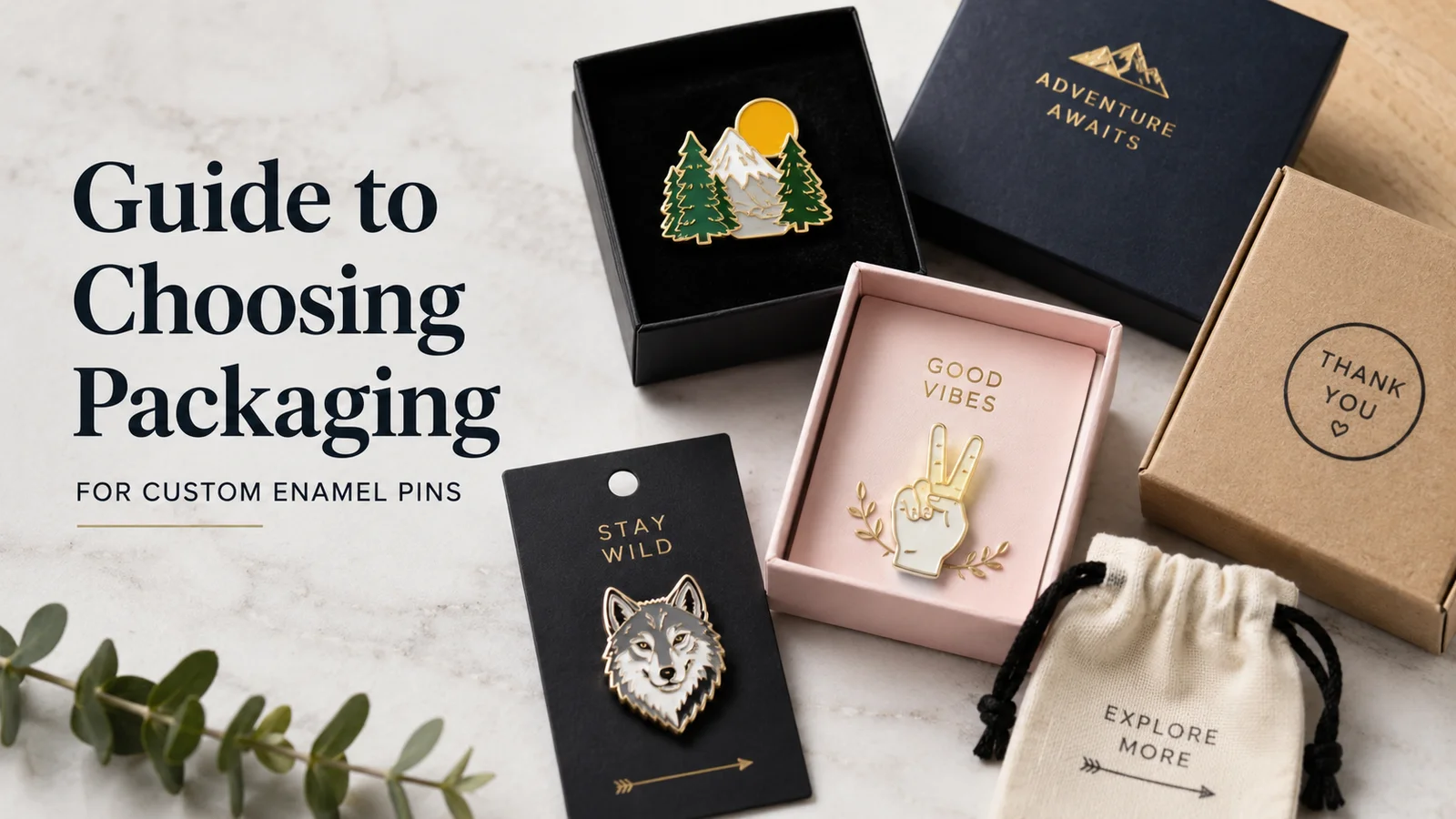
Packaging is far more than a protective layer — it’s the first physical impression your customers experience. The right enamel pin packaging builds brand trust, elevates perceived value, reduces transit damage, and can even spark unboxing content on social media. This guide covers every packaging option available in 2026, with real cost ranges, pro tips, and a clear strategy for beginners and growing brands alike.
Whether you’re launching your first pin series, scaling a Kickstarter campaign, or setting up boutique retail, this guide will help you make a confident, informed decision.
Polybag = backing card + clear plastic sleeve. Lightweight, cheap, great for conventions and online shops.
Gift box = rigid paper box with foam/velvet insert. Premium feel, ideal for collector or limited-edition releases.
Hybrid strategy = use both depending on your product tier. Smart brands do this!
Why Enamel Pin Packaging Matters
Even though enamel pins are small accessories, your packaging influences nearly every part of your business:
Packaging communicates your brand’s identity before a single word is read. A premium gift box signals luxury and collectability; a clean, minimal backing card signals accessibility and independent artistry. Both are valid — what matters is alignment between your packaging and your audience’s expectations.
Step 1 — Define Your Eaneml Pin Packaging Goals
Before spending a single dollar on packaging, clarify what you need it to do. Most pin brands have one or more of these primary objectives:
Key Custom Pin Packaging Objectives
- Protection: Prevent scratches, bending, and transit damage — especially important for international shipping.
- Branding: Showcase your logo, art style, and brand personality at first touch.
- Presentation: Increase perceived value for gifting, collectors, and retail shelf display.
- Cost-efficiency: Stay within budget while maintaining quality, especially for bulk orders.
- Sustainability: Meet eco-conscious consumer expectations with responsible material choices.
Once you know your primary goal, every packaging decision becomes easier. A convention seller prioritises lightweight cost-efficiency; a boutique pin brand prioritises presentation and shelf appeal.
Step 2 — The 7 Main Enamel Pin Packaging Types
Here’s a breakdown of every mainstream packaging format used for enamel pins in 2026, including real cost ranges per unit at typical order quantities:
Printed cardstock with the pin attached via a butterfly clutch. The most common starting point for independent artists.
✅ Pros
- Cheapest option available
- Easy to brand with full-color print
- Lightweight — low shipping cost
- Great for displaying in sets
❌ Cons
- Minimal protection
- Best paired with a sleeve
- Dust and scratch risk
The classic enamel pin packaging combo — a printed card inside a resealable or adhesive clear sleeve. The industry standard for most small and mid-sized pin brands.
✅ Pros
- Affordable at all quantities
- Protects from dust & scratches
- Pin visible without opening
- Flat — easy to store and ship
❌ Cons
- Plastic = eco concerns
- No crush protection
- Minimal unboxing impact
An eco-friendly alternative to plastic sleeves. Uses kraft or custom-printed paper envelopes, often fully biodegradable.
✅ Pros
- Sustainable & biodegradable
- Custom printing available
- Lightweight
- Strong eco-brand alignment
❌ Cons
- Less protection than boxes
- Can bend in transit
- Pin not visible without opening
Drawstring or envelope fabric pouches made from velvet, organza, linen, or cotton. Reusable and perceived as premium.
✅ Pros
- Premium gift-like feel
- Reusable & sustainable
- Excellent scratch protection
- Memorable unboxing
❌ Cons
- Higher cost per unit
- Bulkier for shipping
- Pin not visible inside
Premium rigid paper boxes with foam, velvet, or cardboard inserts. Full custom printing, embossing, foil stamping available. The top-tier enamel pin packaging option.
✅ Pros
- Highest protection level
- Luxury unboxing experience
- Custom finishes available
- Justifies premium pricing
❌ Cons
- Most expensive option
- Heavier shipping cost
- Larger storage required
- Overkill for low-cost pins
A plastic vacuum-formed tray heat-sealed to a backing card. Common in mass-market retail. Excellent protection and hang-display capability.
✅ Pros
- Excellent transit protection
- Retail-ready (hang tab)
- Professional, store-shelf look
❌ Cons
- Plastic-heavy (less eco)
- Higher production cost
- Difficult to open (frustrating UX)
Flat custom-printed envelopes for minimalist shipping, or die-cut inserts sized for multi-pin subscription boxes.
✅ Pros
- Very lightweight & flat
- Low cost
- Eco-friendly if recycled paper
- Strong unboxing with inserts
❌ Cons
- Minimal pin protection
- May bend in transit
- Die-cuts increase cost
Pro Tip: The most popular beginner setup is a custom-printed backing card + clear resealable sleeve. It costs under $0.35 per unit, looks professional, protects the pin from dust and scratches, and lets customers see the pin immediately. Once your brand grows, upgrade special releases to gift boxes or fabric pouches.
📊 Full Enamel Pin Packaging Comparison Table
Use this table to compare all options at a glance. Prices are per-unit estimates at typical small-to-medium order quantities and will decrease significantly at higher volumes.
| Packaging Type | Protection | Cost/Unit | Eco-Friendly? | Best Use Case |
|---|---|---|---|---|
| Backing Card Only | ⭐ Minimal | $0.05–$0.25 | ✅ Yes (paper) | Indie artists, starter orders |
| Card + Plastic Sleeve | ⭐⭐ Basic | $0.10–$0.35 | ⚠️ Plastic concerns | Online shops, conventions |
| Card + Paper Sleeve | ⭐⭐ Basic | $0.15–$0.40 | ✅ Yes (biodegradable) | Eco brands, handmade markets |
| Fabric Pouch | ⭐⭐⭐ Good | $0.30–$1.00 | ✅ Yes (reusable) | Collector sets, premium gifts |
| Rigid Gift Box | ⭐⭐⭐⭐⭐ Best | $0.70–$2.50 | ✅ If FSC certified | Limited editions, retail boutiques |
| Blister Pack | ⭐⭐⭐⭐ Very Good | $0.40–$1.50 | ❌ Plastic-heavy | Mass retail stores |
| Custom Envelope | ⭐ Minimal | $0.05–$0.20 | ✅ Yes (paper) | Minimalist brands, flat mail |
| Subscription Insert | ⭐⭐ Basic | $0.50–$1.50 | ✅ If recycled | Subscription boxes, themed drops |
Polybag vs Gift Box: The Most Important Decision
For most pin sellers, the choice comes down to two formats: the polybag (backing card + clear sleeve) and the rigid gift box. Here’s a detailed breakdown of each:
📦 Polybag Packaging — The Workhorse
Includes: Custom backing card + pin + clear plastic sleeve (resealable or adhesive)
✅ Advantages
- Cost-effective — ideal for large quantities, Kickstarter, conventions
- Lightweight — lower domestic and international shipping costs
- Retail visibility — customer sees the pin instantly through the clear bag
- Easy to store — stacks flat, friendly to bulk inventory management
- Fast production — minimal lead time compared to boxes
- Universal — works across all sales channels
❌ Limitations
- Lower perceived luxury than a box
- No crush protection for fragile pins
- Minimal unboxing moment for social sharing
- Plastic sleeve raises eco concerns
- Pin can shift or scratch inside sleeve if not positioned carefully
When should you choose polybag packaging?
- ✅ Selling at conventions, anime expos, or artist alleys
- ✅ Running a Kickstarter or crowdfunding campaign
- ✅ Selling standard-line pins in a competitive price range
- ✅ Shipping internationally where weight matters
- ✅ Offering affordable merch or freebies
- ✅ First-time pin order or testing a design before committing to premium packaging
🎁 Gift Box Packaging — The Premium Upgrade
Includes: Rigid paper box, foam or velvet insert, full-color branding, optional foil/emboss finishes
✅ Advantages
- Premium presentation — luxury feel, collector-worthy vibes
- Strongest protection — rigid structure resists crushing and drops
- Unboxing experience — emotional, shareable, drives social media posts
- Justifies higher pricing — box packaging supports retail price increases of 30–100%
- Brand storytelling — more space for brand info, artist bio, care instructions
- Retail shelf presence — stands out in boutique or gift store displays
❌ Limitations
- Higher production cost per unit
- Heavier — increases shipping cost for both receiving and sending
- Takes up more storage space
- Longer lead time from manufacturers
- Overkill for low-margin or promotional pins
When should you choose gift box packaging?
- 🎁 Launching a limited edition or collectible pin series
- 🎁 Positioning your brand as premium or boutique
- 🎁 Wanting to increase your retail price point significantly
- 🎁 Selling in gift stores, boutiques, or high-end online marketplaces
- 🎁 Holiday releases or seasonal special editions
- 🎁 Brand collaborations where the unboxing experience matters to both brands
🔁 The Hybrid Strategy: Use Both Like a Pro
Many successful pin brands don’t choose one format — they use both strategically:
= Balanced profit margins + strong brand positioning
Example: Your core pin catalogue ships in polybags at $12–$18 each. Your annual limited-edition drop comes in a rigid gift box and retails at $35–$45. Same brand, two tiers, maximum reach. 🧠
🏷️ Branding & Customization Options
Your packaging is a branding canvas. Every element from materials to finish choices communicates something about your brand. Here’s what you can customise:
Customization Techniques
- Printing Options: Offset printing (best for large runs), digital printing (flexible for small runs), screen printing for solid colors.
- Special Finishes: Matte laminate, gloss laminate, spot UV coating, foil stamping (gold, silver, holographic), embossing or debossing for tactile texture.
- Die-Cut Windows: Cut a window in your box or sleeve to show the pin without opening the package — combines visual appeal with protection.
- Color Matching: Use your exact brand palette (Pantone or CMYK) for instant recognition across all touchpoints.
- Storytelling Elements: Artist bio, collection story, care instructions, pin history, QR code to exclusive content.
- Shape: Standard rectangle, square, circle, or custom die-cut silhouettes for backing cards.
What to Include on Your Backing Card
A great backing card should include at minimum:
- Your brand logo and name — front and center
- Pin name or collection title
- Your website or social media handle — so customers can find you again
- A QR code (optional but recommended) — link to your shop, social, or care guide
- Care instructions (optional) — “Avoid water, store in a dry place”
- Edition info — “Limited Edition #47/200” for collector pins
Material Options for Different Effects
- Cardstock (14pt–20pt): Most common, cost-effective, highly printable — ideal for backing cards
- Kraft Paper: Eco-friendly, rustic branding, natural appeal — great for indie and handmade aesthetics
- Rigid Board: Premium gift boxes, maximum durability, luxury feel
- Compostable Film: Eco upgrade from traditional plastic polybags
- Fabric: Velvet, cotton, organza — luxury feel, fully reusable by the customer
- Recycled Cardstock: Post-consumer waste materials — increasingly popular with eco-conscious brands
💰 Cost Considerations & Budgeting
Custom Packaging is a real business cost that affects your margins. Understanding the cost drivers helps you make smarter decisions, especially when starting out:
Factors That Affect Enamel Pin Packaging Cost
- Packaging Type: Simple card vs. fabric pouch vs. rigid box — a 10–30x cost difference is possible between extremes.
- Material Quality: Standard cardstock vs. premium rigid board with foil laminate.
- Print Method: Single-color vs. full-color vs. specialty finishes (foil, emboss, spot UV).
- Order Quantity: Bulk orders dramatically reduce per-unit cost — packaging at 500 units can cost 2–3x more per piece than at 2,000 units.
- Shipping Weight & Size: Heavier or bulkier packaging increases fulfillment costs, both inbound from the manufacturer and outbound to customers.
- Setup / Tooling Fees: Some box styles require custom die-cutting tools, which add a one-time setup fee.
⚠️ Hidden Cost Alert for Beginners
Don’t forget to factor in the cost of shipping the packaging itself from the manufacturer! A small order of 200 rigid gift boxes can weigh several kilograms and arrive in multiple cartons, adding meaningful inbound freight costs. Lightweight options like backing cards and sleeves save significantly on both inbound and outbound shipping. Always request a shipping quote alongside your packaging quote.
As a general rule: packaging should represent no more than 10–20% of your final retail price. If a pin retails for $15, spending $0.25–$0.30 on polybag packaging is healthy. Spending $2.00 on a gift box might only make sense if the pin retails for $30+.
👉 For more on pricing your pins profitably, read our guide: Pricing Custom Enamel Pins for Profit: Cost Breakdown & Calculator
🌱 Sustainability & Eco-Friendly Packaging
Today’s pin buyers — especially in the anime, gaming, and independent art communities — increasingly care about sustainability. Eco-conscious packaging can actually become a brand differentiator and a marketing asset:
- ♻️ FSC-certified cardstock — from responsibly managed forests; include the FSC logo on your card
- 🌿 Kraft paper sleeves — biodegradable alternative to plastic polybags
- 🧴 Compostable poly alternatives — look for certifications like EN13432 or ASTM D6400
- 🖨️ Soy-based or vegetable inks — lower VOC emissions than traditional petroleum inks
- 💧 Water-based adhesives — instead of plastic-based alternatives
- 👝 Reusable fabric pouches — customers keep and reuse them; no waste
- 📏 Minimal packaging design — reduce material use; smaller cards = less waste per unit
- 📦 Recycled post-consumer waste materials — clearly label recycling/composting instructions
Eco Tip: Clearly label your sustainable packaging with recycling or composting instructions. Customers who care about this will notice, appreciate it, and often share it online — free organic marketing for your brand.
🛒 Enamel Pin Packaging by Sales Channel
Your sales channel should heavily influence your packaging choice. What works beautifully for an online shop can fail at a convention, and vice versa:
🌐 Online Stores
Need
Lightweight, protective packaging that survives postal handling and looks professional when opened.
Best Options
Backing cards + sleeves, fabric pouches, custom envelopes.
Consider
Flat packaging avoids dimensional weight surcharges from couriers.
🎪 Conventions & Markets
Need
Display appeal, easy customer handling, visible product, and quick transaction speed.
Best Options
Backing cards on display stands, clear polybag sleeves, blister packs.
Consider
Customers want to pick up and examine pins easily — avoid sealed boxes at the table.
🏪 Retail Stores
Need
Shelf presence, durability, theft deterrence, and retail-standard presentation.
Best Options
Rigid gift boxes, hang-ready blister packs, clamshells with barcode.
Consider
Retailers may require UPC barcodes and specific hang-tab sizing. Confirm before ordering.
📬 Subscription Boxes
Need
Compact, theme-appropriate, memorable unboxing experience for the collector audience.
Best Options
Custom die-cut inserts, themed backing cards, tissue paper, branded stickers.
Consider
Packaging contributes to the overall unboxing narrative — it’s a feature, not an afterthought.
🎁 Gift Shops & Boutiques
Need
Gift-ready, premium presentation that justifies a higher retail price in an upscale environment.
Best Options
Rigid gift boxes, fabric pouches, premium backing cards with specialty finishes.
Consider
Boutique buyers often select products partially based on how the packaging looks on the shelf.
💻 Kickstarter / Crowdfunding
Need
Cost-effective at scale, professional presentation, and lightweight for international backers.
Best Options
Backing cards + polybag sleeves, custom-printed envelopes, small thank-you cards.
Consider
International shipping weight is critical — every gram matters across thousands of backers.
✨ Extra Touches That Elevate Any Pin Packaging
Small additions can transform good packaging into memorable packaging that customers talk about. These work across all price points:
Premium Add-ons Worth Considering
- Branded stickers — add your logo or a design to the outside of sealed packaging
- Handwritten thank-you cards — deeply personal; feasible for small batches, outsized impact on loyalty
- QR codes — link to care instructions, your Instagram, exclusive content, or a discount for repeat purchases
- Custom tissue paper — branded tissue wrap for gift boxes or multi-item orders
- Eco-friendly filler — shredded paper or biodegradable peanuts instead of plastic bubble wrap
- Limited-edition packaging — seasonal box art for holidays, collabs, or anniversaries
- Numbered certificates — “Pin #47 of 200” on a separate card for collector series
- Sticker sheet inserts — a small extra gift customers love to share on social media
Ready to Start Your Custom Pin Order?
Get a free quote for your custom enamel pins — including packaging options, sample costs, and production timelines. Our team helps you choose the right packaging for your budget and brand goals.
Get a Free Custom Pin Quote →Free samples • Sustainable packaging options • Hybrid quotes available
✅ Custom Enamel Pin Packaging Decision Checklist
Before you finalise your packaging order, run through this checklist to make sure you’ve covered all the bases:
📋 Pre-Order Packaging Checklist
Does it protect the pin during transit?
Consider drops, pressure, humidity, and long international shipping routes.
Does it align with my brand identity?
Packaging should feel like a natural extension of your visual brand and price positioning.
Is it cost-effective at my order scale?
Factor in both per-unit cost and shipping weight implications — inbound and outbound.
Is it sustainable or can I make it more eco-friendly?
Customers share eco-conscious packaging choices online — it’s a marketing asset.
Does it suit my primary sales channel?
Convention display needs differ from online store needs and retail shelf requirements.
Will customers want to share it on social media?
Instagram and TikTok unboxing content is free organic marketing — design for it.
Have I included all brand information on the backing card?
Logo, website, social handle, and optionally a QR code and care instructions.
Have I requested packaging samples before committing to a bulk order?
Always test print quality, material feel, and fit before ordering thousands of units.
🎯 Final Summary: Which Packaging Is Right for You?
There’s no single correct answer — the best packaging is the one that aligns with your audience, pricing strategy, and long-term brand goals. Here’s a quick decision guide:
Budget and scalability are your priority. You need lightweight, visually accessible, cost-effective packaging that works across online, convention, and crowdfunding channels.
Brand experience and perceived premium value are your priority. You want an unboxing moment, you’re targeting retail or collector audiences, and you’re pricing pins at $30+.
You want sustainability and premium feel without the cost of a rigid box. Great for collector-tier releases with an eco-conscious audience.
You have a multi-tier product line. Standard pins in polybags; limited editions in gift boxes or fabric pouches. This is the approach most successful mid-size pin brands use.
Your packaging is the wrapping on your brand’s promise — make it count. 🧷
The most successful pin brands understand that packaging isn’t just a container — it’s part of the product experience. Start by defining your primary goals, test with small sample batches before committing to large orders, and iterate as your brand grows. Great packaging doesn’t have to be expensive; it has to be thoughtful.
❓ Frequently Asked Questions
What is the most common enamel pin packaging?
What is the difference between polybag and gift box packaging for enamel pins?
How much does enamel pin packaging cost per unit?
Is gift box packaging better for selling limited edition pins?
Does gift box packaging increase my shipping costs?
Can I use both polybag and gift box packaging for different pin collections?
What eco-friendly packaging options are available for enamel pins?
What information should I include on my enamel pin backing card?
Should I order packaging samples before placing a bulk order?
What packaging is best for selling enamel pins at conventions?
Start Your Custom Pin Order Today
Not sure which packaging is right for your project? Our team will guide you through material selection, branding options, and cost-effective solutions tailored to your brand and budget — including free samples to help you decide.
Get Your Free Quote →Free samples • Sustainable packaging options • Hybrid quotes • 15+ years experience