Why Acrylic Keychains Are So Popular Right Now — Plus Design Guide, Risks & Pro Tips
From viral Etsy shops to TikTok unboxings, acrylic keychains are everywhere. Here’s what’s driving their rise — and everything you need to know before designing your own.
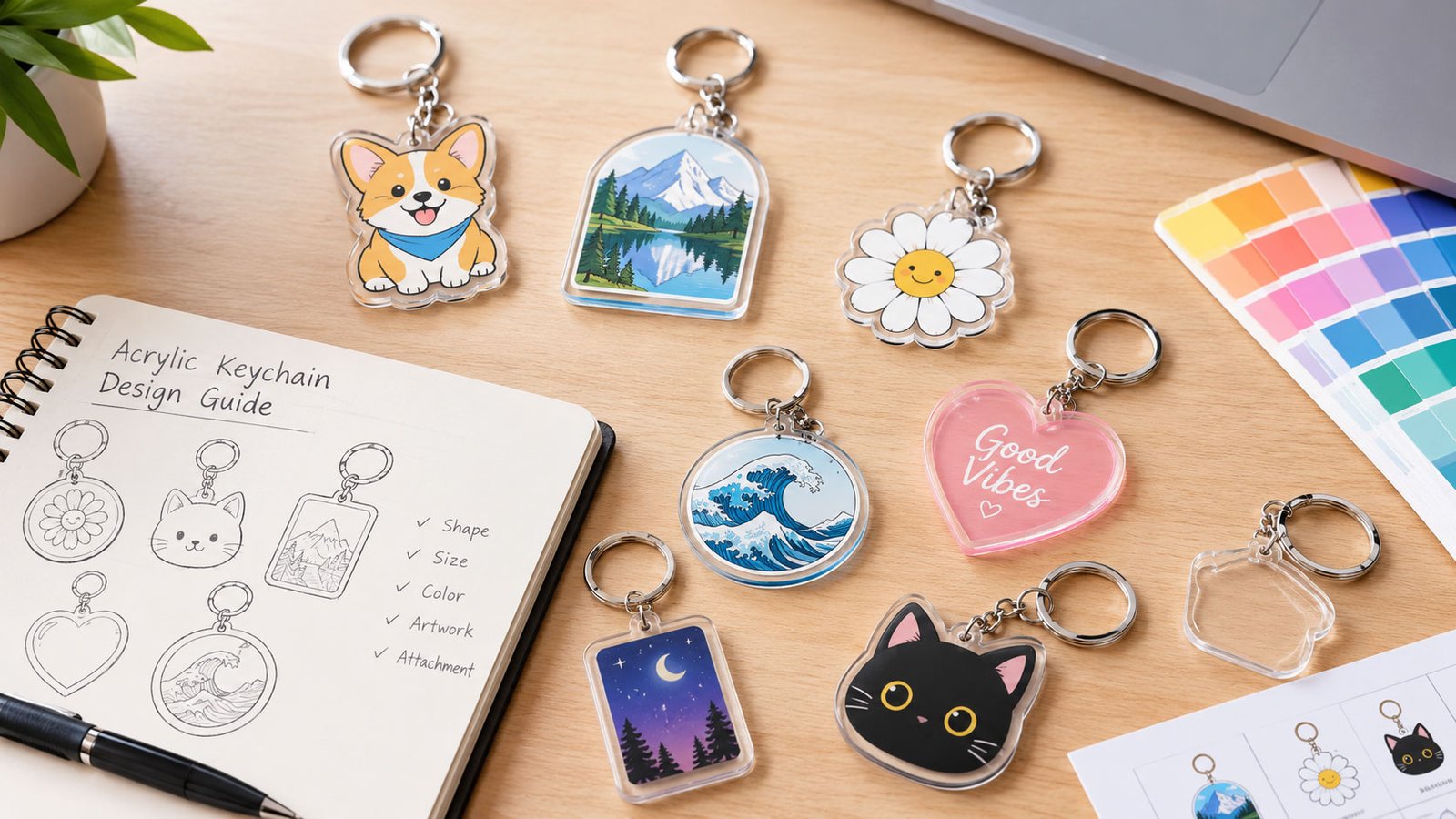
Acrylic keychains have taken over the custom merchandise world — and it’s not hard to see why. From artists and small businesses to global brands, everyone is embracing these vibrant, affordable, and highly customizable accessories.
But beyond the hype, there are real reasons behind their popularity — and important things you need to know before creating your own. This guide covers both: the why, and the how to do it right.
9 Reasons Acrylic Keychains Are Trending
1. Affordable Without Looking Cheap
Modern printing technology delivers sharp, high-resolution designs with vibrant full-color artwork and a clean glossy finish — at a fraction of the cost of enamel pins or metal products. Perfect for testing new designs without heavy financial risk.
2. Unlimited Design Freedom
No color limits. No enamel restrictions. Gradients, fine photographic detail, transparent effects, and double-sided artwork are all fully possible. Artists love acrylic because their digital work reproduces almost exactly as intended.
3. Fast Production Times
Shorter production cycles and faster sampling make acrylic ideal for time-sensitive drops, seasonal designs, trend-driven releases, and crowdfunding rewards where speed to market matters.
4. Perfect for Small Businesses & Artists
Low minimum order quantities, high profit margins, easy shipping (lightweight and durable), and massive appeal for fandoms and niche communities make acrylic often the first product new creators launch.
5. Surprisingly Lightweight & Durable
Acrylic resists breaking (far more flexible than glass), resists fading with proper coating, and handles water exposure well. Ideal for everyday use on keys, bags, and backpacks that take real-world punishment.
6. Trend-Driven Customization Options
Acrylic keychains have evolved far beyond basic shapes. Holographic finishes, glitter epoxy, shaker designs with moving internal elements, layered constructions, and candy-colored transparent styles are all high-demand formats right now.
7. Perfect for Branding & Promotions
Cost-effective, highly customizable, and available at event-friendly quantities — acrylic keychains are a fun, modern alternative to pens and stickers for brands looking to stand out at trade shows, launches, and giveaways.
8. Social Media Virality
Bright colors, reflective finishes, and cute aesthetic designs make acrylic keychains perfect for unboxing videos, packaging reveals, and short-form content on TikTok and Instagram. They’re genuinely “Instagrammable” in ways that most merch isn’t.
9. Low Risk, High Reward Business Product
Low production cost, high perceived value, easy to bundle with other products, and great for testing new design concepts with minimal commitment. For anyone scaling a merch brand, acrylic is consistently the safest and most profitable starting point.
Acrylic keychains are often the first product new creators launch — and many return to them repeatedly because the economics are hard to beat. Low risk, high upside, and genuine customer enthusiasm make them one of the best entry points into branded merchandise.
Acrylic vs. Other Keychain Types
Understanding how acrylic stacks up against alternatives helps you choose the right material for your specific goals — and avoid overspending on features your audience won’t notice or value.
| Feature | Acrylic | Enamel / Metal | PVC / Rubber |
|---|---|---|---|
| Production cost | Lowest | Higher | Medium |
| Color freedom | Unlimited | Limited (enamel) | Full color |
| Gradients & fine detail | Yes | No (enamel) | Limited |
| Production speed | Fastest | Slower | Medium |
| Premium perceived feel | Medium | Highest | Medium |
| Shipping weight | Lightest | Heaviest | Medium |
| Best for | Artists, creators, e-commerce | Corporate, premium branding | 3D cartoon / character designs |
✅ Bonus Tip: If you’re deciding between enamel pins and acrylic keychains as your first product, start with acrylic. You’ll get faster turnaround, lower costs, more design flexibility — and you can validate which designs resonate before investing in higher-cost enamel pin production.
Ready to create your own custom acrylic keychains? Get a free quote and design support from CreatePins — no commitment required.
Get a Free Quote →What Actually Works in Acrylic Production
Designing acrylic keychains is easy. Designing ones that look stunning and sell consistently is a different challenge. These are the production-informed design principles that separate best-sellers from disappointing results.
Use Bold, Readable Designs
Overly thin lines disappear when printed and cut. Details that look crisp at full screen become invisible at 2–3 inches in the real world. Bold, clear, and high-contrast designs consistently outperform intricate fine-line artwork at any keychain size.
- Keep all important lines at least 0.3–0.5mm thick
- Test visibility at actual keychain size before submitting — print it out
- High contrast between adjacent design elements is non-negotiable
Plan Your Cut Line Carefully
Your design will be physically cut to its die-cut outline. That means the shape itself is part of your design — and poor shape planning leads to fragile, imprecise, or unappealing keychains regardless of how good the artwork is.
- Add a 2–3mm bleed margin around your cut line — artwork should extend beyond where the cutter will cut
- Avoid very sharp angles or extremely thin protrusions that are fragile
- Use smooth, rounded outlines for a cleaner, more professional finish
- Keep the shape structurally sound — thin extensions will snap or bend
Design Hole Placement for Strength
The attachment hole is the highest-stress point on any keychain — it takes the full weight and movement of whatever it’s attached to. Poor hole placement is one of the most common causes of cracked or broken acrylic keychains.
- Place holes at least 3–5mm from any edge of the keychain
- Ensure the material around the hole is wide enough to distribute stress
- Avoid placing holes in thin or fragile sections of the design
Plan Double-Sided Printing Carefully
Double-sided acrylic keychains are more complex than they look. The alignment between front and back must be precise, and the relationship between the two sides needs to be intentional — either a mirror of the front, or a completely different design that adds value when flipped over.
- Decide: mirrored artwork (simpler, lower cost) or different front/back designs
- Alignment must be precise — confirm with a printed test before ordering
- Add a white backing layer for opacity — without it, transparent acrylic will show the reverse artwork through the front
Use Transparency Strategically — Not Everywhere
Transparent acrylic areas create beautiful “floating” effects and can dramatically enhance a layered design. But overusing transparency can make designs look faint, unintentional, or washed out — particularly when placed on certain backgrounds.
- Use transparent sections to create depth and floating effects in specific areas
- Ensure critical design elements have adequate opacity — don’t let them fade
- Preview how transparent areas will interact with different backgrounds
Convert to CMYK and Request a Proof
Screen colors (RGB) will not match printed colors without proper conversion. What looks perfect on your monitor can arrive noticeably different in color. CMYK conversion and a digital proof are non-negotiable for color-critical orders.
- Convert all artwork to CMYK before submitting to any printer
- Always request a digital proof — compare it carefully against your original artwork
- For color-critical designs (brand colors, character skin tones), request a physical sample
Choosing the Right Acrylic Finish
The finish you choose changes the entire feel and perceived quality of your keychain — and different finishes suit different design styles and audiences. Here are the most popular options and when to use each one.
Glossy (Standard)
The default finish. Vibrant, reflective, photographs beautifully. Best for bold, colorful, high-contrast designs.
Matte
Soft, non-reflective, premium feel. Ideal for minimalist designs, pastel palettes, and buyers who prefer understated sophistication.
Epoxy Dome
Thick, glossy protective layer that adds depth and premium weight. Highly recommended for retail products and designs you want to feel substantial.
Holographic
Color-shifting rainbow effect that catches light dramatically. Maximum visual impact for social media, limited editions, and high-attention designs.
Glitter Epoxy
Sparkle suspended in a clear dome layer. Popular for cute, kawaii, and fantasy-themed designs. Adds festive energy without overwhelming the base artwork.
Frosted / Translucent
Semi-transparent base creates a soft, diffused light effect. Beautiful for botanical, celestial, and nature-inspired designs where light interaction adds atmosphere.
Epoxy dome is the most popular upgrade for retail-focused sellers — it adds a satisfying physical thickness and protects the printed surface from scratching, meaningfully extending the life of the product and justifying a higher retail price.
Not sure which finish is right for your design? Our team will recommend the best option — free, with every quote.
Start My Design →Common Mistakes (What Most People Get Wrong)
Acrylic keychains are beginner-friendly — but there are production and design pitfalls that trip up even experienced sellers. Understanding these upfront saves you money, time, and the frustration of results that don’t match your expectations.
1. Scratching Without Protective Coating
Uncoated or under-coated acrylic surfaces can scratch during everyday use, losing their shine and making designs look worn quickly. This is one of the most common customer complaints about lower-quality acrylic keychains.
- Always confirm the protective coating or UV lamination applied to your order
- Epoxy dome provides the strongest scratch protection of any available finish
- Ask your manufacturer what coating is standard — and upgrade if needed
2. Color Mismatch From Screen to Print
RGB screen colors and CMYK print colors are fundamentally different systems. Without conversion and proof review, colors regularly arrive darker, less saturated, or noticeably shifted from what you designed — especially for skin tones, purples, and bright neons.
- Always convert artwork to CMYK before submitting
- Request a digital proof — compare carefully before approving production
- For brand-critical or character color accuracy, request a physical sample
- Note that transparent areas can alter the perceived color of adjacent printed areas
3. Weak or Poorly Placed Attachment Holes
The hole is the highest-stress point on the entire keychain — it takes the full weight and tension of daily use. Holes placed too close to edges or in thin sections of acrylic will eventually crack, often sooner than you’d expect.
- Maintain at least 3–5mm clearance between the hole and any edge
- Avoid placing holes in narrow or structurally thin sections of your design shape
- Ask your manufacturer to review hole placement before mold or cut file confirmation
4. Overly Complex Designs That Don’t Scale Down
Highly detailed artwork that looks stunning at full resolution often looks cluttered, muddy, or unclear when printed at 2–3 inches. Perceived quality actually drops when too much detail competes for attention at a small physical size.
- Always print and evaluate your design at actual keychain size before submitting
- If you can’t read every element clearly at 2 inches, simplify
- Bold focal points with clear negative space perform better than dense illustration
5. Cheap Hardware That Undermines Quality
A beautifully designed keychain attached to a tarnishing, flimsy ring leaves a lasting negative impression. Hardware quality affects the daily use experience — and low-quality hardware generates negative reviews even for otherwise excellent products.
- Specify the hardware type and material quality before ordering
- Avoid the cheapest split rings — they tarnish quickly and lose tension
- For premium retail products, lobster clasps or thick split rings are worth the small added cost
Make Your Acrylic Keychains Stand Out
These are the strategies that separate bestselling acrylic keychain shops from those that never quite find their footing. Most successful sellers use at least three of these simultaneously.
Add Motion or Interaction
Shaker designs with confetti or small figures suspended in liquid, movable parts, or layered acrylic with depth — these features dramatically increase perceived value and drive impulse purchases. A shaker keychain that “does something” consistently outperforms a static design of equal quality.
Use Packaging as a Branding Tool
Top-performing Etsy and Instagram shops invest in custom backing cards, branded bags, and thank-you inserts. Packaging is part of the product experience — and beautiful packaging generates unboxing content that markets your shop for free.
Bundle for Higher Average Order Value
Instead of selling individual keychains, create themed sets of 2–4 designs. Pair with matching stickers, enamel pins, or art prints. Offer limited edition bundles. Bundles increase your revenue per order without proportional increases in marketing or shipping cost.
Test Small, Then Scale Winners
Acrylic’s low minimum order quantities make it ideal for design validation. Launch small batches of 3–5 new designs, track what sells fastest, and scale only the winners to larger production runs. This strategy minimizes inventory risk and keeps your product line fresh.
Create Limited Editions for Urgency
Number your releases, announce limited quantities, and communicate sell-out dates. Scarcity drives faster purchasing decisions, reduces the time buyers spend deliberating, and makes buyers feel like they own something genuinely special.
Follow Trends — Without Copying
Use trending aesthetics as inspiration for original work — not as templates to duplicate. Buyers in thriving communities can spot copied work immediately, and it permanently damages your brand reputation. Your version of a trend, with your visual voice, is always more valuable than a copy.
Hottest Acrylic Keychain Styles Right Now
These are the aesthetic directions and production styles that are generating the strongest social media engagement and sales volume in 2026. Use them as creative inspiration — filtered through your own distinctive visual style.
The most successful sellers use trending aesthetics as a creative filter — not a blueprint. “What would my chibi character look like in a pastel transparent format?” is the right question. “How do I copy that design that’s selling well?” is the wrong one. Your audience follows you for your creative voice, not trend replication.
Pre-Order Checklist: Before You Submit Your Design
Run through this checklist before submitting any acrylic keychain design for production. Each item prevents a specific category of costly mistake.
- Line thickness: All important lines are at least 0.3–0.5mm thick and will remain visible when printed at actual keychain size.
- Bleed margin: A 2–3mm bleed has been added around the cut line — artwork extends beyond where the cutter will trim.
- Cut line shape: The die-cut outline is smooth, structurally sound, and free of very sharp points or thin fragile protrusions.
- Hole placement: The attachment hole is at least 3–5mm from any edge and positioned in a structurally solid section of the design.
- Color conversion: All artwork has been converted to CMYK and compared against the original RGB design to check for significant shifts.
- Finish selected: Glossy, matte, epoxy, holographic, or glitter — confirmed with the manufacturer and documented on the order.
- Protective coating confirmed: The manufacturer has confirmed what protective coating or UV lamination is included — sufficient to prevent scratching in daily use.
- Hardware quality checked: The keyring or hardware type has been confirmed and is appropriate for the product’s positioning and expected use conditions.
- Digital proof requested: I will review a digital proof carefully before approving production, checking colors, proportions, and cut line accuracy.
- Packaging planned: Backing cards, poly bags, or any other packaging elements are confirmed and included in the full cost quote.
✅ Acrylic keychains are popular because they hit the sweet spot between low cost, high customization, and strong market demand. They’re also one of the best entry products for building a profitable merch brand — if you design them correctly and avoid the common mistakes covered in this guide.
Ready to Create Your Custom Acrylic Keychains?
Get a free quote, free design advice, and expert production guidance from CreatePins. Fast turnaround, low minimums, worldwide shipping.
Frequently Asked Questions
Acrylic keychains hit a rare sweet spot: low production cost, unlimited design freedom (no color limits, gradients and transparency fully possible), fast turnaround, strong social media shareability, and genuine durability. They’re lightweight, easy to ship globally, and accessible to new creators through low minimum order quantities — making them ideal for Etsy, TikTok shops, and independent merch brands.
Unlike enamel pins, acrylic keychains have no color count limitations and can fully reproduce gradients and photographic detail. They’re significantly more affordable than both enamel pins and metal keychains, and have shorter production cycles. Compared to metal, acrylic is lighter and easier to ship globally. The main trade-off is that metal and hard enamel deliver a heavier, more premium-feeling product that commands higher retail prices in certain markets.
The key rules: keep all lines at least 0.3–0.5mm thick; add a 2–3mm bleed margin around your cut line; avoid sharp fragile protrusions; place holes at least 3–5mm from any edge; convert colors to CMYK before submitting; and always request a digital proof to verify colors before production. Printing your design at actual keychain size and reviewing it at arm’s length is the single most useful pre-submission test.
The most popular finishes are: glossy (vibrant, standard), matte (soft premium look), epoxy dome (adds thickness and scratch protection), holographic (color-shifting, maximum visual impact), glitter epoxy (sparkle in a clear dome), and frosted/translucent (semi-transparent with a soft light effect). Epoxy dome is the most popular upgrade for retail-focused products, while holographic performs best for social media-driven limited editions.
The most common risks are: scratching from inadequate protective coating; color mismatch because screen RGB doesn’t match print CMYK without conversion; cracking at the attachment hole if it’s placed too close to an edge; overly complex designs that lose clarity at 2–3 inches; and cheap hardware that tarnishes or breaks under daily use. All of these are preventable with the right preparation and a manufacturer who reviews your artwork before production begins.
For most new creators, acrylic keychains are the better starting point. They offer faster turnaround, lower production costs, no color count limits (gradients fully possible), and lower minimum order quantities. They’re ideal for validating which designs resonate with your audience before investing in higher-cost enamel pin production. Once you have bestselling acrylic designs, those are the safest candidates to elevate into enamel pins.
References & Further Reading
- CreatePins — The Complete Guide to Custom Metal Keychains
- CreatePins — How to Convert Your Enamel Pin Design Into a Custom Keychain
- CreatePins — Custom Keychain Attachment Types Explained (How to Choose Correct Keychain Attachments)
- CreatePins — How to Choose Durable Metal Keychain Finishes
- CreatePins — What Thickness Should Your Keychain Be
- CreatePins — Limited Edition Products & Why They Sell Out So Fast
- Raoin — Want More Than Just Custom Pins?