Limited Edition Pins: Why They Sell Out So Fast – A Collector’s Guide
Limited edition pins have become one of the most effective ways for artists, brands, and creators to turn a simple design into a highly desirable collectible. This guide explores the limited edition pin strategy behind fast sell-outs, how to price and launch custom limited edition pins, and why limited edition enamel pins and collectible enamel pins hold such strong appeal for collectors.
A regular pin can be attractive. A limited edition enamel pin can feel special. When customers know that only a certain number of pins will ever be produced, the decision to buy becomes more urgent. Instead of thinking, “I can get this later,” they start thinking, “If I don’t buy it now, I might never get another chance.”
That combination of scarcity, exclusivity, collectibility, and emotional connection is why limited edition pins can sell out remarkably quickly. In this guide, we’ll explain how limited edition pins work, why customers respond to them, how to choose production quantities, and how to create a custom limited edition pins release without damaging customer trust.
What Is a Limited-Edition Pin?
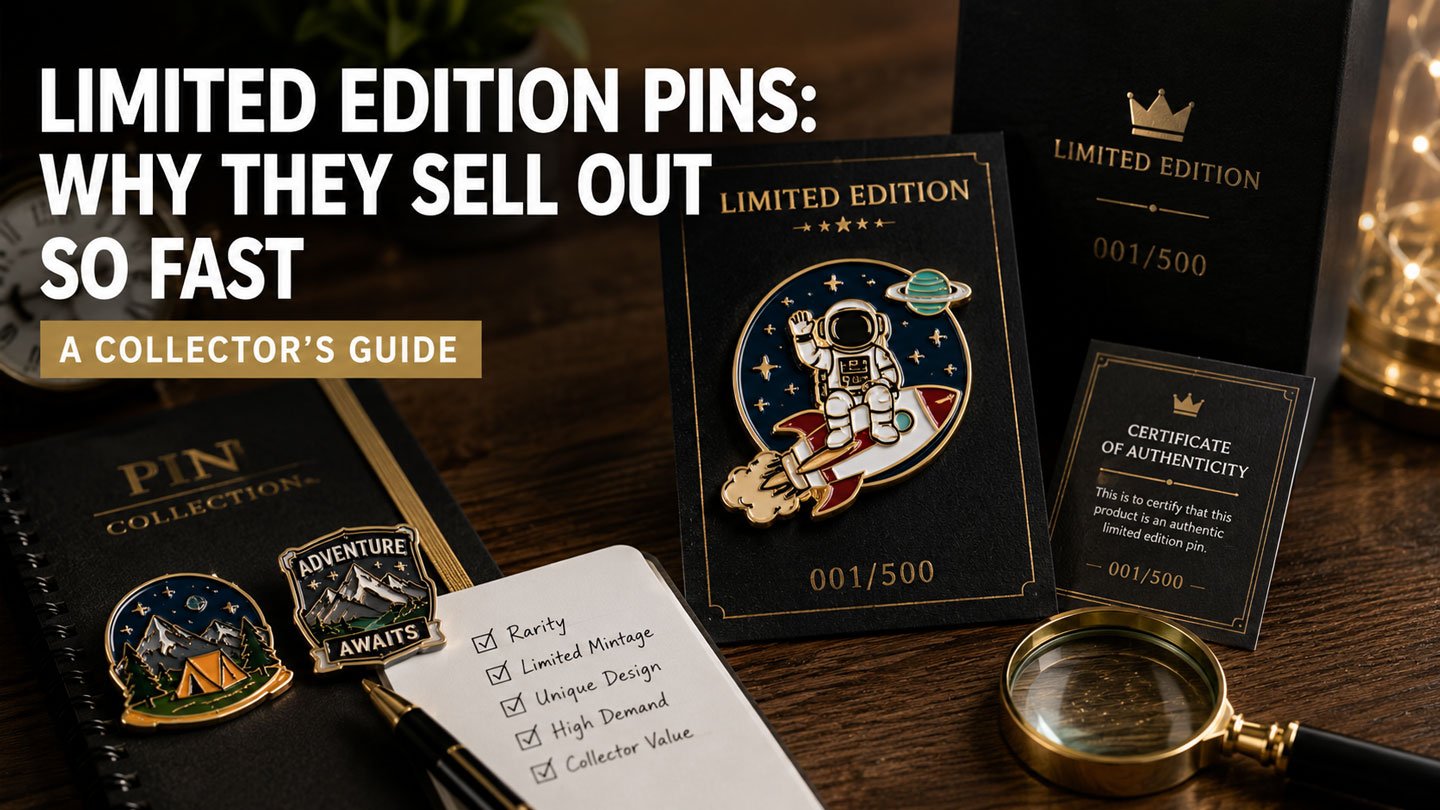
A limited edition pin is a pin produced in a predetermined quantity with the intention of making the release scarce and collectible. For example: 25 pins made, 50 pins made, 100 pins made, 250 pins made, or 500 pins made. Once the stated production quantity has been sold, the edition is considered sold out.
A limited edition enamel pin can also include additional identifying details such as:
- Sequential numbering
- Numbered backing cards
- Special packaging
- Exclusive plating (gold, black nickel, antique, rose gold)
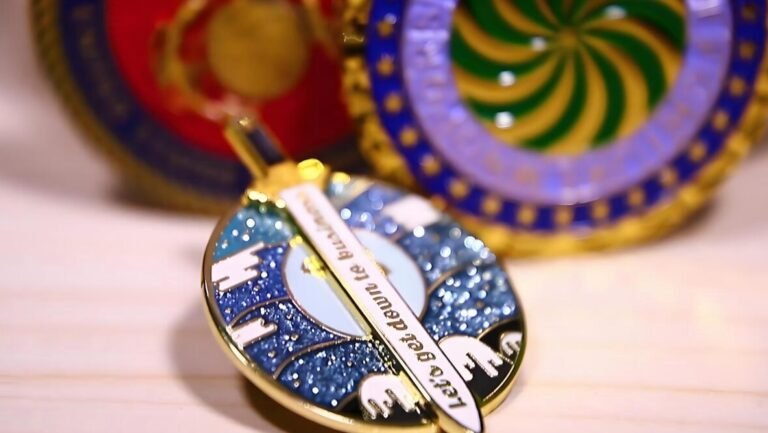
- Special enamel colors (glitter, translucent, glow-in-the-dark)
- Artist signatures
- Certificates of authenticity
🏷️ For example: Limited Edition — 73/100. This tells the customer that they aren’t simply purchasing a pin. They’re purchasing one specific item from a defined collection of collectible enamel pins.
Why Limited Edition Pins Sell Out So Fast
There isn’t one single reason. The strongest limited edition pin strategy combines several psychological and marketing factors.
Scarcity Creates Urgency
If customers believe an item will remain available indefinitely, they can postpone. But when only a fixed quantity exists, the question changes from “Do I want this?” to “Do I want this enough to risk missing it?”
FOMO – Fear of Missing Out
Limited releases take advantage of FOMO. “Limited Edition — only 100 made” immediately communicates that waiting has a potential cost. If the customer likes the design, they know delaying could mean losing the opportunity altogether.
Exclusivity Increases Value
People naturally place additional value on things that are difficult to obtain. A pin that anyone can purchase at any time is a product. A pin that only 50 people can own becomes a collectible enamel pin.
4. Collectors Love Numbers
Numbering is one of the simplest ways to make a limited edition pin feel collectible. For example: #01/100, #25/100, #99/100. The customer knows exactly where their item sits within the edition. This creates a sense of ownership that a standard unnumbered product doesn’t have.
You can use sequential numbering on: the back of the pin, a backing card, a certificate, a collector card, or packaging. For smaller pins where engraving numbers directly onto the metal isn’t practical, numbered backing cards are often a cleaner solution.
5. Limited Editions Encourage Impulse Purchases
Limited availability shortens the customer’s decision-making process. Normally, a buyer might research price, alternatives, and reviews. But when only 20 pieces remain, extensive consideration can result in missing the release. This creates a natural purchasing trigger: Like → Decide → Buy.
6. Social Media Makes Scarcity More Powerful
Limited edition enamel pins and social media are naturally compatible. An artist can announce a new pin drop and then show design previews, production videos, enamel filling, packaging, and numbered cards. As launch day approaches, anticipation builds. After the release begins, you can provide legitimate updates such as “75/100 sold” or “Final 20 available.”
7. Collectors Enjoy Owning Something Rare
Collectors aren’t necessarily buying because they need a pin. They’re buying because the object represents something — their favorite artist, a fandom, a memorable event, a community. Limited edition pins add another layer: “I was one of the people who got this.” That feeling can be extremely valuable.
Limited Edition vs. Open Edition Pins
Understanding the difference is important before launching a product.
| Feature | Open Edition | Limited Edition |
|---|---|---|
| Quantity | Unlimited or ongoing | Fixed quantity |
| Availability | Long-term | Limited |
| Urgency | Low | High |
| Collectibility | Moderate | High |
| Numbering | Usually no | Often yes |
| Reproduction | Possible | Usually restricted |
| Customer decision | Can wait | More immediate |
| Best for | Evergreen designs | Special releases |
Neither model is inherently better. They serve different purposes. An artist might sell popular designs as open editions while using limited edition pins for special collections.
How Many Limited Edition Pins Should You Make?
This is one of the most important decisions. There is no universal “correct” quantity. Your production quantity should depend on: audience size, existing customer demand, price, design popularity, production cost, marketing reach, previous sales, release frequency, and intended exclusivity.
How to Make a Limited Edition Pin Feel Special
Simply writing “Limited Edition” on a product page isn’t always enough. The product itself should communicate exclusivity. Here are some effective techniques for custom limited edition pins.
Special Plating
Instead of standard gold or silver plating, consider: black nickel, antique gold, antique silver, rose gold, rainbow plating, or two-tone plating. Special plating can make the limited edition pin visually different from your standard products.
Special Enamel
Consider finishes such as: glitter enamel, translucent enamel, glow enamel, pearl enamel, or metallic enamel. These can give the limited edition enamel pin a distinct appearance.
Numbered Backing Cards
A numbered backing card is one of the easiest upgrades. For example: LIMITED EDITION — No. 047 / 100 — Artist Signature. This adds collector value without requiring complex engraving on a small pin.
Premium Packaging
Packaging can dramatically affect the perceived value of a custom limited edition pin. Consider: premium backing card, rigid gift box, velvet pouch, collector envelope, magnetic box, printed certificate, or protective sleeve.
Create a Strong Story
A limited edition pin becomes much more compelling when there is a reason why it is limited. For example: “Created to celebrate the 10th anniversary of our studio” or “Designed exclusively for our 2026 artist collaboration.” The story gives the limitation meaning.
Pricing Limited Edition Pins
A limited edition enamel pin doesn’t automatically justify an extremely high price. Customers still evaluate: design quality, size, materials, manufacturing quality, packaging, artist reputation, edition size, story, and exclusivity.
For example, a 100-piece collector pin with premium plating and packaging can reasonably command a higher price than a standard mass-produced pin. But the price should still make sense relative to the perceived value.
A Simple Limited Edition Pin Strategy
A strong limited edition pin can combine:
- Unique Design – something that stands out
- Small Production Quantity – 50–100 pieces
- Special Finish – glitter, glow, translucent, or unique plating
- Numbered Packaging – backing card with edition number
- Strong Story – a reason why this release matters
- Launch Event – a coordinated drop with social media hype
- Clear Scarcity – honest communication about quantity
🎯 = High Collector Appeal. You don’t necessarily need every element. But the more meaningful layers of exclusivity you add, the more compelling the product can become.
🎯 Ready to launch your own custom limited edition pins? Get a free quote and expert guidance from CreatePins.
Get Your Free Quote →Common Limited Edition Mistakes
Calling 5,000 pieces a “highly exclusive” edition may not create the same collector appeal as 50 or 100 pieces. The quantity should match your claim.
Avoid phrases such as “Only 10 left!” when you actually have hundreds available. Short-term sales aren’t worth long-term damage to customer trust.
If customers bought a numbered limited edition pin expecting permanent scarcity, reproducing the exact same edition later can upset collectors. Define the rules before launch.
Scarcity loses its power when customers see it everywhere. Use it selectively. Reserve limited edition pins for products that deserve special treatment.
A collector paying a premium for collectible enamel pins expects the unboxing experience to feel special. Don’t spend heavily on the pin and then package it like an ordinary promotional item.
A successful limited edition pin launch can create a sudden spike in orders. Make sure your manufacturer can handle quantity, quality control, packaging, numbering, and shipping deadlines before announcing a release date.
How to Plan Your First Limited Edition Pin
If you’re trying this limited edition pin strategy for the first time, keep it simple.
Choose a Strong Design
Pick something with an existing audience or strong emotional appeal.
Define the Edition
For example: 100 pieces worldwide.
Decide What Makes It Special
Consider: special plating, unique enamel colors, numbered card, premium packaging.
Set Your Price
Calculate: manufacturing + packaging + shipping + platform fees + marketing + profit.
Create Launch Content
Prepare: product photos, videos, close-ups, production previews, social posts, email announcements.
Announce the Date
Give customers enough time to prepare.
Track Inventory
Keep accurate inventory numbers. If 63 of 100 are sold, say 63.
Archive the Edition
Once sold out, keep a record of edition quantity, production date, final design, numbering system, packaging, and photos.
Can Limited Edition Pins Increase Brand Value?
Yes—but the effect is larger when limited edition pins are part of a consistent brand strategy. Over time, customers may begin to associate your brand with collectible enamel pins releases.
You can build: Series 01 → Series 02 → Series 03 → Series 04. Collectors who purchased Series 01 may be more interested in Series 02. You can also introduce artist series, character series, seasonal series, anniversary editions, collaboration editions, and convention exclusives. This transforms individual pins into a broader collecting experience.
Create Your Own Limited Edition Pins
If you’re planning a custom limited edition pins release, choosing the right production quantity and specifications is just as important as creating the artwork. CreatePins.com offers custom enamel pin manufacturing with no minimum order quantity, making it possible to test a limited edition pin release with a small production run before committing to larger quantities.
Get a Custom Pin Quote →No minimum order · Special finishes available · Numbered backing cards · Premium packaging
Frequently Asked Questions
Limited edition pins sell out quickly due to a combination of scarcity, urgency, exclusivity, and collector psychology. When customers know only a fixed number will ever be produced, the decision to buy becomes urgent. The fear of missing out (FOMO) combined with the appeal of owning something rare drives fast sell-outs.
The ideal quantity depends on your audience size, existing demand, and production costs. For a first limited edition enamel pin, 50–100 pieces is a strong starting point. For creators with larger followings, 100–250 pieces works well. The edition should be small enough to feel exclusive but large enough to be financially worthwhile.
Pricing should reflect design quality, materials, edition size, packaging, and the artist or brand’s reputation. A premium 100-piece collectible enamel pin with special plating and numbered packaging can reasonably command a higher price. However, customers still evaluate value relative to the product’s quality and exclusivity.
Reprinting a limited edition pin after declaring it sold out can damage customer trust. If you want flexibility, consider structuring releases as “First Edition” or “Colorway Edition” so future variations can be released without breaking the original edition’s promise.
A collectible limited edition pin typically combines a strong design, a clear scarcity promise (e.g., 100 pieces worldwide), special finishes (glitter, glow, translucent enamel, unique plating), numbered packaging or backing cards, and a compelling story behind the release.
Start with a small run of 50–100 custom limited edition pins with a clear design, special finish, and numbered packaging. Build anticipation through social media previews before launch. Be honest about the edition size and communicate clearly when pieces are selling out. Use the release to learn about your audience’s response before scaling to larger editions.
References & Further Reading
- Get a Free Custom Pin Quote – CreatePins
- Hard Enamel vs Soft Enamel Pins: The Ultimate Guide
- The Beginner’s Guide to Enamel Pin Plating Colors
- The Ultimate Guide to Enamel Pin Add-Ons: Glitter, Glow, Epoxy & More
- Back Stamps & Sequential Numbering for Enamel Pins
- Complete Enamel Pin Packaging Guide: Types, Costs & Best Practices
- How to Order Enamel Pins (Step-by-Step Guide)
- Custom Enamel Pin Production Timeline Explained
- Custom Enamel Pin Hidden Costs You Should Know