How to Running a Successful Enamel Pin Fundraiser
A practical, real-world guide for schools, nonprofits, clubs, and artists — covering strategy, design, pricing, inventory, risks, and the proven tactics that separate successful campaigns from forgettable ones.
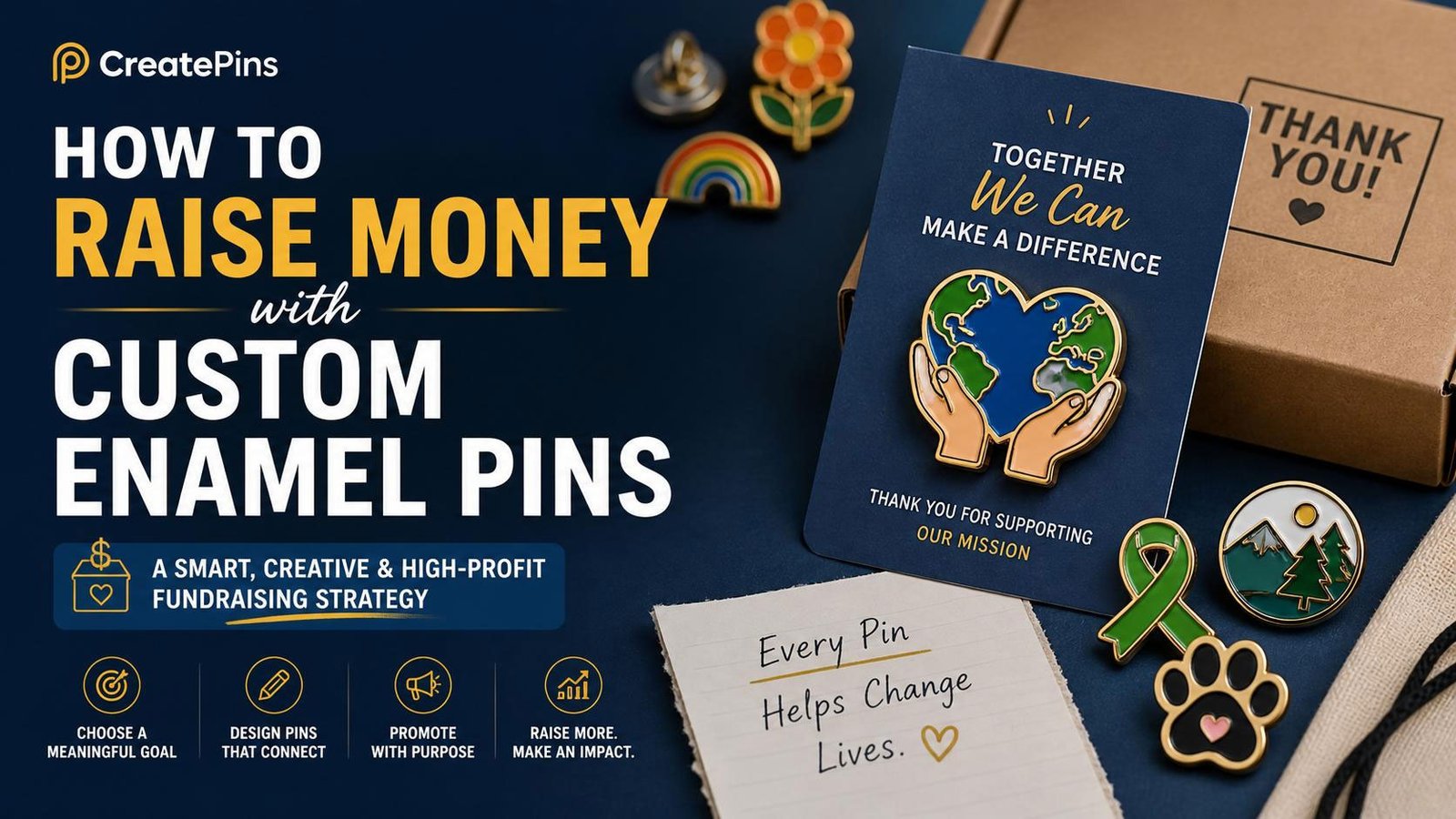
Custom enamel pins aren’t just trendy — they’re one of the most cost-effective, high-margin fundraising products when done right. Schools, nonprofits, clubs, artists, and even startups use them to turn small designs into meaningful revenue.
But not every pin campaign succeeds. The difference comes down to planning, pricing, audience fit, and execution. This guide walks you through exactly how to do it — plus the risks, mistakes, and proven tactics that consistently drive results.
Why Enamel Pins Work for Fundraising
Most fundraising products are expensive to produce, difficult to ship, or easy to ignore. Enamel pins eliminate all three problems simultaneously — and they add something most fundraising products can’t offer: collectability.
- Low production cost, high perceived value. A $2 pin that looks and feels premium can sell for $10–$15 because people are buying a cause connection, not just an object.
- Easy to ship. Lightweight, durable, and virtually indestructible in transit. Shipping cost is minimal and rarely a barrier to online sales.
- Collectible — encourages repeat purchases. Limited-run designs create genuine desire to own before they’re gone, and series designs encourage multiple purchases.
- Customizable for any cause or theme. There’s no cause, team, school, or community that can’t be represented meaningfully in an enamel pin design.
- Wearable advertising. Every time a supporter wears your pin, they’re advertising your cause to everyone they encounter — generating awareness that extends far beyond the sale.
1 Start With a Clear, Specific Goal
Specificity Drives Higher Conversion
Before you design a single pin, define your goal clearly. How much do you need to raise? What specifically will the money fund? Vague goals produce vague motivation in buyers — concrete goals create emotional connection and urgency that generic campaign language can never replicate.
“Support our club”
— No emotional hook. No specific impact. No urgency.
“Help fund our team’s trip to nationals”
— Clear impact. Personal story. A deadline that creates urgency.
A clear goal also gives you your story — the narrative that your marketing, backing cards, and social posts will all reinforce. Every touchpoint in your campaign should connect to this specific goal.
Break your goal into units: “Each $10 pin funds one meal” or “We need 150 pins sold to cover travel costs.” This quantification makes every purchase feel like a concrete contribution rather than a vague donation.
2 Design With Purpose — Not Just Looks
Your Pin Must Connect Emotionally — and Be Wearable
The single most important design question is: would someone wear this on their jacket or backpack? If the answer is yes, it will sell. If not, it will sit in boxes regardless of how worthy the cause is. Good fundraising pin design achieves both — it represents the cause meaningfully AND it’s something people are proud to display.
- Cause-related symbols — ribbons, mascots, icons tied to your mission
- Limited-edition visual language — numbered run, specific year
- Bold, simple artwork — clean lines that reproduce crisply
- Strong silhouette recognition — identifiable from distance
- Something with a story — the design should have a “why”
- Overly detailed designs — lose clarity in small format
- Text that’s too small — unreadable at pin scale
- Generic designs with no connection to the specific cause
- Designs that look like every other pin in the category
- Designs the team loves but buyers wouldn’t wear
Before ordering, post 2–3 design options on your social media and ask directly: “Which would you buy?” Real audience feedback before production prevents expensive design guesses. Even 20–30 responses will tell you what resonates.
3 Choose the Right Specs
Specs Affect Both Your Cost and Your Appeal
Every specification decision affects both what it costs to produce and what a buyer is willing to pay. The goal is to maximize perceived premium quality at a price point that maintains strong fundraising margins.
- Size: 1″–1.5″ is the sweet spot — large enough to display the design clearly, small enough to feel wearable and unobtrusive. Goes on most backpacks and jackets comfortably.
- Enamel type: Soft enamel is the most popular and more affordable option for fundraisers. Hard enamel adds a premium jewelry-quality finish that can justify a higher selling price for smaller batches.
- Colors: Each additional enamel color adds production cost. Limit to 3–6 colors for the best cost-to-impact ratio.
- Add-ons: Gold plating, glitter enamel, or glow-in-the-dark effects can meaningfully boost perceived value and support higher selling prices — but use them strategically on one or two design elements, not across the entire pin.
Use premium finishes sparingly to increase perceived value without meaningfully increasing production cost. Gold plating on a specific element, a single glitter zone, or a rose gold finish can make a pin feel luxurious at a modest per-unit cost increase.
Ready to get a quote for your fundraising pin? Submit your concept and we’ll send pricing at multiple quantities within 24 hours.
Get My Fundraising Pin Quote4 Order Smart — Choose Your Inventory Strategy
Your Biggest Risk Is Unsold Inventory
Most manufacturers have minimum order quantities (MOQ) of 50–100 units. How you approach inventory strategy determines whether you end up with strong profits or boxes of unsold pins. Choose the approach that fits your audience confidence level.
Pre-Order Model
Accept orders and payment first, then produce only what you’ve sold. No inventory risk, no upfront investment. The gold standard for first-time fundraisers.
✅ Lowest RiskSmall Batch Test
Order the minimum (50–100 units), sell through, then reorder if demand exists. Balances risk with the ability to ship immediately.
📊 Low RiskCommunity Pre-Validation
Post designs publicly, count interest signups or “I’d buy” responses, then order based on that signal rather than guesswork.
✅ Data-DrivenLarge Upfront Order
Order 500+ without validating demand. Lower unit cost — but if sales disappoint, you’re holding significant unsold inventory with money locked up.
🚨 High RiskNever order 500+ pins for a first fundraiser without validating demand first. The unit cost savings at higher quantities only matter if you actually sell them. Start small, validate, then scale.
5 Price for Profit — Not Just Affordability
The Most Common Mistake Is Pricing Too Low
Fundraising buyers have a different mindset than retail shoppers. They’re not price-shopping for the cheapest option — they’re choosing to support your cause and receiving a physical token of that support. This means your pricing ceiling is significantly higher than a comparable retail pin, and underpricing actually undermines the perceived quality of both the pin and the cause.
Example: Cost $2 per pin → Sell for $10 (5× markup = 80% margin)
Common Fundraising Price Ranges:
- $8–$12 — impulse-buy range, maximizes conversion volume
- $12–$18 — premium fundraising, works well with hard enamel or special finishes
- $18–$25 — collector-tier, strong for limited editions and cause-aligned communities
Don’t feel guilty about the markup. The profit IS the point — it’s what funds your goal. A buyer who pays $12 for a pin that cost $2 to produce isn’t being exploited; they’re making a $10 contribution to your cause and receiving a tangible keepsake in return. Frame the price that way and your conversion rate will improve.
6 Sell Where Your Audience Already Is
Don’t Make Buyers Come to You — Go Where They Already Are
Instagram & TikTok
Visual products on visual platforms — ideal for cause storytelling, design reveals, and unboxing content. Short-form video consistently outperforms static images.
School or Event Booths
Physical sales at games, concerts, fairs, and school events. High conversion when people can touch the product, and social peer pressure from friends buying creates momentum.
Email Lists
Highest conversion rate of any channel when the list is warm and aligned with the cause. Existing supporters have already opted in to care — they’re your easiest buyers.
Online Store (Shopify / Etsy)
Enables 24/7 sales, automated fulfillment tracking, and global reach. Etsy gives you built-in search traffic for pins; Shopify gives full control of branding and customer data.
High-Conversion Tactics Across All Channels:
- Show the story behind the cause — why matters more than what
- Use real photos of the pin being worn on jackets, bags, and hats (not just mockups)
- Post behind-the-scenes content — design process, unboxing, team reactions
- Share progress updates: “We’ve sold 80 of 150 — only 70 pins left!”
7 Create Urgency — This Is Critical
Pins Sell Better When They Feel Limited
Scarcity drives faster buying decisions — and with pins, it’s genuine rather than manufactured. Limited production runs are a real feature of the product, not a marketing trick. Use this honestly and consistently across all your campaign communications.
Showing real-time inventory updates as pins sell out creates powerful social proof and urgency simultaneously. “We’re at 80% sold — going fast” is more compelling than any amount of marketing copy.
Never use false scarcity — don’t claim “only 50 left” if you have 500 in stock or plan to reorder. Your audience will notice, and the trust damage from discovered dishonesty far outweighs any short-term conversion gain.
8 Bundle & Upsell to Increase Average Order Value
More Revenue Per Buyer Without More Buyers
Once someone decides to support your cause, their wallet is open. This is the highest-probability moment to offer them more. A well-designed bundle or upsell can increase revenue per order by 30–60% without any additional marketing effort.
- “Buy 2 pins, get 10% off” — encourages buying one for themselves and one as a gift
- Bundle with matching stickers or keychains — adds perceived value at minimal added cost
- Support tiers — “$10 = pin / $20 = pin + sticker pack / $30 = pin + keychain + backing card”
- Group packages — “Team pack: 5 pins for $40” — popular for clubs, sports teams, and school groups
A backing card is the lowest-cost, highest-impact upsell you can offer. The card frames your pin as a formal fundraising keepsake, includes your mission statement and campaign goal, and makes the purchase feel like an intentional gift rather than an impulse buy — all for pennies per unit.
Real Risks (Most People Ignore These)
These are the most common failure modes of pin fundraisers — and every one of them is preventable with the right planning.
Unsold Inventory
You order 500 pins, sell 150, and end up with 350 you can’t move. Your money is locked in physical inventory, your fundraising goal is unmet, and every unsold pin is a reminder of an avoidable mistake.
Poor Design Kills Sales — Even for Good Causes
Many fundraisers assume the cause will sell itself. It won’t. Weak design reduces conversion dramatically, regardless of how worthy the goal is. Buyers have split-second emotional reactions to design, and those reactions either create desire or kill it.
Underpricing — Leaving Money on the Table
Setting the selling price too low is perhaps the most common and least discussed fundraising mistake. Pins priced at $5–$6 can feel like they’re not worth buying for a cause — the low price actually undermines the perceived value of both the pin and the mission.
Production Delays — Missing Event Deadlines
Custom enamel pins typically take 2–4 weeks to produce plus 5–15 days for international shipping. If your fundraiser is tied to a specific event date, missing the delivery window can be catastrophic for campaign momentum.
Audience Mismatch
Not every audience buys pins. Younger communities (teens, students, creators, fandom members) are high-demand pin buyers. Corporate donors or older professional audiences may prefer direct donations and find pins irrelevant to their giving motivation.
Working to a specific event deadline? Our team can advise on production timelines and rush options — free, no commitment.
Check My Timeline →Practical Tips That Actually Increase Sales
Tell a Story, Not Just a Product Description
“Each pin helps fund 1 meal for a student” is far more powerful than “Buy our fundraising pin.” Quantify the impact, name the beneficiaries, and tell the human story behind the cause at every touchpoint.
Show It in Real Life, Not Just on Screen
Photos of the pin on a denim jacket, a backpack strap, or a hat convert dramatically better than digital mockups. Real product in real context creates buying imagination — buyers can picture themselves wearing it.
Use Social Proof Aggressively
“Over 200 pins sold” — “Our school community has already funded half the trip” — customer photos and testimonials. Social proof tells hesitant buyers that others have already decided it’s worth it.
Launch With Momentum, Not a Whisper
Don’t open sales quietly. Build 1–2 weeks of hype with design teasers and behind-the-scenes content. Open sales with a specific close date and urgency messaging. A launch with momentum compounds throughout the campaign.
Partner With Micro-Communities
Even micro-creators with 2,000–5,000 followers can drive strong sales if they’re genuinely aligned with your cause. One authentic recommendation from a trusted community voice outperforms broad advertising every time.
Invest in a Custom Backing Card
The cheapest upgrade with the largest impact. A backing card explains your mission, makes the pin feel like a formal fundraising keepsake, increases unboxing shareability, and dramatically elevates the perceived quality of the gift.
Fundraising Breakdown Example
Here’s a realistic scenario showing what a well-executed 200-pin fundraiser looks like financially.
📊 Scenario: 200 Pins, School Team Fundraiser
✅ Even on a conservative 150-sold scenario (selling only 75% of your run), you’d generate $1,500 revenue on a $400 investment — a $1,100 net profit before fees. Custom enamel pins are one of the strongest margin fundraising products available at any scale — if you treat the campaign like a real product launch.
Ready to Launch Your Pin Fundraiser?
CreatePins helps schools, nonprofits, clubs, and artists produce custom enamel pins with free design support, low minimums, and pricing transparent enough to plan your entire campaign before you spend a dollar.
Frequently Asked Questions
Enamel pin fundraisers typically achieve 60–80% gross margins. With production costs of $1–$3 per pin and selling prices of $8–$15+, the profit per unit is significant. At $2 production cost sold for $10, you keep $8 per pin. On 200 pins, that’s $1,600 gross profit before fees — one of the strongest margins available in any fundraising product category.
For a first fundraiser, validate demand before committing to inventory. The safest approach is a pre-order model — accept orders first, then produce only what’s been sold. If you prefer to hold inventory, start with the minimum order quantity (usually 50–100 units) and test demand before reordering. Never order 500+ pins without first validating that your audience will buy.
A good fundraising pin must connect emotionally to your cause AND be something people would proudly wear. It should use cause-related symbols with bold simple artwork, feel like a limited edition, and have a clear visual story. Ask: would someone wear this on their jacket or backpack? If yes, it will sell. Test designs on social media before ordering to get real audience feedback before committing to production.
The highest-converting channels are Instagram and TikTok for visual storytelling, followed by in-person event booths, email lists to existing supporters, and online stores via Shopify or Etsy. Key tactics: show the story behind the cause, use real photos of the pin being worn rather than mockups, post behind-the-scenes content, and create genuine urgency through limited-run messaging.
Custom enamel pin production typically takes 2–4 weeks, plus 5–15 days for international shipping. Always allow buffer time — especially if your fundraiser has a fixed event date. Rush production is available but adds cost. If you have a firm deadline, order at minimum 6–8 weeks in advance to account for proof approval, production, and shipping without pressure.
Yes — for most first-time fundraisers, pre-orders are the best strategy. They eliminate unsold inventory risk entirely, fund the production cost before you spend anything, provide immediate demand validation, and create natural urgency. Be transparent about the production timeline and communicate updates to maintain buyer trust and excitement throughout the wait.
References & Further Reading
- CreatePins — Get a Free Fundraising Pin Quote
- CreatePins — How Much Do Enamel Pins Cost in 2026?
- CreatePins — Pricing Custom Enamel Pins for Profit
- CreatePins — Custom Enamel Pin Hidden Costs
- CreatePins — 15 Enamel Pin Design Ideas That Always Sell
- CreatePins — Ethical Enamel Pins Manufacturing
- CreatePins — How to Order Enamel Pins (Step-by-Step)
- CreatePins — Custom Enamel Pin Production Timeline
- CreatePins — Complete Enamel Pin Packaging Guide
- CreatePins — Pin Collecting Trends 2026