Why Cheap Hard Enamel Pins Turn Black Fast: Plating Problem
A deep-dive guide into the hidden production shortcuts that cause enamel pins to tarnish, peel, and fail — and how to identify collector-grade quality before you order.
📋 In This Guide
- The Real Problem
- Why Electroplating Determines Quality
- Understanding Each Plating Layer
- 3 Biggest Problems With Single-Layer Plating
- Why Triple-Layer Is the Gold Standard
- Hard Enamel vs. Soft Enamel
- CreatePins Production Process
- How to Spot Low-Quality Pins
- Cheap Pins Cost More in the End
- How to Care for Your Pins
- Frequently Asked Questions
- References
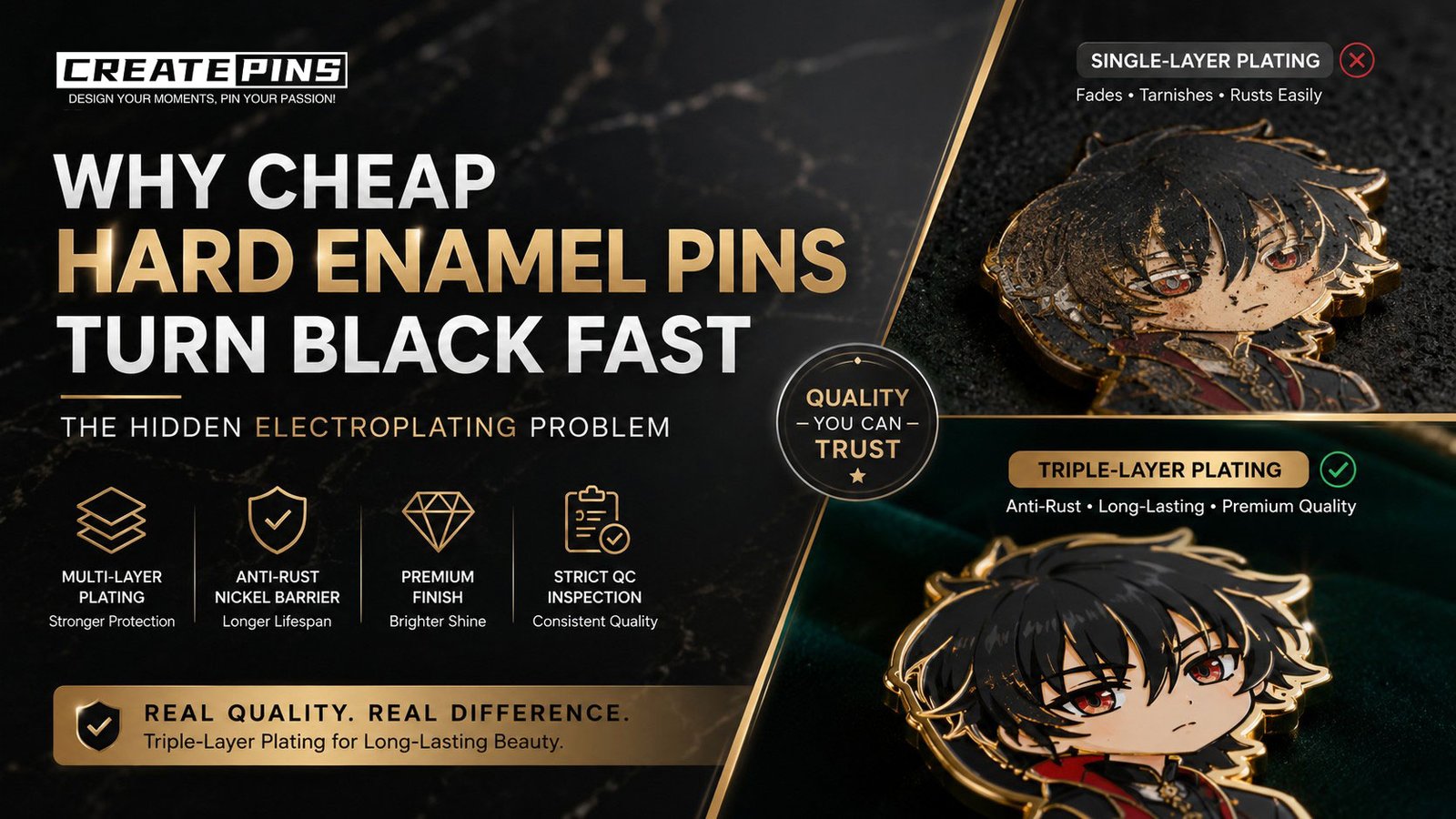
But many buyers experience the same disappointment: a pin that looked shiny and premium when it arrived starts turning black, fading, or peeling after only a few months.
You bought what appeared to be a beautiful custom pin. The colors were vivid, the metal gleamed, and the finish felt smooth. But weeks later, dark patches crept in from the edges. The gold or silver tone began looking muddy. Some color sections even started to bubble or peel. And no amount of cleaning could reverse it.
So what actually causes this? The answer is hidden inside the electroplating process — one of the most important yet least understood parts of hard enamel pin manufacturing.
At CreatePins, we believe customers deserve transparency about how quality pins are really made. In this guide, we’ll explain exactly why many cheap hard enamel pins fail so quickly, how plating layers affect durability, and what separates a long-lasting custom pin from a disposable one.
The Hidden Problem Behind Cheap Hard Enamel Pins
In the worlds of anime merch, fandom collectibles, convention merchandise, and promotional branding, ultra-cheap custom pins are everywhere. Manufacturers compete aggressively on price, and the results can look impressive at first glance.
⚠️ You’ve probably seen offers like these:
These deals sound attractive, especially for creators and small businesses trying to stay within budget. But there’s usually a hidden compromise — one that won’t be visible until weeks or months after delivery.
Most extremely cheap hard enamel pins use only a single electroplating layer. While the pin may initially look shiny, that thin decorative coating provides very little real protection against:
- Humidity and moisture in the environment
- Sweat and skin oils from everyday wear
- Air oxidation over time
- Friction from bag straps, fabric, and display cases
- Chemical reactions with enamel fill materials
That’s why many low-cost pins quickly develop black spots, tarnished edges, surface fading, peeling finishes, and corrosion around the back or sides. The pin may look premium at first — but underneath, the plating structure is fundamentally weak.
Why Electroplating Determines Pin Quality
Electroplating uses an electric current to deposit a thin layer of metal onto the surface of another metal object. In pin manufacturing, it happens before enamel filling and serves several critical purposes:
- Creates the visual metallic appearance (gold, silver, black nickel, etc.)
- Protects the metal base (zinc alloy) from oxidation and corrosion
- Improves adhesion so enamel fills bond more securely
- Smooths microscopic imperfections from die-casting
- Determines how long the pin resists wear and environmental exposure
Electroplating is not just decorative. It is the primary structural protection system of a hard enamel pin. A beautiful surface finish with inadequate underlying layers is like paint on a rusty car — it hides the problem but doesn’t prevent it.
A professional hard enamel pin usually includes multiple plating layers, each with a specific protective and functional role. Here’s how the number of layers directly affects how long a pin will last:
| Plating Structure | Typical Lifespan | Real-World Result | Grade |
|---|---|---|---|
| Single Layer | 1–3 months | Rapid oxidation, black spots, fading | Budget |
| Double Layer | 3–6 months | Edge discoloration, surface dulls | Low |
| Triple Layer | 6–12 months+ | Stable daily-use durability | Standard Pro |
| Four Layers + Coating | 2–3+ years | Collector-grade, long-term retention | Collector Grade |
Understanding Each Plating Layer
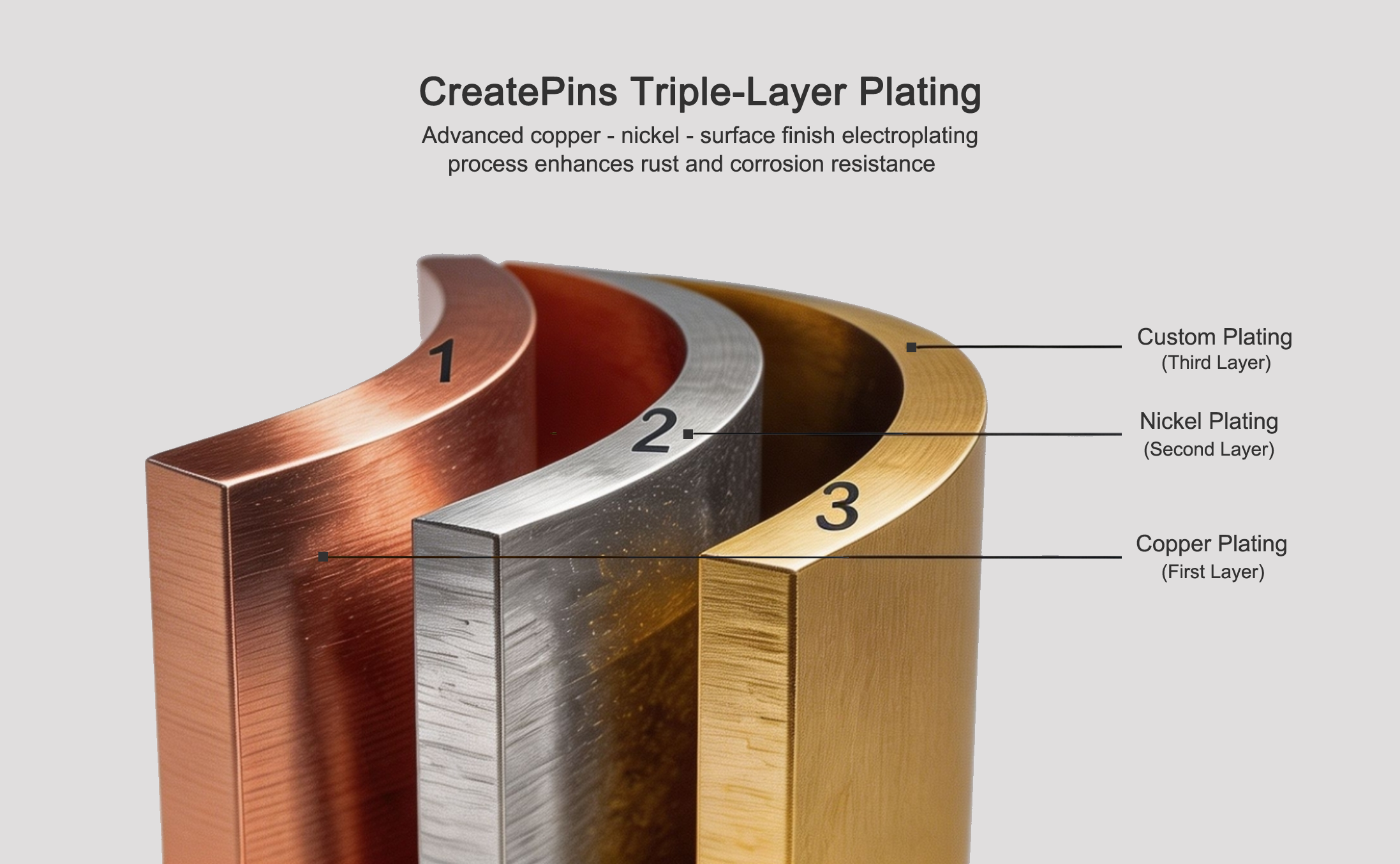
Each layer in a multi-layer plating structure has a specific purpose. Skipping even one significantly reduces the final durability of the pin.
Copper Base Layer
Applied directly over the raw zinc alloy. Copper is ductile and conforms to tiny surface imperfections, smoothing out microscopic scratches and pores. It dramatically improves adhesion for subsequent layers. Without this layer, nickel and surface finishes struggle to bond evenly — leading to weak spots where peeling can start.
Bright Nickel Layer
Nickel is the industry-standard anti-rust and anti-corrosion barrier. It forms a dense, crystalline structure that moisture and oxygen cannot easily penetrate. This layer is the most functionally important for durability. Many cheap factories skip nickel entirely to reduce cost — which is the single biggest reason inexpensive pins fail so quickly.
Surface Finish Layer
Creates the final visual appearance: gold, silver, black nickel, antique brass, gunmetal, rose gold, and more. The surface layer thickness is calibrated to provide color depth and uniformity. Because the underlying copper and nickel layers have already created a smooth, protected foundation, the surface finish can be applied evenly and consistently.
Optional Protective Coating (Premium)
For collector-grade pins, a transparent anti-oxidation coating — sometimes applied via electrophoretic sealing — is added over the final surface finish. This creates a physical barrier against humidity, UV exposure, and airborne contaminants. Pins with this treatment can maintain their appearance for 2–3 years or more, even with regular wear.
Ready to order hard enamel pins that actually last?
Get a Free Custom QuoteThe 3 Biggest Problems With Cheap Single-Layer Plating
⚠️ Problem 1: Enamel Chemicals Can Corrode the Metal From Inside
Hard enamel pins require color filling followed by high-temperature baking at around 180–200°C. If the plating is too thin, chemical compounds inside the enamel — particularly flux agents and glass particles — can penetrate the surface during baking and react with the zinc alloy underneath. The internal corrosion begins before the pin even ships. That’s why cheap pins often don’t just fade — entire color sections may peel away or flake off over time.
⚠️ Problem 2: No Nickel Layer Means Almost No Rust Protection
Nickel is the industry-standard anti-rust shield. Its crystalline molecular structure creates a dense barrier highly resistant to moisture, oxygen, and sweat. Many cheap pins skip nickel plating entirely and apply only a thin decorative top finish — often less than 0.1 microns thick. In humid weather or after convention wear, sweat and moisture cause black oxidation spots, tarnished backs, and darkened edges.
⚠️ Problem 3: Poor Polishing Causes Weak Plating Adhesion
Before electroplating, a high-quality pin must go through detailed polishing to remove burrs and surface roughness from die casting. Budget factories often rush or skip this process entirely. The result is microscopic surface defects that prevent plating layers from bonding evenly. These weak spots become the first places where oxidation takes hold and plating begins to peel.
Why Triple-Layer Plating Became the Gold Standard
In the hard enamel pin industry, triple-layer plating — copper, bright nickel, and surface finish — has become the most widely recognized balance between durability, appearance, and production cost.
- Better Oxidation Resistance: With normal use, triple-layer plated pins maintain their finish for 6–12 months or longer without noticeable tarnishing.
- More Premium Metallic Appearance: The copper smooths the surface while the nickel enhances brightness, creating a richer and cleaner final finish.
- Better Long-Term Value: The production cost difference between double-layer and triple-layer plating is small in bulk, but the durability improvement is significant — reducing return rates and customer complaints.
- Compatibility With Advanced Finishes: Triple-layer plating works far better with premium techniques like transparent protective coatings, electrophoretic sealing, and partial real gold plating.
- Safe for Wearable Use: Nickel layer helps prevent allergic reactions and skin irritation that sometimes occur from direct zinc alloy contact.
When comparing quotes, always ask how many plating layers are included. A price difference of $0.05–$0.15 per pin can often mean the difference between triple-layer and single-layer plating. For a run of 500 pins, that’s $25–$75 more upfront versus potentially receiving an unusable order.
Hard Enamel vs. Soft Enamel: Which Is More Durable?
✦ Hard Enamel Pins
- Color filled and baked in multiple passes
- Surface polished completely flat
- Glass-smooth, premium feel
- Colors flush with metal lines
- More durable surface finish
- Better for collectibles and long-term wear
✦ Soft Enamel Pins
- Color filled in one pass, not polished flat
- Raised metal lines, recessed color
- Textured, tactile feel
- More budget-friendly
- Faster production turnaround
- More prone to color fading at edges
Even within hard enamel pins, the electroplating quality is what ultimately determines longevity. A hard enamel pin with single-layer plating will still degrade faster than a soft enamel pin with triple-layer plating and protective coating. The plating structure matters more than the enamel type when it comes to long-term durability.
For a complete comparison, check out our guide on Hard Enamel vs. Soft Enamel Pins.
The CreatePins Quality Standard: Our Full Production Process
At CreatePins, we do not use single-layer plating for hard enamel pins. Our production process follows a complete professional plating workflow with strict quality checkpoints at every stage.
Every plating layer must meet strict minimum thickness and adhesion standards before moving to the next step. Pins that fail inspection are pulled and reworked — never shipped.
How to Spot Low-Quality Hard Enamel Pins Before Ordering
Whether you’re ordering for the first time or evaluating a new manufacturer, these questions will help you quickly assess production quality.
A professional factory should clearly explain: Copper base → Nickel protection → Final finish. Red flags: Vague answers like “standard plating” or “fully plated” without mentioning individual layers.
The correct process is: complete all electroplating first, then apply enamel filling and baking. Red flags: Any factory claiming they enamel first and plate later likely lacks proper hard enamel production knowledge.
Manufacturers using proper triple-layer plating should confidently discuss oxidation resistance and durability expectations — and should cite approximate timeframes (e.g., 6–12 months minimum). Red flags: Vague answers like “avoid water” or “store in a dry place” without discussing plating structure.
When a sample pin arrives, inspect the edges and the back attachment point carefully. Low-quality plating almost always shows its first signs of degradation at the edges and around clasp holes — look for any slight discoloration, roughness, or inconsistency.
Cheap Pins Usually Cost More in the End
❌ Cheap Pin Order — True Cost
- Low upfront price per pin
- Pins tarnish within weeks
- Products unsellable at conventions
- Refund or replacement costs
- Brand reputation damage
- Customer complaints and returns
- Reorder from scratch at full price
✅ Quality Pin Order — True Value
- Slightly higher upfront cost
- Pins stay bright months to years
- Full convention and retail lifecycle
- Repeat customers from quality trust
- Brand reputation enhanced
- Zero replacement or rework cost
- Higher resale value for collectibles
How to Care for Your Enamel Pins to Maximize Lifespan
- Store in a dry environment: Use display cases, velvet pin boards, or sealed pouches. Silica gel packets help maintain low moisture.
- Avoid direct saltwater or chemical exposure: Remove pins before swimming, showering, or applying perfume, hairspray, or sunscreen.
- Clean gently with a soft, dry cloth: Microfiber cloths work well. Avoid abrasive materials or chemical cleaners.
- Rotate wearable pins periodically: Give each pin recovery time and reduce continuous friction.
- Use individual packaging for transport: Prevents pins from rubbing against each other and scratching the finish.
Frequently Asked Questions
Final Thoughts
A hard enamel pin is more than a small accessory. It represents your artwork, your brand, your fandom, or your story. It should not become disposable metal waste after only a few months.
The difference between a pin that stays beautiful for years and one that turns black in weeks comes down to decisions made deep inside the production process — decisions about how many plating layers to apply, whether to include proper nickel protection, how thoroughly to polish before plating, and whether to invest in a final protective coating.
At CreatePins, we believe good craftsmanship should never be hidden. That’s why we openly share our plating standards, production methods, and durability expectations with every customer — because you deserve to know exactly what you’re ordering before you commit.
Ready for Hard Enamel Pins That Actually Last?
Get professional recommendations on plating options, finishes, and a custom solution built to stay bright, durable, and collectible long after production.