Pins vs Keychains for Giveaways: What Gets Kept?
A complete guide to choosing the right promotional product — from trade show floors to fan conventions — so your brand sticks around long after the event ends.
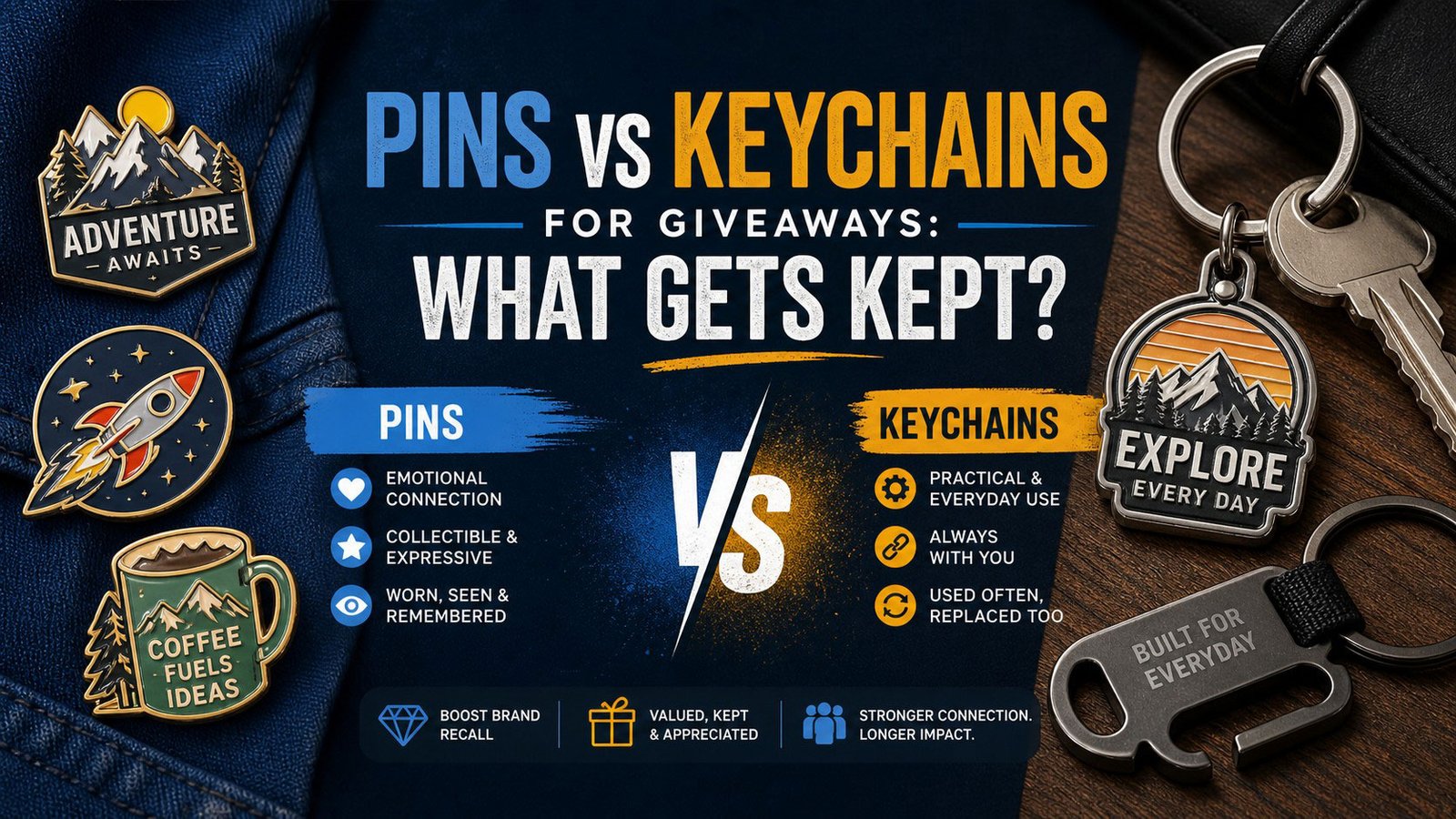
When you invest in promotional products, one question matters more than anything else: will people actually keep it? Giveaways aren’t just about visibility in the moment — they’re about long-term brand recall. Two of the most popular options are enamel pins and custom keychains. Both are affordable, customizable, and easy to distribute — but they behave very differently once they leave your booth, event table, or packaging.
🎯 The Core Difference: Pins vs Keychains
Before diving into retention data and psychology, it’s worth grounding ourselves in what each product fundamentally is. Pins and keychains serve different roles in people’s lives — and understanding those roles is the key to making the right choice for your campaign.
Enamel Pins
- Worn on clothing, bags, hats, and lanyards
- Often treated as collectibles or personal expression
- Design-driven and emotionally appealing
- Create public-facing brand impressions
- Strong in fan, community, and cause-based settings
Custom Keychains
- Attached to keys, bags, or everyday carry items
- Utility-focused with constant physical interaction
- Slightly less “expressive,” more functional
- Passive brand exposure through repeated daily use
- Strong in service-based or utility-driven campaigns
Pins = identity + style + emotional connection.
Keychains = function + convenience + daily utility.
The right choice depends entirely on your audience, brand personality, and campaign goal.
📊 Why “Getting Kept” Matters More Than You Think
Most brands focus on cost-per-unit when planning giveaways. But the metric that actually matters is cost-per-impression over time. A $1.50 pin that someone keeps and wears for two years delivers far more ROI than a $0.50 pen that gets lost in a drawer by week three.
According to the Promotional Products Association International (PPAI), promotional products generate on average 1,000+ impressions over their lifetime — far outpacing digital ads in terms of cost per impression. But this only holds true if the product is actually kept.
Imagine distributing 500 pins at a trade show. If just 60% are kept and displayed publicly for 12 months, that’s 300 daily walking billboards. Each pin seen by even 10 people per week generates 156,000+ impressions per year — for a single run of 500 units.
The question isn’t just “which is cheaper?” — it’s “which one will people still have six months from now?”
🧠 What People Actually Keep (and Why)
Retention research in the promotional products space consistently points to a few key drivers: emotional connection, utility, uniqueness, and perceived value. Let’s break down how pins and keychains stack up across each dimension.
1. Emotional Value vs Practical Use
Pins win on emotional attachment. A well-designed pin becomes part of someone’s identity — fans, hobbyist communities, advocacy causes, or aesthetic preferences. People choose to wear them because the pin says something about who they are. Brands that tap into this identity layer build far deeper loyalty than those that simply slap a logo on a product.
Keychains win on utility. Everyone needs a keychain, but that also means they’re easily replaced. If yours isn’t special — if it’s just another rectangular chunk of acrylic with a logo — it gets swapped out the moment something more convenient comes along.
People keep what they feel emotionally connected to, not just what they use. Utility alone doesn’t build brand loyalty — identity does.
2. Display vs Passive Carry
Pins are visible by choice. When someone wears your pin, they are actively choosing to show it off. That intentionality matters: it signals pride, belonging, or endorsement — and it creates organic promotion every time they step outside. A pin on a laptop bag, denim jacket, or tote bag is seen by dozens of people every single day.
Keychains are semi-hidden. They spend most of their time in pockets, inside bags, or in glove compartments. Visibility is inconsistent — appearing briefly when someone unlocks a door or pulls their keys out at a checkout. It’s still useful exposure, but it’s passive rather than active.
Pins generate more intentional exposure per day, while keychains offer repeated but passive touchpoints. For top-of-mind brand recall, active display wins.
3. Collectibility Factor
Pins are highly collectible. Limited edition releases, themed series, artist collaborations, and seasonal designs can turn a simple giveaway into something people genuinely seek out. Pin trading communities, collector boards, and secondary markets exist specifically because people value pins as objects worth owning beyond their promotional context.
Keychains are rarely collected unless they feature strong, distinctive branding or added utility (multi-tools, bottle openers, QR code activations, etc.). Standard acrylic or rubber keychains simply don’t carry the same “keeper” energy.
Brands like Disney have built entire communities around pin collecting. Limited-run giveaway pins can create the same excitement at your scale — driving attendees to your booth just to get the pin before it’s gone.
If you want people to actively value your giveaway item, pins have a clear edge due to collectibility and community culture.
4. Longevity and Replacement Cycles
Pins tend to be kept long-term. Even when not worn daily, pins migrate to display boards, shadow boxes, pin walls, or get pinned to the inside of bags for occasional rotation. They rarely get thrown away because they carry perceived value — sentimental, aesthetic, or collectible.
Keychains get replaced frequently. Lost keys, damaged rings, broken attachments, or simply finding a keychain you prefer — the replacement cycle is short. Research from ASI (Advertising Specialty Institute) shows the average keychain is replaced roughly every 6–12 months, compared to pins which can be retained for years.
Pins often transition from “active use” to “treasured keepsake,” while keychains tend to stay in the utility cycle — used until replaced.
Side-by-Side Comparison
| Factor | Enamel Pins | Custom Keychains | Winner |
|---|---|---|---|
| Emotional Value | Very high — tied to identity | Moderate — functional | Pins |
| Daily Visibility | Active, intentional display | Passive, inconsistent | Pins |
| Collectibility | High — active communities | Low unless unique | Pins |
| Longevity | Years — often keepsakes | 6–12 months average | Pins |
| Perceived Value | High (art object feel) | Moderate | Pins |
| Daily Utility | Low — decorative first | Very high — always in use | Keychains |
| Ease of Use | Requires appropriate clothing/bag | Instantly usable | Keychains |
| Production Variety | Hard/soft enamel, glitter, glow | PVC, acrylic, metal, leather | Both |
| Cost Efficiency | Slightly higher per unit | Slightly lower per unit | Keychains |
| Brand Memorability | Very high | Moderate | Pins |
📋 Real-World Scenarios: Which Should You Choose?
There’s no single “correct” answer — context is everything. Here’s how to think through common use cases:
Trade Shows & Industry Events
Attendees are overwhelmed with branded swag. Most pens, stress balls, and notepads go into the trash. Pins cut through the noise because they’re wearable conversation starters. A well-designed pin draws people to your booth just to ask about it.
Retail Add-Ons or Product Merch
Packaging inserts, online order gifts, or retail merch shelf items. Pins significantly increase the perceived value of a purchase and are frequently shared on social media — especially when the design is sharp and distinctive.
Service-Based or Utility Brand Promotions
Plumbers, real estate agents, auto dealerships, and home service providers benefit from keychains because the product lives exactly where their service is relevant — on the keyring. Seeing your brand every time they unlock a door is effective passive reinforcement.
Fan, Fandom, or Creative Audiences
Gaming, anime, comics, music, sports — fan communities already have a strong pin culture. Branded pins for these audiences tap directly into collector behavior. Limited editions or event-exclusive designs can generate genuine excitement and secondary market trading.
Non-Profits & Cause-Based Organizations
Cause pins are one of the most powerful forms of advocacy merchandise. When supporters wear your cause pin, they become walking ambassadors. The emotional weight of the cause elevates the pin beyond a simple giveaway — it becomes a statement of values and community membership.
Schools, Universities & Campus Events
Students love collectible merch that signals school pride or involvement. Pins for clubs, departments, sports teams, and orientation events carry lasting sentimental value — often kept as graduation mementos long after the event is over.
⚠️ Common Mistakes to Avoid
Even great promotional strategies get undermined by poor execution. These are the most frequent mistakes brands make with each product type — and how to sidestep them.
📌 Pin Mistakes
- Overly corporate designs — a logo slapped on a circle reads as low-effort and gets discarded
- Poor color contrast or tiny, illegible details that look muddy after production
- Cheap plating (nickel vs gold vs black nickel) that tarnishes quickly
- Weak butterfly clasps that fall off easily — losing pins frustrates customers
- No backing card — bare pins look cheap; backing cards add perceived value instantly
- Ordering generic shapes with no design intent (simple circles or squares)
- Not ordering samples before a full production run
🔑 Keychain Mistakes
- Generic shapes, materials, and colors with no differentiation from competitors
- Bulky or inconvenient designs that people immediately remove from their keyring
- No added function or uniqueness — a plain rectangle with a logo won’t survive
- Flimsy key ring attachments that break quickly, losing the brand association
- Overly small text or logo that becomes invisible with daily wear
- Choosing materials based on cost alone (cheap PVC warps and fades)
- Ignoring weight — heavy keychains frustrate people who carry many keys
💡 Pro Tips to Maximize Retention
Whether you choose pins, keychains, or both, the execution details are what separate forgettable giveaways from brands people genuinely love. Here’s how to ensure yours gets kept.
📌 If You Choose Pins
- Create limited editions or numbered series to drive scarcity and desire
- Prioritize aesthetic design over logo placement — let the art carry the brand
- Add special finishes: glitter, glow-in-the-dark, dual-plating, or translucent enamel
- Include a branded backing card to elevate perceived value
- Use rubber clutch backs instead of butterfly clasps for security
- Partner with a local artist or illustrator for a truly distinctive design
- Create a series of pins across multiple events to encourage collecting
- Use consistent brand colors but let the design breathe beyond the logo
🔑 If You Choose Keychains
- Add real functionality: bottle opener, phone stand, mini flashlight, or multi-tool
- Keep them lightweight — heavy keychains are the #1 reason people remove them
- Use bold, simple designs optimized for small-format recognition
- Choose soft PVC or quality acrylic for cost-effective creativity
- Consider leather or metal for premium-feel campaigns
- Include a QR code on the back linking to a landing page or offer
- Laser engrave on metal for a tactile, premium feel that lasts
- Use unique die-cut shapes instead of rectangles or ovals
🏆 Final Verdict: What Gets Kept?
After comparing emotional value, visibility, collectibility, longevity, and utility — here’s the honest summary:
Your goal is brand love, long-term memorability, identity-driven campaigns, or reaching creative/fan audiences. Pins are more likely to be kept for months or years — and displayed publicly.
Your goal is daily practical utility, consistent passive exposure, or reaching audiences who value function. Keychains deliver repeated touchpoints but are replaced more often unless they’re genuinely unique.
🚀 The Smart Strategy: Use Both
The most effective brands don’t choose — they combine. Pins and keychains serve different psychological needs and different moments in the customer journey. Together, they create a balanced promotional ecosystem that covers both emotional and practical touchpoints.
Use pins for engagement, storytelling, and building brand loyalty. They’re your brand’s wearable identity — deployed at launches, events, and anywhere you want deep emotional resonance.
Use keychains for everyday visibility and practical utility. They’re your brand’s daily reminder — best deployed with services, subscriptions, or campaigns where repeated practical exposure builds familiarity.
Run them together at high-value events: give a pin to those who engage deeply (visit your booth, sign up, purchase) and a keychain to everyone else. This creates a natural tiering that rewards engagement.
Design Your Custom Pins or Keychains Today
Get a free, no-obligation custom quote from CreatePins.com. Our team will help you design something your audience will actually want to keep — with expert guidance on materials, finishes, and quantities for any budget.
❓ Frequently Asked Questions
📚 Related Reading from CreatePins
🔑 Custom Keychains
-
How to Choose Durable Metal Keychain Finishes
A beginner’s guide to keychain plating and finish options that hold up over time — so your brand stays visible longer. -
Custom Keychain Attachment Types Explained (How to Choose Correct Keychain Attachments)
Understand the pros and cons of each attachment type to avoid the most common reason people remove keychains from their keys. -
How Much Do Custom Keychains Cost in 2026? (Complete Pricing Guide)
Transparent breakdown of keychain costs by material, quantity, and finish — so you can plan your campaign budget accurately. -
Why Acrylic Keychains Are So Popular Right Now — Plus Design Guide, Risks & Pro Tips
Acrylic keychains dominate modern giveaways — here’s why, and how to design one that doesn’t look generic. -
How to Convert Your Enamel Pin Design Into a Custom Keychain
Already have a pin design? Learn how to adapt it into a keychain format — and what changes during production. -
UV Printing vs Screen Printing for Enamel Pins, Keychains, Coins & Badges: Which Is Better?
Choose the right printing method for your keychain design, budget, and durability requirements. -
How to Prepare Perfect Artwork for Custom Keychains (By Material & Type)
File format requirements, resolution tips, and design considerations for each keychain material type.
📌 Enamel Pin Design & Production
-
Common Enamel Pin Types: Differences, Costs & Mistakes (2026)
The fundamental choice every first-time pin buyer faces — explained clearly with cost and design implications for each type. -
The Beginner’s Guide to Enamel Pin Plating Colors
Gold, silver, black nickel, antique copper — learn which plating color suits your design and brand aesthetic. -
How to Choose the Right Enamel Pin Backings Complete Guide, Risks & Pro Tips (2026)
Butterfly clasp vs rubber clutch vs locking pin backs — choose the right backing so your pins don’t get lost. -
The Ultimate Guide to Enamel Pin Add-Ons: Glitter, Glow, Epoxy, Spinners & More (2026)
Epoxy domes, glitter fill, glow ink, sequential numbering — explore the add-ons that increase perceived value and collectibility. -
Glitter Enamel Pins: The Complete Guide to Sparkle
How glitter fill works, what it costs, and how to use it effectively to make your giveaway pin stand out. -
Glow in the Dark Enamel Pins: Complete Design Guide (2026)
Glow-in-the-dark pins are some of the most talked-about giveaway items — here’s everything you need to design one correctly. -
Complete Enamel Pin Packaging Guide Types, Costs & Best Practices (2026)
Backing cards, polybags, gift boxes — packaging dramatically affects how recipients perceive your pin’s value.
🎯 Strategy, Events & Marketing
-
Custom Pins for Conferences, Trade Shows & Events Design, Pricing & Planning Guide
A complete planning guide for ordering and distributing custom pins at events — from design timelines to booth strategy. -
Pin Collecting Trends 2026: What’s Hot Right Now
Stay ahead of the curve — current collector trends that inform smarter giveaway design decisions for brands. -
Upgrade Your Custom Pins with Pin‑to‑Keychain and Pin‑to‑Magnet Adapters
One design, multiple formats — how adapters let you distribute the same artwork as a pin or a keychain.
🆕 For New Pin Makers
-
Complete Enamel Pin Design Guide (2026)
The comprehensive technical guide to designing pins that look great on screen and come out perfectly in production. -
How to Order Enamel Pins (Step-by-Step Guide)
Walk through the full ordering process from design submission to delivery — ideal for first-time buyers. -
Custom Enamel Pin Production Timeline Explained
Full production timeline from order to delivery — critical for event planning and campaign scheduling. -
Pricing Custom Enamel Pins for Profit: Cost Breakdown, Calculator & Pricing Tips
Get a realistic picture of what your pin order will cost before you request a quote — broken down by size, type, and quantity.
Ready to Create Something Your Audience Will Keep?
Whether you need 50 pins for a small event or 5,000 keychains for a national campaign, CreatePins.com has you covered. Fast turnaround, expert design support, and prices that work for any budget.