Why Custom Pin Prices Vary by Manufacturer?
What every buyer should know when comparing quotes for custom enamel pins
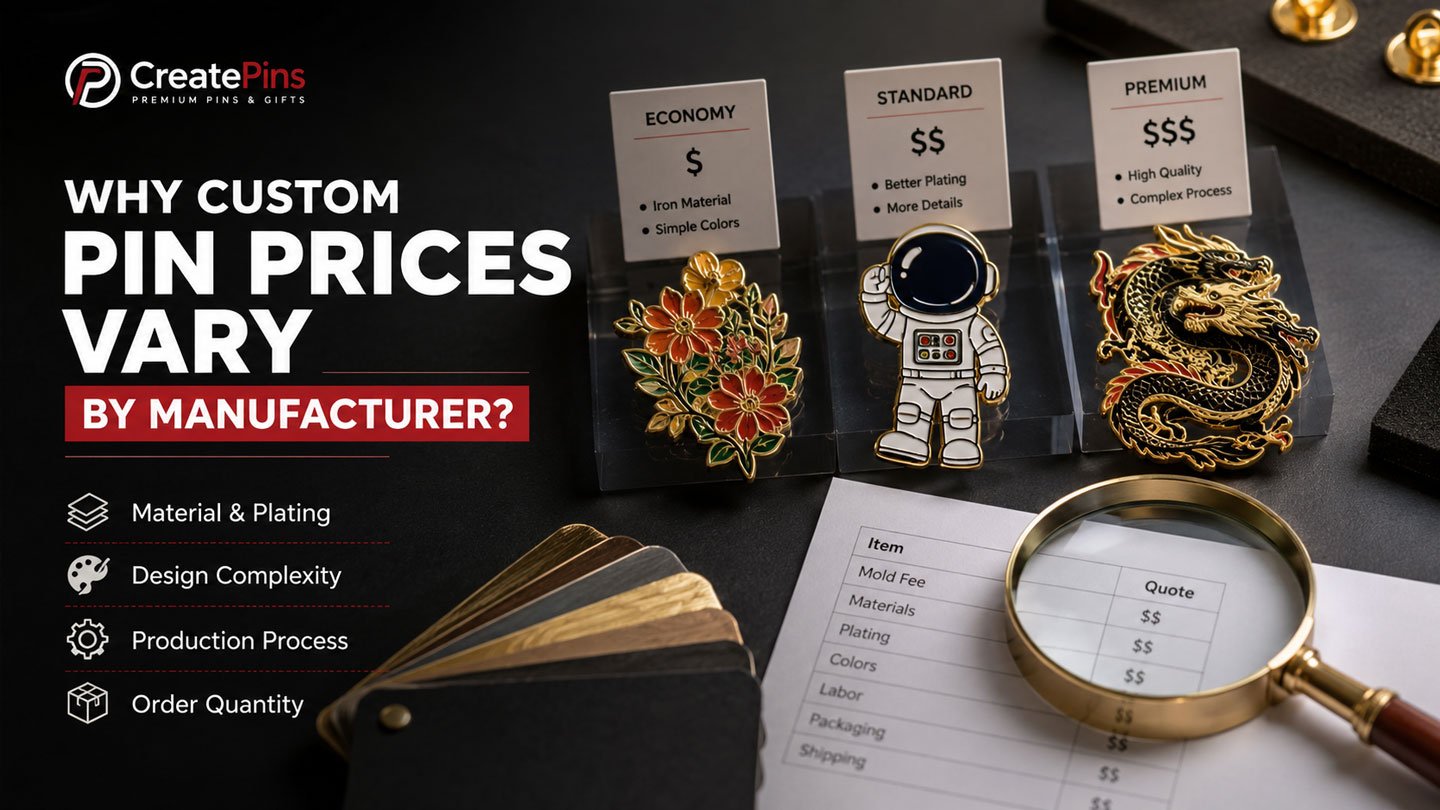
Understanding manufacturing differences helps explain price variations between custom pin suppliers
If you’ve requested quotes from multiple enamel pin manufacturers, you’ve probably noticed something confusing: the same pin design can come back with very different prices.
So… why does this happen?
Custom pin prices vary by manufacturer due to differences in production methods, materials, quality control, labor, service level, and business practices. In this article, we break it all down so you know exactly what you’re paying for—and how to compare quotes the right way.
1 Manufacturing Location & Labor Costs
One of the biggest reasons custom pin prices vary is where the pins are made. Labor costs differ significantly by country, which directly impacts the final price.
Lower Labor Cost Regions
- Can reduce pricing by 20-40%
- May offer faster turnaround
- Potential communication barriers
- Quality consistency may vary
Higher Labor Cost Regions
- Often better communication
- Higher quality control standards
- Better worker conditions
- Higher base pricing
Key Insight
Lower labor costs can reduce pricing—but may also affect consistency, communication, or lead time if not well managed. Always check reviews and ask for samples when considering manufacturers in different regions.
2 Material Quality (Not All Pins Are Made Equal)
Two pins may look similar in a quote—but use very different materials. This is one of the most common areas where manufacturers cut corners to offer lower prices.
Materials That Affect Price & Quality
- Base metal thickness: Thinner metal bends easier and feels cheaper
- Enamel quality: Higher-grade enamel has better color and durability
- Plating quality: Cheaper plating tarnishes faster
- Pin posts & clutches: Weak posts break; poor clutches don’t secure
Some manufacturers cut costs by using thinner metal or lower-grade plating, which can lead to bending, tarnishing, or shorter lifespan. Always ask about material specifications when comparing quotes.
Material quality is one of the biggest hidden factors behind enamel pin pricing, and it’s also one of the hardest things to judge from a photo alone. Budget pin manufacturers sometimes use recycled or uncertified zinc alloy, and pins made from this kind of blend are far more likely to dull, oxidize, or turn black within months of regular wear. If you’ve noticed this happen to a pin that looked great on day one, our guide on why cheap hard enamel pins turn black fast breaks down exactly why it happens and how to spot the warning signs before you order.
Why Certified Materials Matter
- REACH and RoHS certificated zinc alloy avoids restricted heavy metals and lowers the risk of premature blackening or corrosion
- Non-certified alloy blends can contain higher trace levels of lead or cadmium, affecting both durability and buyer safety
- A consistent alloy composition helps plating adhere more evenly, so gold, silver, and black nickel finishes hold their color longer
- Certified base metal matters most for pins worn daily, used outdoors, or sold to buyers who expect long-term durability
At CreatePins, every production run uses REACH and RoHS certificated zinc alloy, which is one reason enamel pin pricing here reflects a higher material standard than many budget factories. This certification isn’t just a label—it means the metal composition has been tested and verified against international safety and durability requirements, and that directly affects how well a finished pin resists tarnishing over time. When you compare pin quotes side by side, it’s worth asking each manufacturer whether their base metal is certified and requesting documentation if long-term appearance matters for your brand or event. A slightly higher price for certified zinc alloy is usually a small trade-off compared to reordering pins that discolor within months.
3 Production Process & Equipment
Manufacturers use different machines, molds, and finishing processes that affect both quality and cost.
Basic Production
- Standard equipment
- Fewer finishing steps
- Faster but less precise
- Lower cost
Advanced Production
- Precision equipment
- Multiple finishing steps
- Higher consistency
- Higher cost
More advanced equipment and extra finishing steps increase cost—but also improve detail, consistency, and feel. For complex designs or premium products, this investment is often worth it.
Compare Beyond Price
Look at what’s included in the quote, not just the bottom line. Hidden fees can add up quickly.
Quality vs Cost
Higher quality materials and processes cost more but result in better, longer-lasting pins.
Communication Matters
Good communication prevents costly mistakes and ensures your vision is understood.
4 Quality Control Standards
Quality control is often the invisible price difference. What happens when a pin has imperfections?
Higher-Priced Manufacturers Typically Include:
- Multiple QC checks during production
- Rejected or remade defective pins
- Manual inspection of plating, color fill, and alignment
- Detailed inspection reports
Lower-cost quotes may skip or limit QC, increasing the risk of misfills, scratches, or unusable pins. Ask about QC processes and defect rates when comparing manufacturers.
Beyond inspecting finished pins, well-run pin manufacturers also plan ahead at the raw production stage. One quality control habit that’s easy to overlook, but makes a real difference, is keeping extra raw, uncoated pins on hand throughout a production run. Having spare raw pins available means a factory can immediately remake any piece that fails inspection instead of shipping a flawed pin just to hit the order count on time.
Spare Raw Pins: A Small Detail That Protects Quality
- Extra raw pins let a factory swap out defective pieces without delaying your production timeline
- Reduces pressure to ship borderline pins just to reach the ordered quantity
- Supports consistent high quality turnouts, even on complex multi-color designs
- Keeps reorders and future runs matched to the original quality standard
CreatePins keeps additional spare raw pins in reserve during every production run specifically to support this replacement process, which helps maintain high quality turnouts across a batch rather than letting a handful of defective pieces slip through. This is a big part of why enamel pin quality can differ so much between a factory that treats QC as a final checkbox and one that builds it into every stage of production, from raw metal to the finished, packaged pin.
5 Included Services vs Hidden Fees
Not all quotes include the same services. A lower initial quote might end up costing more after adding necessary services.
Often Included
- Free artwork review
- Design fixes for manufacturability
- Mold storage for reorders
- Sample photos or pre-production proofs
Sometimes Charged Separately
- Design revisions
- Digital proofs
- Packaging
- Backing cards
- Rush production
Important Warning
Always check what’s included before comparing prices. Ask for a detailed breakdown of all potential charges to avoid surprises later in the process.
How to Compare Custom Pin Quotes Fairly
When comparing manufacturers, don’t ask “Who’s cheapest?” Ask “What am I getting for this price?”
Why CreatePins Pricing May Differ
(And Why That’s a Good Thing)
At CreatePins, pricing reflects consistent material quality, experienced pin-focused production teams, thorough quality control, clear communication, and long-term reorder support.
Our goal isn’t to be the cheapest—it’s to help you create pins you’re proud to sell, gift, and collect.
Get a Transparent Quote at CreatePins.comFree design review | Quality guarantee | 12-hour quotes
Complete Conclusion: What You Need to Know
Custom enamel pin pricing varies significantly between manufacturers for valid, understandable reasons. These differences aren’t random—they reflect choices about quality, service, and business practices that directly impact what you receive.
Location Matters
Manufacturing location affects labor costs, communication, and quality standards. Consider both price and practical implications when choosing.
Quality Has a Price
Better materials, advanced equipment, and thorough quality control cost more but deliver superior results that protect your brand reputation.
Look Beyond the Price Tag
Compare what’s included in quotes, not just the bottom line. Hidden fees and excluded services can significantly change the final cost.
Service Adds Value
Good communication, design support, and reliable timelines prevent costly mistakes and ensure you get what you expect.
The most important question isn’t “Who’s cheapest?” but rather “Who delivers the best value for my specific needs?”
Whether you’re creating pins for business, events, or personal projects, understanding these factors empowers you to make informed decisions. You can now evaluate quotes with confidence, knowing exactly what contributes to price differences and what trade-offs you’re making with each choice.
Final Recommendation
Always request samples, ask detailed questions about materials and processes, and consider your long-term needs—not just the immediate price. The right manufacturer is a partner in your success, not just a supplier.
Want More Than Just Custom Pins?
Discover Raoin.com — your one-stop partner for custom products like tote bags, lanyards, patches, and more.
References & Further Reading
- Get a Free Custom Pin Quote – CreatePins
- How Much Do Enamel Pins Cost to Make in 2026?
- Pricing Custom Enamel Pins for Profit (Cost Breakdown & Calculator)
- Custom Enamel Pin Hidden Costs You Should Know
- No Minimum Order Custom Pins: What You Need to Know
- Hard Enamel vs Soft Enamel Pins: The Ultimate Guide
- Why Cheap Hard Enamel Pins Turn Black Fast
- The Beginner’s Guide to Enamel Pin Plating Colors
- Custom Enamel Pin Production Timeline Explained
- Custom Enamel Pin Order Process Explained
- How to Order Enamel Pins (Step-by-Step Guide)