The Complete Beginner’s Guide to Enamel Pin Plating Colors
Discover how to choose enamel pin plating colors with our complete guide. We explain custom pin plating, popular metal plating for enamel pins, and the best enamel pin finishes for your design. Learn about the best plating color for enamel pins and the differences between all options.
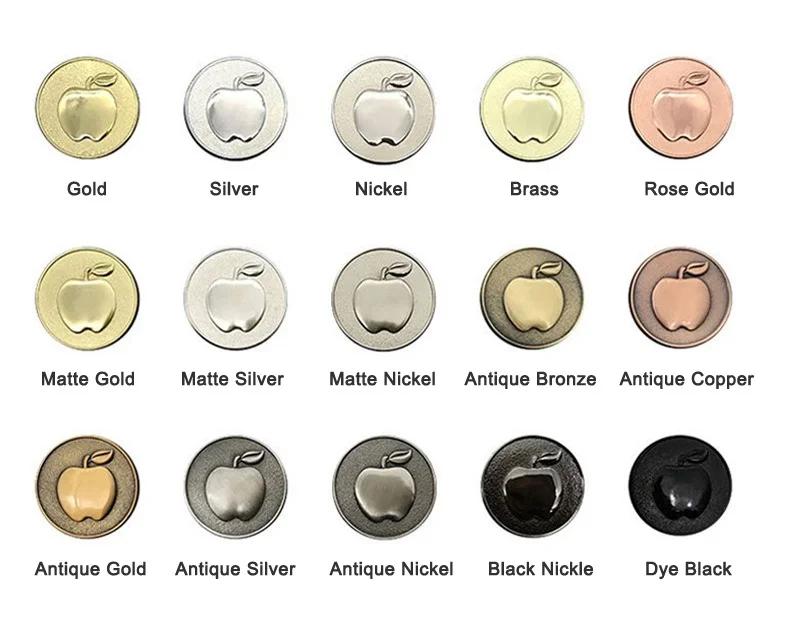
Choosing a plating color is one of the most critical — and most misunderstood — decisions in enamel pin design. For beginners, the terminology alone can be overwhelming: gold plating, nickel, dyed black, antique finish, oxidation, black nickel, color tolerance. This guide covers all the essential enamel pin plating colors, from shiny gold to antique silver. It explains the different types of custom pin plating, how each finish works, and how they affect your design. Understanding pin plating colors is the first step to creating a successful product.
Yet enamel pin plating determines far more than how shiny your pin looks. It affects durability, enamel color visibility, detail clarity, photography performance, and the entire visual identity of your finished product. This is why knowing how to choose enamel pin plating colors is vital for any first-time designer.
This guide explains every type of metal plating for enamel pins, the materials behind them, how each finish behaves in real-world conditions, the mistakes that cost most beginners their first production run, and a clear step-by-step process for choosing the right plating for your specific design. We’ll help you decide which is the best plating color for enamel pins for your specific design.
What Is Custom Pin Plating and Why Does It Matter?
Custom pin plating is the process of coating the base metal of your enamel pin — typically iron, brass, or zinc alloy — with a thin layer of another metal or pigment. That outer coating is what you see when you look at a finished pin: the color of every metal line, the sheen between enamel fill areas, the character and mood of the entire piece.
Enamel pin plating determines all of the following:
- The color of your pin’s metal lines — the visual dividers between enamel fill zones
- Reflectivity and shine — from mirror-bright to completely matte
- Durability and scratch resistance — varies dramatically between plating types
- How your enamel colors appear — dark plating amplifies light colors; light plating softens them
- Texture and depth — antique platings add dimensional character that flat electroplating cannot replicate
- Photography performance — matte platings photograph cleanly; shiny platings require careful lighting control
- Brand impression — gold reads as premium and luxurious; black nickel reads as modern and bold; antique reads as artisanal and collectible
🔑 Think of custom pin plating as the frame around your enamel artwork — it can elevate your design or fight against it. The right enamel pin finish feels invisible; the wrong one makes the whole pin feel off.
All Metal Plating for Enamel Pins Explained
There are three distinct categories of metal plating for enamel pins used in enamel pin manufacturing, each using a different process and producing a fundamentally different result. Understanding these categories is key when you choose the best plating color for enamel pins for your project.
A. Electroplated (Shiny / Glossy) Metals
Shiny Gold
The most classic and recognisable pin finish. A warm, bright yellow-gold tone that reads as luxurious and premium. Produced using a gold alloy (typically imitation gold) bonded via electrochemical process.
Shiny Silver / Nickel
Cool, mirror-like metallic finish. One of the most versatile and widely used platings — works with almost any color palette and enamel style. The high reflectivity gives a modern, crisp appearance.
Black Nickel
Nickel alloy coated with black chromium — the result is a dark, glossy metallic surface that reflects light differently at different angles. Ideal for making neon and bright enamel colors explode with contrast. Often confused with dyed black — they are fundamentally different products.
Copper
Pure copper plating produces a warm reddish-orange metallic tone with high natural appeal. May darken slightly over time without a protective seal coat — this patina is considered desirable in many collector communities.
Rose Gold
A warm, soft pinkish-gold tone achieved through a copper-gold alloy. Increasingly popular for fashion-forward and feminine designs. Slightly softer in tone than shiny gold, making it more photogenic and less prone to glare.
B. Antique Metals (Chemically Oxidized)
Antique Gold
Warm, aged, non-reflective gold with darkened recesses. The oxidation creates visual depth that makes engraved details and fine line work exceptionally visible. A premium choice for historical, fantasy, and collector-grade pins.
Antique Silver
The most popular antique finish — vintage silver tone with dark oxidized recesses. Dramatically enhances line work and text clarity. Extremely beginner-friendly as it forgives slight design imperfections and photographs beautifully without glare control.
Antique Copper
Rustic, earthy, textured appearance with strong shadow contrast in recessed areas. Particularly effective for nature, history, fantasy, and map-inspired designs where a handcrafted, aged quality is desirable.
C. Dyed / Painted Metal (NOT Electroplated)
Dyed Black Metal
Black pigment applied directly to the metal surface rather than electroplated. The result is a completely flat, matte black with zero reflectivity — giving line art and cartoon-style designs a crisp, digital illustration quality. Lower durability than electroplated finishes; more prone to scratching at edges.
Colored Dyed Metals (Red, Blue, etc.)
Rare due to significant durability limitations. Used primarily for novelty or highly stylized items where the colored metal itself is the design feature. Not recommended for standard pin production due to high chipping risk at edges.
How Pin Plating Colors Affect Your Design
Reflectivity & Light Behavior
✨ Shiny Platings
- Highly reflective — catches light from all angles
- Creates an elegant, premium visual impression
- Can cause glare and hotspots in product photography
- Requires careful lighting setup to photograph well
- Best appreciated in person rather than in photos
🔅 Matte / Antique Platings
- Minimal or zero reflections under direct light
- Details, lines, and text appear crisp and readable
- Photograph cleanly without glare — ideal for product listings
- Produce consistent color representation across lighting conditions
- Most forgiving for beginner photographers
Detail Visibility by Plating Type
Different pin plating colors affect how visibly your fine details, text, and line work read on the finished pin. This rating reflects how clearly a typical design’s detail survives the enamel pin plating choice:
How Plating Influences Enamel Fill Colors
This is one of the most important — and most overlooked — aspects of enamel pin plating. The metal surrounding your enamel fill zones is a visual neighbor to every color in your design. Change the plating and the same Pantone color will read differently:
- Dark plating (black nickel, dyed black) strengthens contrast with pastel or light enamel colors, making them appear more vivid and saturated
- Light plating (silver, gold) produces a softer, more harmonious look — warm gold pairs naturally with warm enamel tones
- Antique plating adds a vintage warmth or coolness (depending on antique gold vs. silver) that shifts the entire mood of the design
- Black nickel is the best choice for maximizing the visual impact of neon, bright, or highly saturated enamel colors
- Dyed black makes the overall artwork appear “digitally clean” — the flat black border closely resembles how a design looks in vector illustration software
The same Pantone color will NOT look identical next to different pin plating colors. Always request a digital mockup showing your design with your intended plating before approving production, or ask your manufacturer for a physical sample.
Hard Enamel vs. Soft Enamel Plating Differences
The enamel type you choose interacts directly with your custom pin plating choice — the same plating will look noticeably different on a hard enamel pin versus a soft enamel pin. This surprises many first-time designers who assume the two should look identical. It is a crucial factor when you choose the best plating color for enamel pins for your specific product type.
Hard Enamel
- Smooth, polished, flat surface — enamel level with metal lines
- Polishing amplifies the reflectivity of shiny platings
- Shiny gold and silver appear particularly bright and premium
- Hard enamel surface naturally complements glossy electroplated finishes
- Best enamel pin finishes pairings: Shiny Gold, Black Nickel, Shiny Silver
Soft Enamel
- Textured, dimensional surface — enamel recessed below raised metal lines
- Recessed texture naturally amplifies the depth effect of antique finishes
- Dyed black plating complements the tactile, illustrative quality of soft enamel
- Shiny platings appear slightly less intense due to the textured surface
- Best enamel pin finishes pairings: Antique Silver, Dyed Black, Antique Gold
⚠️ A hard enamel sample and a soft enamel sample with the same specified metal plating for enamel pins will never look identical. If you’re ordering samples to compare enamel types, understand that the plating appearance will also differ — this is normal and expected.
Color Tolerance & Batch Variation
Custom pin plating is a chemical and electrochemical process — not a printed ink application. This means exact, repeatable color reproduction is impossible to the same degree that Pantone printing achieves. Understanding tolerance is essential for managing expectations and avoiding frustration when your production samples arrive.
Normal variations you should expect across batches and factories:
- Gold tone can shift warmer (deeper orange-gold) or cooler (lighter yellow-gold)
- Silver can shift slightly warmer (towards champagne) or cooler (towards pure white-silver)
- Black nickel darkness can vary — sometimes more graphite-grey, sometimes nearly true black
- Dyed black finish can vary from flat matte to a slight semi-gloss sheen
- Antique finishes will show variation in how deeply recessed areas are oxidized
Factories target a plating color tolerance of approximately ±5–10% variation from the approved sample. This is the global industry norm, not a quality defect. If your second production run looks slightly different from your first, this is expected — particularly with gold and antique pin plating colors.
Full Plating Comparison Table
| Plating | Finish | Durability | Detail Visibility | Photo Ease | Best For |
|---|---|---|---|---|---|
| Shiny Gold | Glossy | High | ★★ | Moderate | Premium, jewelry-style |
| Shiny Silver / Nickel | Glossy | Very High | ★★★ | Moderate | Minimalist, tech, versatile |
| Rose Gold | Glossy | High | ★★★ | Good | Fashion, lifestyle, gifts |
| Black Nickel | Glossy-Dark | High | ★★★★ | Good | Bold, neon, modern |
| Copper | Glossy-Warm | Medium | ★★★ | Good | Retro, steampunk, earthy |
| Antique Gold | Matte / Two-tone | Good | ★★★★★ | Excellent | Historical, fantasy, collector |
| Antique Silver | Matte / Two-tone | Good | ★★★★★ | Excellent | Most styles — top beginner pick |
| Antique Copper | Matte / Two-tone | Good | ★★★★★ | Excellent | Nature, history, fantasy |
| Dyed Black | Flat Matte | Lower | ★★★★★ | Excellent | Line art, cartoon, graphic |
| Colored Dyed | Flat Matte | Low | ★★★ | Good | Novelty / specialty only |
Common Beginner Mistakes & Misunderstandings
These six misunderstandings account for the majority of plating-related production surprises for first-time pin designers. Read them carefully before placing your first order.
- Confusing Black Nickel with Dyed Black. This single mistake causes the majority of plating mismatches for beginners. Black Nickel = electroplated, glossy, reflective, highly durable. Dyed Black = pigment-coated, completely matte, flat, lower durability. They look and behave entirely differently.
- Expecting metal plating for enamel pins to match Pantone numbers. Pantone is a system for printing ink. Custom pin plating is a chemical process involving electrochemical baths and oxidation. You cannot specify a Pantone number for a plating color — you can only reference standard plating names and approved physical samples.
- Assuming all factories produce identical gold or silver. Every production facility uses different chemical bath compositions, concentrations, and processing times. Gold plating from Factory A and Factory B may look perceptibly different even if both are labeled “shiny gold.”
- Expecting 100% batch-to-batch consistency. Even within the same factory, plating tone can shift slightly between production runs months apart. Seasonal temperature changes, chemical bath aging, and substrate variation all contribute. A ±5–10% difference is normal and not a defect.
- Assuming all enamel pin finishes have the same durability. Dyed black and colored dyed metals are significantly more prone to scratching at edges and raised lines than electroplated finishes. If you’re producing pins for daily wear, prioritize nickel, black nickel, or gold plating for longevity.
- Not accounting for how the same plating looks on soft vs. hard enamel. The polishing step in hard enamel production amplifies metallic shine. The recessed texture of soft enamel creates additional depth with antique finishes. Never approve a plating choice based on how it looks on the wrong enamel type.
🎯 Not sure which custom pin plating is right for your design? Our team at CreatePins offers free plating consultations with every quote.
Get Free Plating AdviceStep-by-Step Guide: How to Choose Enamel Pin Plating Colors
Work through these five decision points in order to narrow down the right plating for your specific design. By the end, you’ll have a clear, confident choice rather than a guess. This is your definitive process on how to choose enamel pin plating colors.
🔧 Your Plating Selection Workflow
Identify Your Design Style
Match Your Color Palette
- Light / pastel colors → dark plating (black nickel, dyed black) for contrast
- Dark / saturated colors → light plating (silver, gold) for balance
- Earthy / warm tones → antique copper or antique gold
- Bold neon colors → black nickel for maximum vibrancy
- Monochrome / greyscale → silver or antique silver
Consider Your Enamel Type
- Soft enamel (textured) → antique finishes and dyed black work best with the dimensional surface
- Hard enamel (smooth, polished) → shiny platings look particularly premium on the flat, glassy surface
- Avoid shiny gold on soft enamel with very fine details — the combination can reduce legibility
Think About Photography
- If you’ll be photographing for social media or product listings: choose antique or matte finishes for easiest setup
- Avoid shiny gold for detail-heavy designs — the glare makes fine lines difficult to capture
- Dyed black and antique silver produce the most consistent, flattering photos across different lighting conditions
Consider Pin Purpose & Wear
- Daily wear (jackets, bags) → nickel or black nickel for scratch resistance
- Collector / display pins → gold, antique silver, or antique gold for premium character
- Children’s pins → avoid dyed metal (more prone to chipping at edges)
- Event giveaways → nickel or black nickel for reliable appearance at scale
How to Choose the Best Plating Color for Enamel Pins
Ultimately, determining the best plating color for enamel pins for your project depends on a balance of these factors. Here’s a simple, decisive guide to help you make the right choice.
- For maximum contrast and a modern look: Choose Black Nickel. It makes vibrant colors pop and is an incredibly popular enamel pin finish.
- For detailed, illustrative, or cartoony designs: Choose Dyed Black. It offers the most precise outline clarity and a graphic, flat feel.
- For a versatile, classic, and beginner-friendly option: Choose Antique Silver. It’s the most forgiving option that enhances detail and looks great in photos.
- For a clean, universal, and durable finish: Choose Shiny Silver / Nickel. It works well with any color palette and is one of the most durable pin plating colors available.
- For a premium, luxurious feel: Choose Shiny Gold or Rose Gold. These are the go-to pin plating colors for high-end products and gifts.
When in doubt, follow the classic rule: the best plating color for enamel pins is the one that complements your design style and brand aesthetic. This guide is designed to help you make an informed decision on how to choose enamel pin plating colors, so revisit the key sections above to finalize your selection with confidence.
Best Beginner-Friendly Enamel Pin Finishes
If you’re producing your first pin and want to minimize risk, these four enamel pin finishes are the most forgiving across design style, photography, durability, and color accuracy. Start here, then explore more expressive pin plating colors as your production experience grows.
Antique Silver
The most universally forgiving enamel pin finish for beginners. The two-tone oxidation effect automatically enhances detail visibility, it photographs beautifully without glare, and it suits almost every design style. If in doubt, choose antique silver.
Dyed Black Metal
Best choice for line art, illustration-style, and cartoon designs. The flat matte black eliminates photography glare entirely and gives your artwork a clean, graphic-quality definition. Just note the lower scratch durability at edges.
Black Nickel
The most versatile electroplated enamel pin finish. Works with almost any design palette, provides excellent durability, and gives bold, modern designs dramatic contrast. The go-to choice for neon, pop culture, and contemporary pin styles.
Nickel / Shiny Silver
The safest, most neutral choice. Highly durable, versatile with any color palette, and clean-looking in both person and photography. A reliable default for minimalist, pastel, and general-purpose designs.
Need Help Choosing the Best Plating Color for Enamel Pins?
Choosing the right custom pin plating is more than a decorative choice — it shapes the entire identity of your enamel pin. The CreatePins team can compare different pin plating colors, provide sample references, and recommend the best plating color for enamel pins based on your specific artwork and goals.
Get Professional Plating Advice →Free design consultation · Sample references available · All enamel pin finishes offered
Frequently Asked Questions
The most common questions about enamel pin plating colors from beginner pin designers and first-time buyers.
Black nickel is an electroplated enamel pin finish — nickel alloy coated with black chromium — resulting in a glossy, highly reflective, dark metallic surface. It is very durable. Dyed black is a painted/pigmented coating applied over the base metal, resulting in a matte or semi-matte flat black finish. Dyed black is less durable and more prone to scratching than black nickel. This is the most common plating confusion for beginners: if you want shiny and dark, choose black nickel; if you want flat matte black, choose dyed black.
The four most beginner-friendly enamel pin finishes are: (1) Dyed black — excellent detail clarity, matte finish reduces photography glare; (2) Black nickel — highly versatile and durable, works with almost any design; (3) Nickel/silver — neutral, clean, great color accuracy; (4) Antique silver — extremely forgiving, enhances detail visibility, and photographs easily. Beginners are advised to avoid shiny gold for their first production run as the high reflectivity can obscure fine design details.
Plating significantly affects how enamel fill colors read visually. Dark pin plating colors (black nickel, dyed black) creates stronger contrast with light or pastel enamel colors, making them appear more vivid. Light plating (silver, gold) produces a softer, more harmonious look with most colors. Antique plating adds a warm vintage tone that shifts the perceived mood of the entire design. Critically: the same Pantone color will not look identical next to different metal colors — always test or request a digital mockup with your chosen plating.
Antique plating uses a chemical oxidation process to selectively darken recessed areas of the pin’s surface, creating a two-tone aged effect where raised metal lines appear brighter and recessed detail areas appear dark. This dramatically enhances detail visibility and gives the pin a vintage, hand-crafted character. Shiny plating uses electrochemical bonding to create a uniform, reflective metallic surface with no intentional variation between raised and recessed areas.
Yes, significantly. Electroplated enamel pin finishes (nickel, gold, black nickel) are the most durable — the metal-to-metal bond is extremely resistant to chipping and scratching. Antique finishes are also generally durable, though the oxidized surface can lighten slightly with heavy wear in high-contact areas. Dyed black and colored dyed metals have the lowest durability — the pigment coating is more susceptible to scratching and chipping, particularly at pin edges and raised metal lines.
Not with 100% precision. Metal plating for enamel pins is not Pantone ink — it is a chemical process that involves electrochemical baths or oxidation treatments, both of which have inherent natural variation. Industry standard tolerance is approximately ±5–10% variation in plating tone. Gold may appear deeper or lighter, silver may shift slightly warmer or cooler, and dyed black can vary from matte to semi-gloss between batches. These variations are normal industry standards, not manufacturing defects.
While you can use any metal plating for enamel pins on either enamel type, some combinations work better than others. Hard enamel has a smooth, polished surface — shiny platings (gold, silver, black nickel) look particularly premium on hard enamel because the polished surface amplifies the metallic sheen. Soft enamel has a textured, recessed surface — antique and dyed black platings work especially well because the recessed texture naturally enhances the aged or graphic character of these finishes. The same plating will look noticeably different on soft vs. hard enamel.
References & Further Reading
- How to Order Enamel Pins (Step-by-Step Guide)
- No Minimum Order Custom Pins: What You Need to Know Before You Buy
- Custom Enamel Pin Production Timeline Explained
- Common Enamel Pin Defects & How CreatePins Prevent Them
- Custom Enamel Pin Production Expectations & Tolerances
- Essential Criteria for Grading Enamel Pins: Complete Quality Standards & Inspection Guide (2026)
- Pricing Custom Enamel Pins for Profit: Cost Breakdown, Calculator & Pricing Tips
- The Beginner’s Guide to Enamel Pin Plating Colors
- Epoxy Dome Pins Complete Guide to Finishing, Design & When to Use It (2026)
- Translucent Enamel Pin Design Guide
- Pearl Swirl Enamel Pin Design Guide: Limits, Risks & Pro Tips
- Complete Enamel Pin Design Guide (2026)
- Common Enamel Pin Types: Differences, Costs & Mistakes (2026)
- How to Choose the Right Enamel Type for Your Pin Design
- Technical Tips for Enamel Pin Design (Beginner Guide)
- The Ultimate Guide to Enamel Pin Add-Ons: Glitter, Glow, Epoxy, Spinners & More (2026)
- How Much Do Enamel Pins Cost to Make in 2026?
- Custom Enamel Pin Production Timeline Explained
- Want More Than Just Custom Pins?