How to Get the Cheapest Enamel Pins Made Without Losing Quality
Smart production decisions — not corner-cutting — are how you create affordable enamel pins that look premium, build your brand, and maximize your margins. Learn exactly how to save money on pins while delivering professional results.
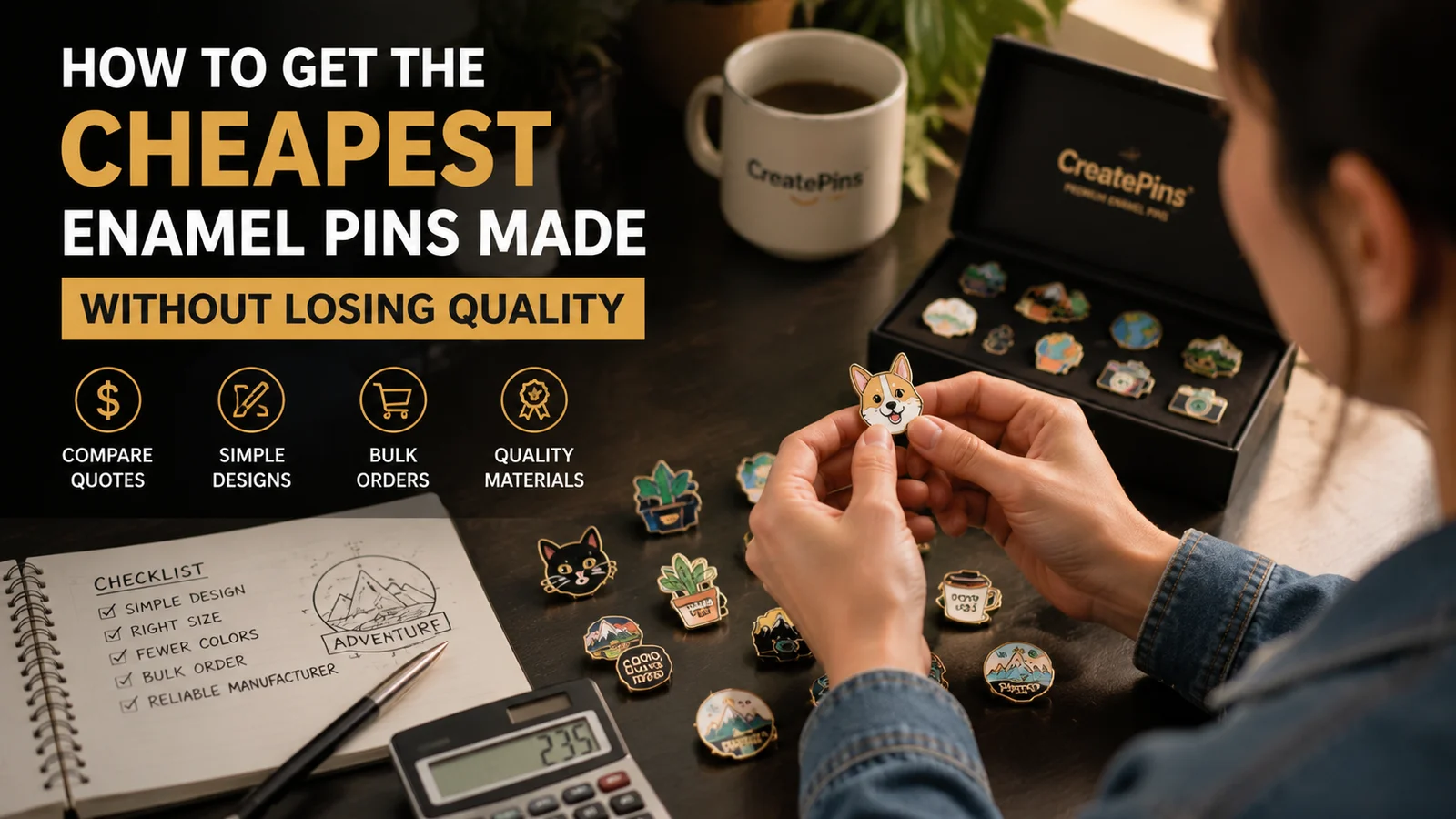
Custom enamel pins are one of the most cost-effective ways to build a brand, create merch, or express creativity. But if you’re not careful, cutting costs in the wrong places can quickly lead to poor-quality pins that hurt your reputation. The key is making smart production decisions — not compromising on quality. This guide breaks down every lever you can pull to reduce cost while still getting professional, premium-looking results. Whether you’re searching for the cheapest enamel pins or simply want affordable enamel pins that stand out, these strategies will help you get there.
1 Choose the Right Pin Type (Hard vs. Soft Enamel)
The type of enamel you choose is one of the most impactful cost decisions you’ll make — and for most projects, there’s a clear budget winner. Soft enamel is the foundation of the cheapest enamel pins on the market, offering vibrant colors and a textured finish that collectors love.
Soft Enamel
- Lower production cost — ideal for budget enamel pins
- Textured surface (raised metal edges)
- Vibrant, punchy colors
- Faster production time
- Highly popular with collectors
Hard Enamel
- Smooth, polished flat surface
- More durable and scratch-resistant
- Longer production process
- Higher per-unit cost
- Jewelry-like premium feel
For most creators and brands, soft enamel is the smart default. It’s the industry standard for a reason — it looks great, holds colors vibrantly, and is significantly cheaper to produce. If you’re looking for affordable enamel pins that still impress, soft enamel delivers. The textured, tactile quality is actually a popular feature among pin collectors.
If you want the smooth look of hard enamel without the price, choose soft enamel + epoxy coating. The dome epoxy layer sits on top of the enamel and mimics the polished, flat surface of hard enamel at a fraction of the cost — one of the best ways to get cheap pins that feel premium.
2 Simplify Your Design
Design complexity is directly proportional to production cost. Every added detail increases mold complexity, production time, and the risk of errors — all of which add to the final price. If you want to know how to save money on pins, start with a clean, streamlined design.
What drives up design cost:
- Too many colors — each color is filled individually by hand, one layer at a time
- Gradients and color blends — extremely difficult to achieve in standard enamel; require screen printing instead
- Tiny text or intricate linework — hard to cut cleanly in the mold and harder to fill without bleed
- Complex die-cut outlines — non-standard shapes require more intricate mold cutting
How to keep your design cost-efficient:
- Limit to 3–6 solid colors (ideally fewer) — this is a core principle for affordable enamel pins
- Use clean, bold outlines with adequate line weight
- Replace gradients with flat color blocking or halftone patterns
- Avoid very small text — consider removing it or placing it on the back stamp instead
- Embrace negative space — it’s free and looks intentional
Minimalist designs consistently perform well in the pin market and cost significantly less to produce — a proven way to get the cheapest enamel pins without sacrificing aesthetics. Bold, simple art translates better to enamel than complex illustrations — and often looks more striking at pin scale.
Most manufacturers price colors in tiers: up to 4–6 colors at a base rate, with incremental fees per additional color. Always ask your supplier exactly where their color pricing breaks occur to maximize savings on budget enamel pins.
3 Order in Bulk — This Is the #1 Cost Saver
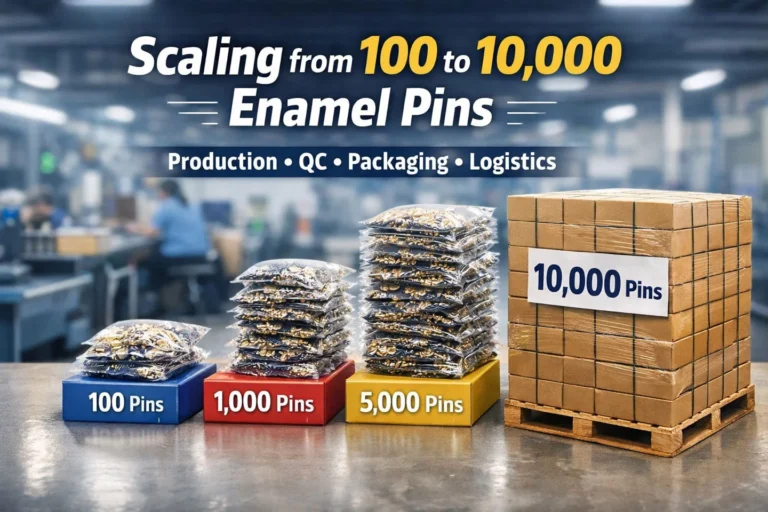
If there’s one single action that will reduce your per-unit pin cost more than anything else, it’s ordering a higher quantity. The mold fee, setup labor, and machine time are all fixed costs — they don’t change whether you order 50 pins or 500. So the more pins you order, the more those fixed costs are diluted. This is the single most effective strategy for how to save money on pins.
Start with 100–300 pcs for testing
Validate your design and gauge demand before committing to a large run. Use pre-orders or Kickstarter to de-risk this phase.
Scale to 500+ pcs for the best margins
Once you’ve validated demand, your reorder at higher quantity will have dramatically lower per-unit costs — and your mold is already paid for. This is how successful brands get affordable enamel pins at scale.
Build a repeatable product line
Designing multiple pins in a series lets you batch orders, share shipping runs, and establish long-term volume with your manufacturer for better rates — a long-term strategy for the cheapest enamel pins possible.
Moving from 100 to 300 pins might only increase your total spend by 30–40%, but your per-pin cost could drop by 40–50%. Run the math before assuming a small order saves money. Bulk ordering is the #1 way to get cheap pins without losing quality.
4 Optimize Size and Shape
Size has a direct relationship with cost — larger pins use more raw material, require bigger molds, and weigh more during shipping. Even small differences in size can add up significantly across a full order. For budget enamel pins, size optimization is critical.
| Pin Size | Cost Level | Best For |
|---|---|---|
| 1 inch | Cheapest | Simple logos, icons, minimal designs |
| 1.25 – 1.5 inch | Low–Mid ⭐ | Sweet spot — most popular, great detail |
| 1.75 – 2 inch | Mid–High | Character art, detailed illustrations |
| 2.5 inch+ | Highest | Statement pieces, limited editions |
For pin shapes, standard die-cut silhouettes (simple outlines of characters, objects, or logos) cost less than highly complex irregular outlines. If your design has elaborate negative space or tiny cut-through sections, your mold will cost more and the manufacturing difficulty increases — important to consider when aiming for affordable enamel pins.
1.25 inches with a custom shape is the best balance between cost, visual impact, and popularity. It’s large enough to appreciate fine detail, small enough to wear comfortably, and keeps mold and material costs manageable — a sweet spot for the cheapest enamel pins that still look great.
5 Choose Cost-Effective Plating
Your metal finish affects both how the pin looks and how much it costs. The good news: the most budget-friendly options also happen to be the most universally stylish. Choosing standard finishes is a key way to save money on pins without compromising aesthetics.
| Finish | Cost | Notes |
|---|---|---|
| Gold (standard) | Standard | Warm, classic, pairs with most colors |
| Silver (standard) | Standard | Clean, modern, versatile |
| Black Nickel | Standard ⭐ | Looks premium, dark and edgy — same price as standard |
| Rose Gold | +Moderate | Trendy but adds to cost |
| Antique / Matte | +Moderate | Vintage feel, extra processing steps |
| Dual Plating | +Higher | Two-tone effect, extra masking and plating pass |
Black nickel is a hidden gem for budget orders. It looks high-end and editorial — far more premium than its price suggests — and costs the same as standard gold or silver plating. It’s particularly effective with dark or bold color palettes, making it a go-to for budget enamel pins that look expensive.
Want a budget-optimized quote tailored to your design? Our team will help you choose the right options for your goals and budget — so you can get affordable enamel pins that deliver.
Get Your Free Custom Quote6 Skip Unnecessary Add-Ons
Special effects and premium upgrades are tempting — but they add cost fast. The rule of thumb is: one standout feature maximum. Stacking multiple effects rarely improves the result and always increases the price. Knowing what to skip is essential for how to save money on pins.
| Add-On | Cost Impact | Worth It? |
|---|---|---|
| Epoxy (dome) coating | Low | ✅ Yes — great value, protects enamel, adds gloss |
| Custom back stamp | Low | ✅ Yes — inexpensive brand reinforcement |
| Translucent enamel | Moderate | ⚠️ Selective — only if it’s central to the design |
| Glitter enamel | Moderate | ⚠️ Selective — use as accent, not everywhere |
| Glow-in-the-dark enamel | Moderate–High | ⚠️ Only if it’s your core concept |
| Screen printing | Moderate | ⚠️ Only for designs with fine detail beyond enamel limits |
| Custom backing cards | Moderate | ✅ Worth it for retail sales; skip for giveaways |
| Premium packaging (boxes) | Higher | ⚠️ Only for high-end limited editions or gifts |
Epoxy coating and custom back stamps offer the best cost-to-value ratio of any add-on. Both are inexpensive and meaningfully improve the perceived quality and brand presence of your pin — smart choices for affordable enamel pins that feel premium.
7 Use Standard Backing Options
The backing hardware is the small clasp on the rear of your pin that secures it to fabric. Most buyers never think about this — but it does affect both cost and user experience. Sticking with standard options is another easy way to save money on pins.
| Backing Type | Cost | Notes |
|---|---|---|
| Rubber clutch | Cheapest ⭐ | Soft, comfortable, easy to use — the most popular choice |
| Butterfly / military clutch | Low | Metal clasp, secure, classic feel |
| Deluxe locking back | Higher | Extra secure, better for heavier pins |
| Magnetic back | Highest | No needle holes in fabric — premium option |
Rubber clutches are the industry standard for a reason — they’re cheap, comfortable for everyday wear, and what most pin buyers expect. Unless your audience specifically values no-hole magnetic attachments, there’s no need to upgrade. This is a simple but effective strategy for the cheapest enamel pins.
8 Combine Shipping and Production Smartly
Shipping is one of the most overlooked costs in pin production. For overseas manufacturing, freight costs can add a meaningful amount to your per-pin price — especially for small orders. With a little planning, you can reduce this significantly and get budget enamel pins delivered affordably.
- Batch your orders — order all designs at once rather than multiple small orders over time
- Ship to one location — split deliveries to multiple addresses multiply your freight costs
- Choose standard shipping — express air freight can cost 3–5× more than standard; plan ahead with adequate lead time
- Ask about sea freight — for larger orders (500+ pins), sea shipping can reduce freight costs dramatically (4–6 week lead time)
- Request DDP (Delivered Duty Paid) — some manufacturers offer this, which covers all import duties and customs clearance upfront, making costs fully predictable
Look for manufacturers that include free mold fees and free shipping as part of bulk order deals. These promotions can offset hundreds of dollars in fixed costs and are often available for orders of 300+ pins — a huge advantage when sourcing affordable enamel pins.
Always ask for your fully landed cost — production + shipping + any import duties/taxes to your country. What looks like a cheap production quote can become expensive once freight and customs are added. This is critical for calculating the true cost of your cheap pins.
9 Work With the Right Manufacturer
Choosing the right supplier can save you more money — and stress — than any single design or production decision. A reliable manufacturer prevents costly mistakes, reorders, and the hidden expenses of poor quality. This is perhaps the most important factor in getting cheap pins that still meet high standards.
What to look for:
- ✅ Free design revisions — at least 2–3 rounds of artwork changes included
- ✅ Transparent pricing — mold fees, shipping, and add-ons quoted upfront, not hidden
- ✅ No hidden mold fees — or clear communication when mold fees apply
- ✅ Quality control checks — every batch should be inspected before it ships
- ✅ Digital proofs and sample photos — you should see exactly what you’re getting before approval
- ✅ Pantone color matching — critical for brand accuracy
- ✅ Responsive communication — clear, fast replies throughout the process
Avoid manufacturers with prices that seem “too cheap” — this often means lower metal quality, poor color accuracy, thinner enamel fills, and minimal quality control. Also avoid suppliers with no proofing process or unclear communication — the risk of a costly mistake is too high. True affordable enamel pins come from reliable partners, not the lowest bidder.
Request samples of their previous work or ask for reference photos of pins they’ve produced for other customers. A good manufacturer will be happy to share these — and this step is essential for anyone serious about how to save money on pins without sacrificing quality.
10 Plan for Long-Term Savings
The most cost-efficient pin makers think beyond a single order. Building a repeatable, scalable strategy from day one will compound your savings over time, ensuring you consistently get affordable enamel pins for every collection.
Test with a small batch
Start with 100–200 pins to validate the design, quality, and market response. Keep your design simple and your options standard to minimize cost at this stage.
Validate demand through pre-orders or sales
Use your test batch to gauge how quickly pins sell. Pre-order campaigns on your store or platforms like Kickstarter can fund your next production run before you spend.
Reorder in bulk for your lowest cost
Your mold is already paid. Reorders are purely production — and at higher quantities, your per-unit price drops significantly. This is where your real margins kick in and you get the cheapest enamel pins per unit.
Build a series or collection
Turn one design into a set of related pins. This reuses your mold design language, allows batch ordering, and gives collectors a reason to buy multiple pins at once — a powerful way to scale affordable enamel pins.
Designing a series of pins with a consistent style and theme is one of the most powerful long-term strategies. It builds brand identity, encourages repeat purchases from collectors, and lets you batch your production runs for maximum volume discounts. This is how top creators consistently get cheap pins that sell.
Cost Breakdown Example: The Smart Budget Setup
Here’s what a well-optimized “cheap but premium-looking” pin order looks like in practice — a proven configuration for affordable enamel pins:
📌 Example Order Configuration
✅ This setup consistently delivers the best balance of visual quality, production cost, and profit margin. It’s the configuration we recommend to most first-time and returning pin creators who want the cheapest enamel pins without compromising on quality.
Get a Budget-Optimized Pin Quote
Tell us about your design and goals. We’ll help you find the right production options to maximize quality within your budget — no hidden fees, no surprises. Get started on your affordable enamel pins today.
Pre-Order Checklist
Before placing your order, run through this checklist to make sure you’re not leaving money on the table — and that you’re set up for the cheapest enamel pins possible:
- Is my design simple and bold, with 6 or fewer solid colors?
- Am I ordering enough quantity to take advantage of volume pricing (100+ pcs minimum, 300+ for best value)?
- Have I chosen soft enamel instead of hard enamel (or soft enamel + epoxy for a smooth finish)?
- Did I select a standard metal finish — gold, silver, or black nickel?
- Is my pin 1.25–1.5 inches for the best size-to-cost balance?
- Have I avoided unnecessary add-ons (keeping to one feature maximum if needed)?
- Did I choose a rubber clutch backing instead of a premium option?
- Did I ask for a fully landed quote including shipping and any applicable import duties?
- Is my manufacturer transparent, responsive, and able to provide quality samples or references?
- Have I finalized my design before approving production to avoid revision or mold change fees?
If you answered yes to all of the above, you’re in an excellent position to get affordable enamel pins that look professional and protect your margins — the cheapest enamel pins with the quality your brand deserves.
Keep It Simple
Bold, clean designs cost less and often look better at pin scale — a core principle for budget enamel pins.
Order More
Volume is the single biggest lever for reducing per-unit cost. It’s how you get cheap pins that sell.
Soft Enamel First
Add epoxy if you want a smooth surface — without the hard enamel price. Ideal for affordable enamel pins.
Limit Add-Ons
One standout feature max. Don’t stack effects that inflate cost — a key strategy for how to save money on pins.
Standard Finishes
Black nickel looks premium and costs the same as gold or silver — perfect for budget enamel pins.
Right Manufacturer
Transparent pricing, quality control, and good communication save money long-term and ensure the cheapest enamel pins done right.
Frequently Asked Questions About Affordable Enamel Pins
Soft enamel pins are the most cost-effective option for the cheapest enamel pins. They have a textured surface with raised metal lines, vibrant colors, and a faster production time than hard enamel. Adding an epoxy coating to soft enamel pins gives them a smooth, hard enamel-like finish at a fraction of the cost — making them the best budget enamel pins for most creators.
Ideally, limit your design to 3–6 solid colors. Each additional color adds to production time and cost since colors are filled by hand one at a time. Avoiding gradients and using flat, solid colors will also reduce complexity and keep your price down — a key strategy for how to save money on pins and create affordable enamel pins.
The sweet spot is 1.25 inches. It’s large enough to show meaningful design detail, small enough to keep material and mold costs manageable, and it’s the most popular size range in the collectible and merch pin market — ideal for affordable enamel pins that still look premium.
Ordering in bulk significantly reduces your per-unit cost because fixed setup costs like the mold fee, labor, and machine time are spread across more units. Moving from 50 pins to 300+ can reduce the per-unit price by 40–60%. Most manufacturers offer their best rates at 500+ units. Run the numbers — a larger order often doesn’t cost much more in total but delivers a dramatically lower per-pin cost. This is the #1 way to get cheap pins without losing quality.
Standard gold, silver, and black nickel plating are all similarly priced and the most budget-friendly options. Black nickel is a particularly good choice — it looks premium and modern while costing the same as standard finishes, making it a top pick for budget enamel pins. Avoid dual plating and antique finishes if you’re watching costs, as these require additional processing steps.
Rubber clutch and butterfly clutch backings are the cheapest and most common options. They are secure, comfortable for everyday wear, and what most pin buyers expect. Avoid deluxe locking backs and magnetic backs if you’re focused on keeping costs low — the premium they add is rarely justified unless your customer base specifically demands it. This is an easy win for how to save money on pins.
Absolutely. The key is making smart production decisions rather than cutting corners. Choose soft enamel, simplify your design, order in bulk, stick to standard finishes and backings, and work with a reputable manufacturer who offers transparent pricing, quality control, and free design revisions. With the right approach, you can create the cheapest enamel pins that still look premium and perform beautifully.
For most orders, a thorough review of the digital proof is sufficient. However, for large orders (500+ pins), high-stakes launches, or complex designs, a physical pre-production sample (PP sample) is worth the added time and small fee. It lets you catch any color or detail issues before the full run — potentially saving you from a costly reorder. This is a wise investment when you’re aiming for the cheapest enamel pins with zero quality surprises.
References & Further Reading
- Get a Free Custom Pin Quote
- How Much Do Enamel Pins Cost to Make in 2026?
- Pricing Custom Enamel Pins for Profit (Cost Breakdown & Calculator)
- Custom Enamel Pin Hidden Costs You Should Know
- No Minimum Order Custom Pins: What You Need to Know
- Hard Enamel vs Soft Enamel Pins: The Ultimate Guide
- How to Choose the Right Enamel Pin Backings — Complete Guide
- The Ultimate Guide to Enamel Pin Add-Ons: Glitter, Glow, Epoxy & More
- How to Save 30% on Your Next Custom Pin Order
- Custom Enamel Pin Order Process Explained