Why Some Enamel Pins Feel Premium? (Others Don’t)
Discover what makes an enamel pin premium — from mold precision and metal finishing to enamel consistency, plating, and packaging. A complete guide to achieving premium enamel pins that collectors and brands love.
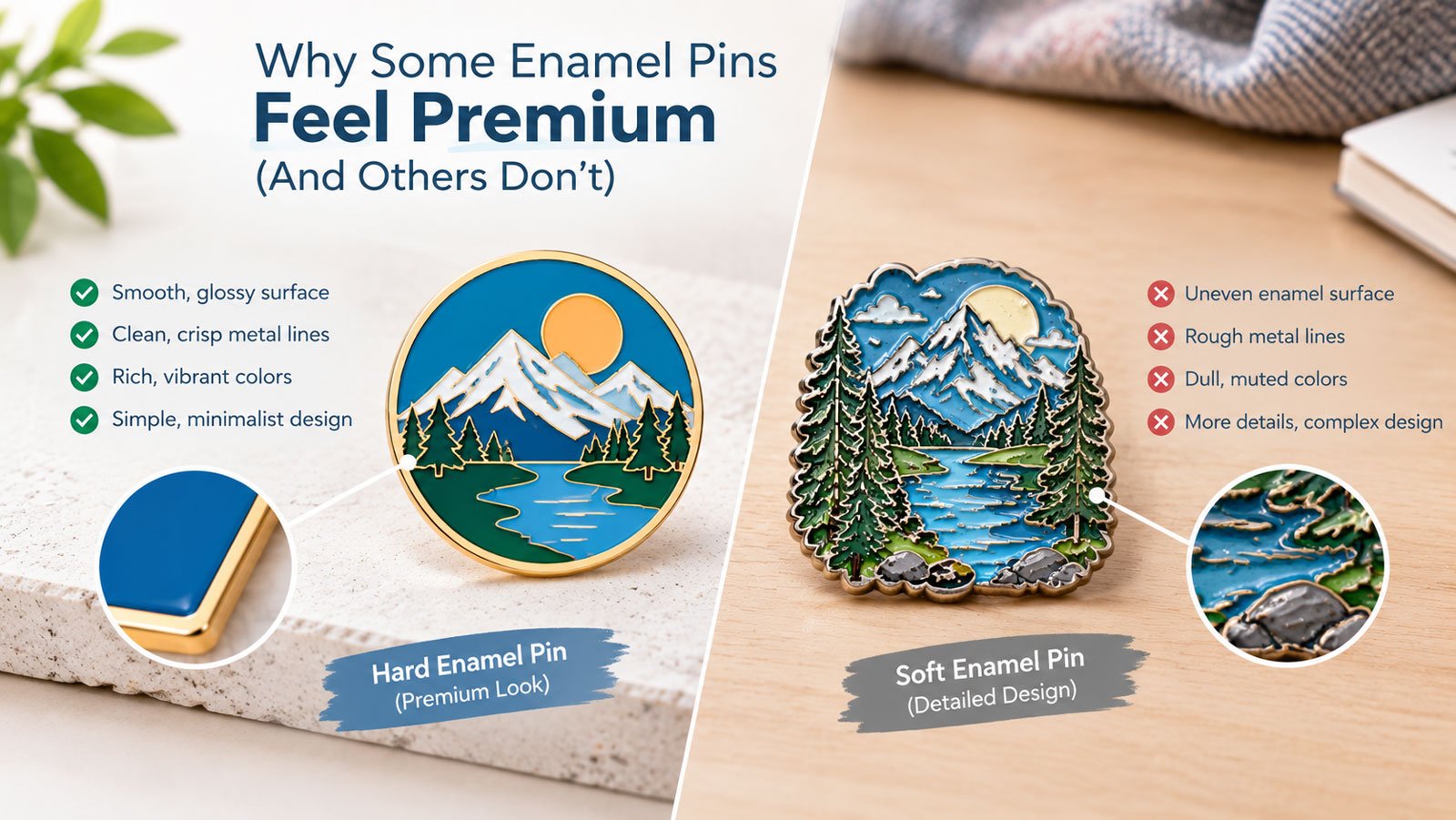
Two enamel pins can look almost identical in a product photo. They may have the same size, similar artwork, the same number of colors, and even the same basic manufacturing process. Yet when you hold them in your hand, one immediately feels premium, while the other feels inexpensive.
Why? The difference is rarely caused by one single feature. A premium enamel pin is the result of many small decisions working together—from the precision of the mold and quality of the metal to the plating, enamel filling, polishing, thickness, backing, and final quality control. Understanding what makes an enamel pin premium is essential for any artist, brand, or collector who values custom enamel pin quality.
This is why choosing a pin manufacturer based only on the lowest quoted price can sometimes produce disappointing results. In this guide, we’ll break down the details that make an enamel pin feel premium and explain what buyers, artists, brands, and collectors should look for before placing an order. We’ll cover everything from enamel pin manufacturing quality to the finishing touches that elevate a pin from ordinary to extraordinary.
Quick insight: A premium enamel pin isn’t defined by a single feature — it’s the sum of consistent mold precision, clean metal lines, flawless plating, even enamel filling, proper weight, and thoughtful packaging. High quality enamel pins are built from the ground up, starting with a well-prepared artwork and ending with rigorous quality control.
1. The Mold Is the Foundation of Premium Enamel Pins
Before enamel is filled, the artwork has to become a physical metal mold. This is one of the most important stages in the entire manufacturing process and a key factor in custom enamel pin quality. The mold determines metal lines, recessed areas, raised areas, shapes, borders, enamel compartments, fine details, and overall proportions. If the mold is inaccurate, later production cannot completely fix the problem.
Imagine a design containing thin outlines, small lettering, tiny gaps, complex curves, and several closely spaced color areas. If those elements are not reproduced accurately in the mold, the finished pin can look muddy or uneven. A high-quality mold should reproduce the artwork with clean, controlled edges. That’s why what makes an enamel pin premium often starts with the mold.
Premium principle: A premium enamel pin starts with a premium mold.
2. Clean Metal Lines Make a Huge Difference
Look closely at the metal borders on an enamel pin. On a high quality enamel pin, the lines tend to look crisp, even, smooth, consistent, and well-defined. On a lower-quality pin, you may notice uneven borders, rough edges, inconsistent line thickness, blurry details, or small imperfections around enamel areas. These differences can be subtle in a photograph but become much more obvious when you hold the pin in your hand.
Metal lines define the structure of the artwork. A clean metal outline makes colors appear more separated and intentional. That visual separation contributes significantly to the perception of quality and is a hallmark of premium enamel pins.
3. The Plating Finish Changes the Entire Appearance
The metal finish is one of the easiest ways to change how custom enamel pin quality is perceived. Common plating options include gold, silver, black nickel, copper, antique finishes, and other specialty plating options. Different finishes create different personalities. Bright gold can create a luxurious or energetic appearance; silver often gives a clean, modern appearance; black nickel can create a darker, contemporary look; and antique finishes can give the pin a vintage or collectible character.
The important point is that plating should match the artwork. A beautiful design can lose its premium enamel pin appearance if the plating color clashes with the color palette. Consistent, high-quality plating is a cornerstone of enamel pin manufacturing quality.
4. Polishing Is More Important Than Many Buyers Realize
After metal production, finishing and polishing help determine how the surface looks and feels. A well-finished pin can have smooth raised metal, consistent shine, clean edges, controlled surface texture, and better visual contrast between metal and enamel. Poor finishing can make even good artwork look inexpensive. You may notice scratches, uneven shine, rough edges, dull areas, or inconsistent surface appearance. This is particularly noticeable on polished gold or silver finishes.
A premium enamel pin does not necessarily need a mirror-like surface; for some designs, a satin or antique finish may actually look better. Premium enamel pins have finishes that are intentional and consistent.
5. Enamel Filling Must Be Clean and Consistent
Enamel is one of the most visible components of an enamel pin. The quality of the fill can dramatically change the appearance. A good enamel fill should look even, smooth, consistent in color, properly contained within the metal borders, and free of obvious bubbles or contamination. Poor enamel filling can create uneven surfaces, color contamination, overflow, gaps, visible defects, and inconsistent color.
These imperfections become especially noticeable when the pin contains large areas of enamel. For high quality enamel pins, the filling process must be carefully controlled to avoid these issues.
6. Soft Enamel and Hard Enamel Feel Different
The choice between soft enamel and hard enamel affects the physical experience of the pin and contributes to what makes an enamel pin premium.
- Soft Enamel: Typically has recessed enamel areas with raised metal lines. This creates a textured surface that many collectors enjoy. Soft enamel is popular for colorful illustrations, logos, character designs, and budget-conscious projects.
- Hard Enamel: Filled and polished so the enamel surface becomes smooth with the metal. The finished surface is smooth, flat, glossy, and refined — often creating a more jewelry-like appearance. Hard enamel is often a strong choice when the goal is a clean, premium finish.
Neither is universally better; the right choice depends on the artwork, budget, and desired appearance. Both can produce premium enamel pins when executed with care.
7. Color Quality Matters More Than You Think
Color is one of the first things people notice. A premium enamel pin should have colors that look consistent, clean, appropriate to the approved artwork, well separated, and visually balanced. However, screen colors and physical enamel colors are not exactly the same. This is why production proofs and color references are important.
A common mistake is designing artwork on a monitor and assuming the physical enamel will automatically look identical. It won’t. Digital artwork uses screen-based color reproduction, while enamel is a physical material. The goal should be controlled and predictable color reproduction. This attention to color is part of custom enamel pin quality.
8. Thickness Affects the Perceived Value
Pick up two pins of the same size. One may feel noticeably more substantial. Thickness is one reason. A thicker pin can provide more weight, greater rigidity, a more substantial feel, and better dimensional presence. However, thickness should be appropriate for pin size, shape, artwork, intended use, and number of posts. The goal is often not maximum thickness but appropriate thickness with solid construction — a mark of enamel pin manufacturing quality.
9. Weight Creates a Surprisingly Strong Psychological Effect
People often associate weight with value. When someone picks up a pin and feels that it has a satisfying amount of weight, the product can immediately feel more substantial — a key trait of premium enamel pins. This is especially relevant for collectible pins, limited editions, brand merchandise, premium artist products, and anniversary pins. However, weight alone does not make a pin premium; a heavy pin with poor finishing will still feel poorly made. Think of weight as one part of the overall experience.
10. The Back of the Pin Matters Too
The front gets most of the attention, but the back of a premium enamel pin should not be ignored. Important details include pin posts, backing attachment, post positioning, backing type, metal finishing, and manufacturer markings where applicable. The posts should be positioned appropriately for the pin’s shape and size; a large or irregularly shaped pin may need more than one post for stability. Backing options — rubber clutches, butterfly clutches, metal clutches, locking backs, or specialty backing systems — should be chosen based on how the customer will use the pin. For a collectible product, the backing can also become part of the overall branding experience.
11. The Edges Should Feel Finished
Run your finger carefully around the edge of a high quality enamel pin. It should feel intentional and controlled. Poorly finished edges may feel sharp, rough, uneven, or inconsistent. Edge quality becomes especially important with custom-cut shapes, large pins, complex silhouettes, die-struck designs, and irregular borders. A premium enamel pin should feel finished from every angle — not only from the front.
12. Tiny Details Need to Be Production-Friendly
One of the biggest mistakes designers make is assuming that every detail that looks good digitally will work on a tiny physical product. It won’t. Small enamel pins have physical limitations. Extremely thin lines can become difficult to reproduce; tiny text can become unreadable; narrow gaps can disappear; small enamel sections may be difficult to fill cleanly. For production-oriented artwork, many manufacturers recommend keeping metal lines around 0.2 mm or greater and enamel areas around 0.3 mm or greater. Premium enamel pins are not about adding more detail but about choosing the right amount of detail for the final size. A simplified design can look far more premium than an overly complicated design that becomes messy after manufacturing.
13. Typography Can Make or Break a Pin
Text is particularly challenging on small enamel pins. A font may look beautiful on a computer screen but become difficult to read after manufacturing. Common problems include letters touching, thin strokes disappearing, tight spacing, tiny counters, too-small text, and decorative fonts losing clarity. For small pins, bold and simple typography is generally safer. If the text is important to the identity of the design, make it large enough to remain readable at the final physical size — a detail that separates premium enamel pins from ordinary ones.
14. The Shape Should Feel Intentional
Premium enamel pins often have a strong silhouette. The outline should complement the artwork rather than simply contain it. Compare artwork placed inside a generic rectangle with a custom-cut silhouette that follows the artwork — the second option can immediately feel more specialized. Custom shapes can also create stronger recognition and are a hallmark of custom enamel pin quality.
15. Raised Metal Can Add Visual Depth
Premium enamel pins often use the metal structure to create dimensional contrast — raised outlines, raised lettering, recessed backgrounds, layered metal sections, or cut-out areas. This can create visual depth without requiring a complicated 3D construction. The key is moderation; too many dimensional elements can make a small pin visually confusing.
16. Special Finishes Can Increase Perceived Value
Once the basic production quality is strong, specialty finishes can make a design more distinctive. Depending on the manufacturing method, possibilities can include glitter enamel, pearl enamel, translucent enamel, glow effects, screen printing, UV printing, specialty plating, cut-out metal, and textured metal. These finishes can be especially effective for limited editions, collector releases, artist collaborations, and premium brand merchandise. But special effects should support the artwork; adding every available effect does not automatically make a pin premium. Used thoughtfully, they elevate enamel pin manufacturing quality.
17. Premium Pins Usually Have Better Quality Control
This is one of the least visible but most important differences. A premium enamel pin isn’t necessarily a pin where every unit is absolutely identical down to microscopic details; instead, the manufacturer should have reasonable quality standards and inspection procedures. Quality control should look for issues such as wrong plating, incorrect colors, missing enamel, excess enamel, scratches, bent posts, surface defects, incorrect dimensions, packaging problems, and misaligned components. For larger production runs, sampling and inspection become particularly important. A production sample gives the customer an opportunity to see the actual physical result before a large quantity is completed — this is a cornerstone of custom enamel pin quality.
18. Packaging Changes the Customer’s First Impression
Imagine receiving a premium enamel pin in a plain plastic bag. Now imagine the same pin arriving with a custom backing card, clean printing, protective packaging, consistent branding, a short product story, a collector number, and a professional presentation. The pin itself may be identical, but the second experience feels more premium. Packaging is part of the product; for artists and brands selling directly to customers, packaging can communicate “this was made carefully.” That perception matters.
19. Backing Cards Can Add Significant Brand Value
A backing card doesn’t have to be complicated. It can include logo, artist name, collection name, website, social media, product number, copyright information, short story, care instructions, or a QR code. A well-designed card turns the pin into a complete merchandise package. For collectible series, the card can also establish a consistent visual identity across the entire collection — an aspect that contributes to what makes an enamel pin premium.
20. Consistency Is One of the Biggest Signs of Quality
Consider a collection of five pins. If one has different plating, different border thickness, different backing style, different card design, or different color treatment, the collection can feel inconsistent. Premium enamel pins collections usually have a clear system: same card size, same branding, coordinated colors, and consistent numbering. This creates the feeling of a professionally managed product line.
21. Why Cheap Pins Sometimes Look Cheap
It’s useful to understand what happens when production is optimized almost entirely around price. A low-cost pin may involve compromises in mold precision, metal thickness, plating, polishing, enamel consistency, quality control, packaging, backing components, and production tolerances. None of these compromises is automatically unacceptable; for promotional campaigns, giveaways, or very large quantities, cost efficiency may be more important than premium finishing. The problem occurs when a customer expects a collector-quality product but chooses a specification designed primarily around the lowest unit price. That’s why knowing what makes an enamel pin premium helps you make informed choices.
22. Premium Does Not Mean the Most Expensive
A premium enamel pin does not need to have the thickest possible metal, the most expensive plating, the largest size, the most complicated artwork, or the most specialty effects. Premium quality is about balance. For example, a simple 1.25-inch soft enamel pin with clean lines, excellent plating, consistent enamel, and professional packaging can feel more premium than a 2-inch pin overloaded with effects. The goal is to make every production decision serve the design. That is the essence of custom enamel pin quality.
23. How to Make Your Pins Feel More Premium
If you’re developing a new pin collection, start with these steps:
Step 1: Simplify the Artwork
Remove details that don’t contribute to recognition. Ask: “If I remove this detail, does the design become weaker?” If not, consider removing it.
Step 2: Choose the Right Finish
Don’t automatically choose gold or silver. Consider artwork colors, brand identity, target audience, collection theme, and desired mood.
Step 3: Choose Soft or Hard Enamel Intentionally
Choose soft enamel when you want visible texture, strong color separation, and a classic pin appearance. Consider hard enamel when you want smooth surfaces, a polished appearance, and a more jewelry-like finish.
Step 4: Get the Size Right
Don’t make the pin smaller than the artwork can realistically support. If the design contains small lettering or detailed illustration, increasing the size may dramatically improve the final result.
Step 5: Review the Physical Proof
Do not judge everything from the computer screen. Look at the actual sample whenever possible. Check color, metal finish, detail, size, thickness, backing, and overall feel.
Step 6: Think About the Entire Product
Ask yourself: “What will the customer see when the package arrives?” The experience should include pin + backing + packaging + presentation, not just the pin.
24. Premium Pin Checklist
Before approving production, use this checklist to ensure you’re getting premium enamel pins:
Artwork
- Strong silhouette
- Appropriate level of detail
- Readable text
- Production-friendly lines
- Sufficient spacing
- Balanced colors
Metal
- Appropriate plating
- Clean borders
- Smooth finishing
- No obvious scratches
- Suitable thickness
Enamel
- Consistent color
- Clean fills
- No obvious contamination
- Appropriate enamel type
- Smooth or intentionally textured surface
Construction
- Correct post placement
- Secure backing
- Appropriate number of posts
- Finished edges
Presentation
- Professional backing card
- Consistent branding
- Protective packaging
- Correct product information
Quality Control
- Physical proof approved
- Production specifications confirmed
- Finished products inspected
- Packaging checked
The Premium Pin Formula
If you want a simple way to think about custom enamel pin quality, use this formula:
Premium Pin = Design + Precision + Materials + Finishing + QC + Presentation
If one component is weak, the entire product can feel less premium. For example: great artwork + poor finishing = disappointing pin; excellent metal + poor artwork = technically good but visually weak; great pin + poor packaging = less impressive customer experience. The strongest products combine all of these elements.
Building High Quality Enamel Pins
A premium enamel pin is rarely the result of one expensive feature. It is usually the result of dozens of small decisions being made correctly. The mold needs to reproduce the artwork accurately. The metal lines need to be clean. The plating needs to complement the design. The enamel needs to be filled consistently. The surface needs to be finished properly. The thickness and weight should feel appropriate. The backing should be secure. The edges should feel finished. And the packaging should communicate the same level of care as the product itself.
Most importantly, premium enamel pins start before production. Good artwork preparation, realistic production specifications, clear communication with your manufacturer, physical proof approval, and quality control can prevent many problems before they become expensive mistakes. If you’re creating pins for an artist shop, clothing brand, fandom collection, Kickstarter campaign, or corporate merchandise program, don’t simply ask: “How much does this pin cost?” Also ask: “What specifications will make this pin feel worth keeping?” That question can lead to a much better product.
Frequently Asked Questions About Premium Enamel Pins
What makes an enamel pin look expensive?
Clean metal lines, consistent enamel, appropriate plating, good polishing, strong construction, suitable thickness, and professional packaging can all contribute to a premium appearance. Ultimately, what makes an enamel pin premiumis the sum of these factors executed with care.
Does thicker metal make an enamel pin better?
Not automatically. Appropriate thickness is more important than maximum thickness. The ideal specification depends on the pin’s size, shape, artwork, and intended use. High quality enamel pins strike a balance between heft and practicality.
Is hard enamel more premium than soft enamel?
Hard enamel often has a smoother and more polished appearance, which some buyers associate with premium quality. However, high-quality soft enamel can also look excellent and may be the better choice for certain designs. Both can produce premium enamel pins when manufactured well.
Why do some enamel pins have rough edges?
Rough edges can result from issues during metal production, cutting, polishing, or finishing. Proper manufacturing and quality control can help minimize these problems — a key aspect of enamel pin manufacturing quality.
Does plating affect the quality of an enamel pin?
Yes. Plating affects the appearance and overall finish of the exposed metal. The plating should be consistent and appropriate for the design. Inconsistent or poor plating is a red flag for custom enamel pin quality.
Why is the mold so important?
The mold determines the physical structure of the pin, including metal borders, recessed areas, raised areas, and enamel compartments. A poorly executed mold can limit the quality of the finished product — it’s the foundation of premium enamel pins.
Can small details make a pin look less premium?
Yes. Details that are too small to reproduce reliably can become muddy, disappear, or create inconsistent enamel areas. Simplifying artwork for the final physical size often produces a cleaner result and a more premium enamel pin.
How important is packaging?
Very important for retail and collectible products. Professional backing cards and packaging can significantly improve the customer’s first impression and make the product feel more complete — an often-overlooked element of what makes an enamel pin premium.
How can I make a low-cost pin feel premium?
Focus on the elements customers notice most: clean artwork, strong silhouette, appropriate size, consistent enamel, clean plating, good finishing, secure backing, and professional presentation. You don’t necessarily need expensive specialty effects to achieve high quality enamel pins.
What should I check before approving a pin order?
Review the physical proof for size, color, plating, enamel fill, line quality, thickness, post placement, backing, and overall finish. Confirm that the physical sample matches the approved artwork and specifications before moving forward with full production. This is essential for ensuring custom enamel pin quality.
Ready to Create Premium Enamel Pins?
Whether you’re launching a new collection or refining an existing design, we can help you achieve the level of quality that collectors and brands expect. Let’s discuss your artwork, materials, and finishing options.