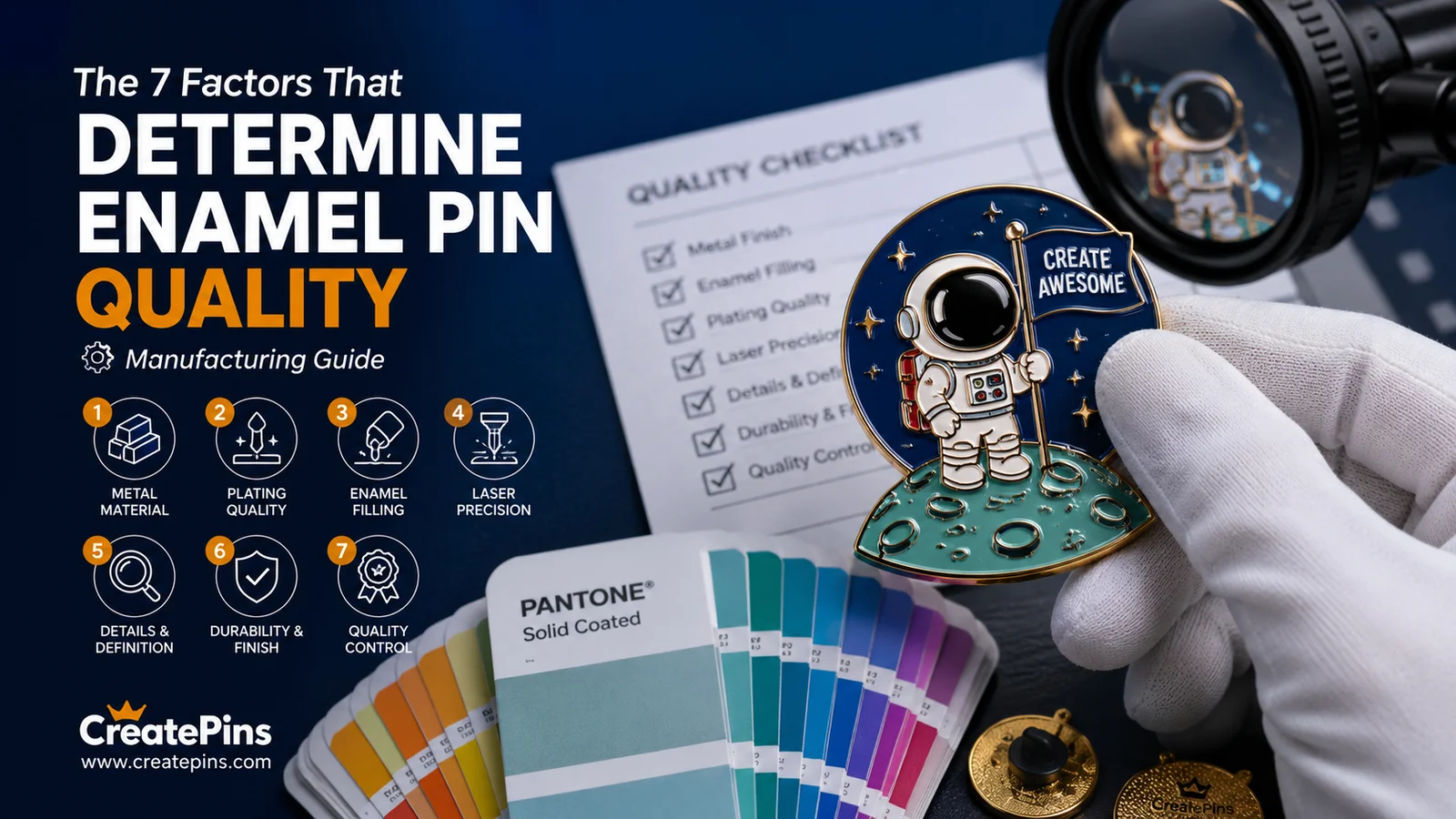
The 7 Factors That Determine Enamel Pin Quality – Manufacturing Guide
A deep look into the pin manufacturing factors that separate premium enamel pin quality from low‑quality ones — metal materials, mold precision, enamel filling, pin plating quality, and quality control
Why Enamel Pin Quality Varies Between Custom Pins
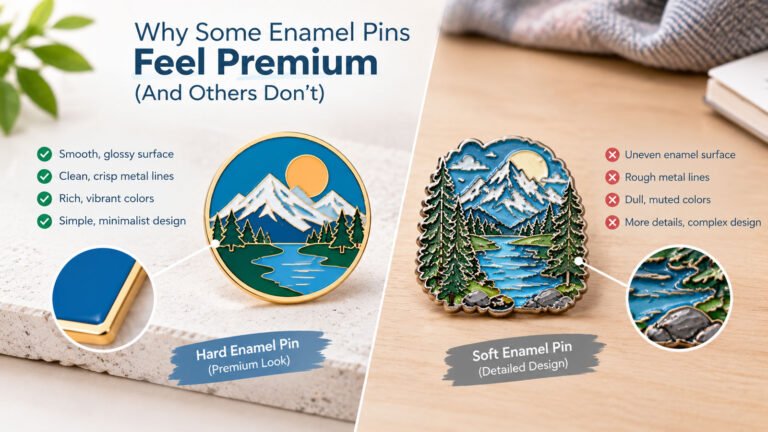
At first glance, many custom enamel pins look similar. Two pins may share the same design, size, and colors — but once you hold them in your hand, the difference in enamel pin quality can be immediately obvious. One feels polished, vibrant, and solid. The other has rough edges, uneven color fills, or dull pin plating quality that already looks tired.
This variation isn’t accidental. It’s the direct result of pin manufacturing decisions made at every stage of production — from the metal used as a base, to how carefully the enamel is applied, to whether a factory’s quality inspectors reject pins that fall below custom pins quality standards or ship them anyway.
🔍 Understanding these quality factors doesn’t just help you evaluate finished pins — it helps you make smarter decisions when choosing a pin manufacturing partner, briefing a design, and reviewing proofs before production begins.
The 7 Factors That Determine Pin Quality
Metal Material — The Foundation of Every Pin
Every enamel pin begins with a metal base. The choice of material affects how well the design stamps, how cleanly it can be plated, and how durable the finished pin is over time. Not all metals perform equally across these dimensions — and the metal you choose directly impacts both enamel pin quality and cost.
Mold Precision — The Foundation of Every Design
The mold (die) is what stamps your design into the metal base. If the mold lacks precision, nothing that happens in later production stages can fully compensate — you cannot polish away imprecise lines or fill poorly‑defined enamel areas with beautiful color and make them look clean. Mold quality is a non‑negotiable element of enamel pin quality.
A high‑quality mold produces:
- Sharp, consistent metal outlines that match the approved digital proof
- Uniform depth in all enamel recesses — essential for even color fill
- Clean edges with no burrs or distortion around the pin’s perimeter
- Crisp separation between adjacent color zones without bleeding risk
Mold quality is invisible in a quote — it only reveals itself in the finished product. This is one of the strongest reasons to request a pre‑production sample before committing to a full run.
Enamel Filling — More Skill Than It Appears
Color filling is one of the most skill‑dependent stages of pin manufacturing. While it may look like simply pouring paint into recessed areas, experienced artisans carefully manage multiple variables that determine the final appearance of every color zone. This step makes or breaks enamel pin quality.
Skilled enamel filling controls:
- Precise enamel volume — underfill leaves visible metal gaps; overfill causes bleeding
- How colors settle and level during the baking process
- Preventing enamel from crossing metal border lines into adjacent color zones
- Ensuring recessed areas are fully and evenly filled with no voids or thin spots
Enamel areas under 0.3 mm wide are extremely difficult to fill cleanly and consistently, even for skilled artisans. This is why minimum enamel fill area specifications exist — they’re not arbitrary rules, they’re the physical reality of the filling process.
Pin Plating Quality — The Visual Character of the Metal
After the metal base is stamped and prepared, pins are electroplated with the chosen finish — gold, silver, black nickel, antique copper, or others. Pin plating quality determines the reflectivity, color character, and long‑term durability of the metal surfaces you see between and around the enamel fills. It’s a major contributor to overall enamel pin quality.
Quality plating delivers:
- Even, consistent color across the entire pin surface — no lighter or darker patches
- Smooth, polished finish with no rough or grainy texture on metal lines
- Strong adhesion to the base metal that won’t peel, flake, or discolor over time
- Consistent appearance across all pins in a batch — not just the samples shown for approval
🔍 Want to see enamel pin quality before you commit? Request a pre‑production sample with your CreatePins order — our team performs multi‑stage inspections at every pin manufacturing phase to eliminate pin defects.
Get a Free Quote & Design ReviewThickness — A Supporting Factor, Not the Main One
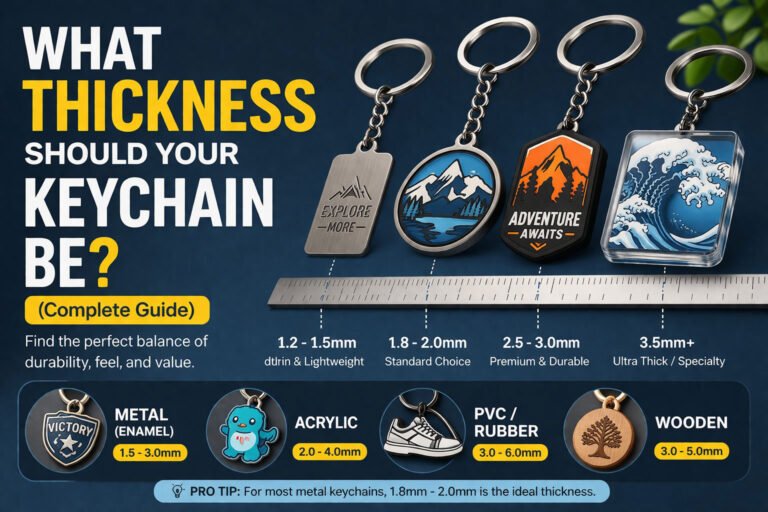
A common misconception among buyers is that a heavier or thicker pin automatically means higher custom pins quality. Thickness does contribute to the perceived weight and substance of a pin — but it is far from the most important quality indicator.
Most standard enamel pins fall between 1.2 mm and 2.0 mm in metal thickness, which is already durable for everyday wear over many years. A 1.5 mm pin with excellent pin plating quality, clean enamel fill, and precise mold work will feel significantly more premium than a 2.0 mm pin with rough edges and inconsistent color.
Quality Control — Where Standards Become Consistent Results
Even a factory with excellent materials, precision molds, skilled artisans, and quality plating equipment will produce inconsistent results if it doesn’t have rigorous, systematic quality control processes. QC is what converts good pin manufacturing capability into reliable delivery of consistent custom pins quality at scale.
Professional manufacturers inspect at multiple stages — not just a final glance before packing:
After Mold Creation
Verify line sharpness, shape accuracy, and depth consistency before stamping begins
After Plating
Check pin plating quality, color evenness, surface smoothness, and adhesion
After Enamel Fill
Inspect for underfill, overflow, particle contamination, and color consistency
Pre‑Shipment
Full inspection of finished pins; defective pins rejected or remade before packaging
Design Preparation — Quality Starts Before Production
Quality isn’t solely the factory’s responsibility. The design file you submit determines what’s possible in pin manufacturing. Even the best manufacturer cannot cleanly produce a pin from artwork with lines thinner than 0.3 mm, color zones too narrow to fill, or text too small to stamp legibly.
Design elements that enable high‑quality production:
- Clear metal die lines that fully separate all color zones — no gaps that allow enamel to bleed across colors
- Die lines at least 0.3 mm thick (0.4 mm recommended for hard enamel)
- Enamel fill areas at least 0.3 mm wide — 0.5 mm for reliable results
- Text at minimum 5 pt using a clean sans‑serif font, converted to outlines
- Colors specified as Pantone Solid Coated (PMS) numbers — not RGB, HEX, or CMYK
- Vector artwork (AI, EPS, SVG, or PDF) at actual final size
Every CreatePins order includes a free design review that checks your file against these specifications before pin manufacturing begins. Issues that would affect enamel pin quality are flagged and resolved before the mold is created — when corrections are still inexpensive.
How to Ensure High-Quality Custom Pins
Understanding the factors above gives you the tools to actively protect your investment. Here’s the practical checklist for getting consistently high custom pins quality:
✅ Your Quality Assurance Checklist
- Choose a pin manufacturing partner with documented, multi‑stage quality control processes — ask how pin defects are handled
- Ask about the base metal used for your pin type and confirm it matches your design’s complexity level
- Prepare your artwork file correctly: vector format, Pantone colors, 0.3 mm+ die lines, text converted to outlines
- Review your digital proof carefully at 100% final size — check every detail before approving production
- Request pre‑production photos showing actual plated and filled pins to verify pin plating quality before the full order ships
- For orders of 500+ units or designs with high retail value, request a physical pre‑production sample
- Compare the shipped product to the approved digital proof systematically on receipt — document any variance in enamel pin quality
- Know the manufacturer’s policy for handling quality issues — before you order, not after
At CreatePins, we focus on precision molds, controlled plating, expert enamel filling, and thorough multi‑stage inspection processes. Every order includes a free design review and a digital proof for approval before production begins. Our quality process treats every pin as a small piece of craftsmanship — not just a promotional product.
Ready for Pins You Can Be Proud Of?
Get a free quote and artwork review from CreatePins — our team checks every design for manufacturability and enamel pin quality before a single mold is cut.
Get Your Free Quote →Free artwork review · No obligation · Multi‑stage quality inspections
Frequently Asked Questions
Common questions about custom enamel pin quality and manufacturing standards.
Custom enamel pins vary in enamel pin quality due to differences in base metal material, mold precision, enamel filling technique, pin plating quality, and the strictness of quality control. Two pins with identical designs can look entirely different depending on these factors — and the differences are often most apparent in the fine lines, color evenness, and metal finish rather than the overall shape.
Not necessarily. Thickness contributes to weight and perceived substance, but overall enamel pin quality depends far more on base metal material, plating finish, mold precision, and enamel application. Most standard enamel pins fall between 1.2 mm and 2.0 mm thick — already durable for everyday use. A thinner pin with excellent finishing can feel more premium than a thick pin with poor quality control.
Brass is preferred for the highest custom pins quality — it stamps fine details cleanly, polishes smoothly, and accepts plating with exceptional adhesion. Zinc alloy is a solid alternative for complex 3D shapes and larger designs at lower cost, provided the plating preparation is thorough. Iron or steel are used for budget applications but require additional corrosion protection steps.
Choose a pin manufacturing partner with documented, multi‑stage quality control across mold creation, plating, enamel filling, and pre‑shipment inspection. Prepare your artwork correctly with vector files and Pantone colors. Review digital proofs carefully before approval. Request pre‑production photos before the full order ships. For high‑value orders, request a physical sample to verify enamel pin quality firsthand.
Common pin defects include uneven or incomplete enamel filling, visible metal gaps within color areas, rough or jagged pin edges, inconsistent pin plating quality across the surface, scratches or handling marks from insufficient QC, dust or particles trapped inside enamel, and discoloration or peeling of the plating layer over time — particularly with dyed black and painted metal finishes.
Discover Raoin.com — your one-stop partner for custom products like tote bags, lanyards, patches, and more.