Ethical Enamel Pins Manufacturing: What It Really Means (and Why It Matters)
Enamel pins may be small, but the impact of how they’re made can be enormous. A complete guide to fair labor, safe materials, environmental responsibility, and how to choose a manufacturer you can trust.
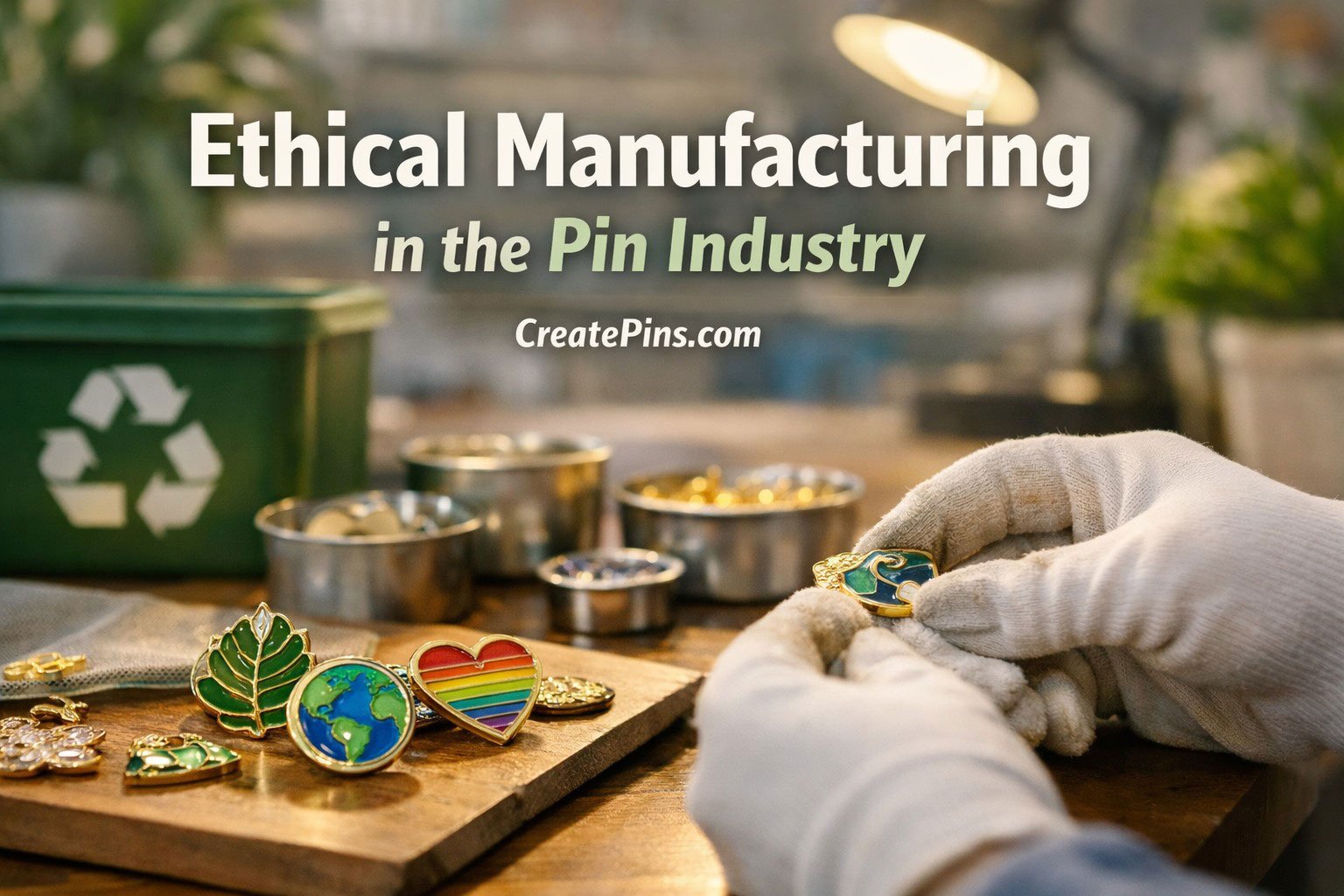
As demand for custom enamel pins grows — especially among artists, indie brands, and socially conscious businesses — so does the responsibility to ensure those pins are produced ethically. Unfortunately, not all manufacturers follow the same standards when it comes to labor conditions, material safety, environmental responsibility, and supply chain transparency.
At CreatePins, ethical manufacturing isn’t a marketing buzzword — it’s a core operational principle. This guide breaks down what ethical manufacturing in the pin industry actually means, why it matters for creators and buyers, and how to make responsible choices when producing custom pins.
For context on the full production process these ethical standards apply to, see: How Long Does It Take to Make Custom Enamel Pins? Full Timeline Guide
What Is Ethical Manufacturing in the Pin Industry?
Ethical manufacturing means producing enamel pins in a way that respects people, safety, and the environment — not just profit margins. It looks at the entire lifecycle of a pin, from raw material sourcing through to final delivery, and considers the long-term impact of production decisions at every stage.
In the enamel pin industry, ethical production typically includes:
- Fair wages and humane, safe working conditions at every production stage
- Safe, non-toxic materials that meet international regulatory standards
- Responsible sourcing of metals, enamel pigments, and plating chemicals
- Environmental waste reduction and pollution control throughout manufacturing
- Transparent, honest communication with clients about processes, materials, and limitations
- Durable product quality that discourages disposable merchandise culture
- Responsible end-of-life considerations for packaging and product materials
Common Ethical Issues in Enamel Pin Production
Before understanding best practices, it’s essential to know where and how ethical failures occur. These are the most prevalent problems in unregulated pin manufacturing:
⚠️ Unsafe Working Conditions
- Poor ventilation during enamel firing and chemical processes
- No protective gear — masks, gloves, eye protection absent
- Excessive working hours without proper rest breaks
- Insufficient safety training for machinery and chemicals
- No documented emergency procedures or incident reporting
⚠️ Unfair Labor Practices
- Below-minimum wages that don’t support basic living standards
- Forced overtime without fair compensation
- No labor protections, formal contracts, or worker benefits
- Employment of underage workers in unregulated facilities
- No grievance mechanisms for worker complaints
⚠️ Toxic Materials
- Lead-based enamels hazardous to workers and end-users
- Hazardous plating chemicals including cyanide in electroplating
- Unregulated metal alloys with high nickel content causing skin reactions
- Solvents and cleaners not properly contained or disposed of
- No material safety data sheets available to buyers
⚠️ Environmental Neglect
- Untreated wastewater discharged from plating processes
- No air pollution controls on factory emissions and oven fumes
- Scrap metal and enamel waste sent directly to landfill
- Excessive non-recyclable packaging materials used
- No measurement or accountability for environmental impact
Ethical vs Non-Ethical Manufacturing: Side-by-Side Comparison
Understanding the concrete differences between ethical and non-ethical production helps buyers ask the right questions and evaluate manufacturer responses critically:
| Aspect | Ethical Manufacturing | Non-Ethical Manufacturing |
|---|---|---|
| Labor Conditions | Ethical Fair wages, safe workplaces, reasonable hours, formal contracts | Risk Low wages, unsafe conditions, excessive overtime, informal labor |
| Materials | Ethical Lead-free, non-toxic enamel compliant with REACH and RoHS | Risk Potentially toxic or unregulated materials, no compliance data |
| Environmental Impact | Ethical Waste reduction, wastewater treatment, recycling programs | Risk High pollution, untreated chemical waste, excessive scrap |
| Transparency | Ethical Clear production process, honest timelines, open supply chain | Risk Vague answers, hidden processes, unknown subcontractors |
| Product Quality | Ethical Durable pins designed for long-term use and wearability | Risk Short lifespan, frequent defects, poor plating adhesion |
| Brand Reputation | Ethical Builds audience trust and long-term customer loyalty | Risk Vulnerable to exposés, social media backlash, and boycotts |
| Legal Risk | Ethical Compliant products rarely face customs or liability issues | Risk Customs seizures, import bans, consumer safety liability |
| Long-Term Cost | Ethical Durable pins generate fewer reorders and complaints | Risk Hidden costs from quality failures, replacements, and disputes |
For more on production quality standards that ethical manufacturing upholds: Custom Enamel Pin Production Expectations & Tolerances and Common Enamel Pin Defects and How We Prevent Them
The Four Pillars of Ethical Enamel Pins Manufacturing
Ethical manufacturing in the pin industry rests on four interconnected principles. No single one is sufficient on its own — genuine ethics requires all four working together:
Fair Labor & Worker Welfare
Ethical pin manufacturers ensure fair pay, reasonable work hours, and safe factory environments as a baseline — not an exception. This includes regular safety training, appropriate protective equipment, workers’ right to refuse unsafe tasks, and respect for worker dignity at every level.
Practical markers of this pillar include documented wage structures above local minimum wage, formal employment contracts, independent worker welfare audits, and functioning grievance channels.
Safe, Non-Toxic Materials
Ethical pins use lead-free and nickel-safe enamels, durable metal bases, and plating processes that meet international safety regulations including REACH (EU) and RoHS (EU/UK). This protects workers during production and ensures pins are safe for customers throughout their lifespan.
For buyers with customers who have metal sensitivities or who sell children’s products, material compliance isn’t optional — it’s a liability requirement. Always request material safety data sheets.
Environmental Responsibility
Sustainable pin production means recycling excess metal and enamel waste, treating wastewater from electroplating processes before discharge, minimizing unnecessary packaging, and reducing overproduction through accurate forecasting.
Ethical factories take a proactive approach to environmental stewardship — going beyond what local regulations minimally require.
Transparent Communication
Secrecy is one of the clearest red flags in manufacturing. Ethical manufacturers clearly explain their materials and process, provide realistic timelines and pricing, identify their production partners, and don’t obscure how or where pins are made.
This transparency extends to acknowledging limitations and risks honestly — not just promising whatever the customer wants to hear.
Ready to produce custom pins that you can stand behind — ethically and creatively?
Get a Free Ethical Pin QuoteHow CreatePins Supports Ethical Manufacturing
Ethics at CreatePins are operational commitments, not marketing language. Here’s specifically how these principles translate into practice:
- Carefully selected manufacturing partners — We work only with factories that meet rigorous standards for fair labor practices, safe working conditions, and documented quality control. Partners are reviewed regularly, not just at onboarding.
- Lead-free, non-toxic materials — All pins are produced using lead-free enamels and safe plating options compliant with international safety standards. Material safety data sheets are available upon request for any product.
- Waste reduction in production — Our manufacturing partners actively recycle metal offcuts from stamping, control chemical waste through certified treatment systems, and work to reduce overproduction at every stage.
- Designed for longevity — Ethical manufacturing means creating pins that last. Proper plating thickness, durable enamel fills, and secure clasps reduce failure rates, reorders, and the waste of disposable merchandise culture.
- Transparent production process — We explain every step of how your pins are made, what materials are used, what timelines are realistic, and what limitations exist. No vague answers.
- Pre-shipment quality inspection — Our quality review process identifies defects before pins ship, reducing waste from failed orders and protecting your investment.
- Carbon-neutral shipping options — We offer carbon-neutral shipping options to minimize the environmental impact of getting your pins to their destination worldwide.
Why Ethical Manufacturing Matters to Creators
Choosing an ethical pin manufacturer isn’t just about values alignment — it’s also strategically smart business with tangible, measurable benefits.
It Builds Real Trust With Your Audience
Modern customers — especially in artist, gaming, activism, and collector communities — actively care about how products are made. A 2023 consumer study found that 74% of buyers are willing to pay more for products from ethically transparent companies. Ethical sourcing strengthens brand credibility and converts single purchases into ongoing loyalty.
For creator-focused brand strategy: Start Your Custom Enamel Pin Business Today and How to Build a Loyal Fan Base With Enamel Pins
It Reduces Significant Business Risk
Beyond values, ethical manufacturing protects your business from concrete operational risks that can be expensive to navigate after the fact:
- Toxic materials triggering allergic reactions or health complaints from customers
- Customs seizures due to non-compliant materials (particularly lead content)
- Reputational damage from supply chain exposés or social media investigations
- Legal liability from unsafe products, particularly when sold to children
- Platform bans or listing removals on Etsy, Amazon, or similar marketplaces due to safety violations
See also: Customs Clearance Guide for Importing Enamel Pins from China
How to Identify an Ethical Pin Manufacturer
Before placing any order, these questions help you evaluate a manufacturer’s actual practices rather than their marketing claims. Ethical manufacturers answer these questions specifically and confidently — not vaguely or evasively:
- Where exactly are your pins manufactured? Ask for specific factory locations, not just countries.
- Are your enamels lead-free and compliant with REACH and RoHS? Request the specific certifications or material data sheets.
- How do you handle wastewater, chemical waste, and scrap material? Ethical manufacturers have documented processes.
- Can you describe your labor standards and worker compensation structure? Look for specifics about wage levels, hours, and safety practices.
- Have your facilities been audited by any independent body? Third-party audits (SMETA, BSCI, or similar) are far more reliable.
- Can you provide material safety data sheets for the materials used in my pins? This should be a straightforward yes.
- What is your defect and quality control process? How defects are managed tells you a great deal about a manufacturer’s standards and transparency.
Certifications to Look For
While no single “ethical pin” certification exists, a combination of the following standards indicates a manufacturer that takes compliance seriously across labor, environment, and materials:
Frequently Asked Questions
Enamel pins can be ethically made when produced using fair labor practices, safe non-toxic materials, and environmentally responsible manufacturing processes. Not all manufacturers follow the same standards — choosing a verified ethical manufacturer is key to ensuring your pins are produced responsibly.
An ethical pin manufacturer prioritizes fair wages and safe working conditions, lead-free and non-toxic enamels, responsible waste management and chemical treatment, transparent communication about materials and processes, and durable product quality that discourages disposable culture.
Ethical pins may have a slightly higher production cost (typically 10–25%) reflecting fair wages, safety equipment, and environmental controls. However, the long-term value through product durability, brand reputation, and customer loyalty far outweighs the minimal upfront difference. Fewer quality issues and reorders also reduce total lifetime cost.
Ask for specific certifications such as SMETA, BSCI, ISO 14001, or SA8000. Request factory audit reports, ask for references from other clients, and look for detailed transparency in their communication about materials and production locations. Ethical manufacturers are typically proud to share this information and respond specifically, not vaguely.
Yes. CreatePins works with carefully selected manufacturing partners that follow fair labor standards, use lead-free enamels compliant with international safety regulations (REACH and RoHS), reduce waste through recycling and treatment systems, and maintain safe working environments. Material safety data sheets are available upon request.
Ethical manufacturing protects workers and the environment, protects your customers from toxic materials, reduces business risks from customs seizures and reputational damage, and builds trust with an increasingly conscious consumer base. For artists and indie brands whose identity is built on values, ethical production ensures your merchandise aligns with what you stand for.
Key certifications to look for include ISO 14001 (environmental management), ISO 9001 (quality management), SA8000 (social accountability), SMETA (Sedex Members Ethical Trade Audit), and BSCI (Business Social Compliance Initiative). For material safety, check for compliance with REACH (EU chemical regulation) and RoHS (restriction of hazardous substances). No single ‘ethical pin’ certification exists, so look for a combination of these standards.
Low-cost pins from unregulated manufacturers may contain lead-based enamels, hazardous plating chemicals including cyanide compounds used in electroplating, unregulated metal alloys with high nickel content that cause skin reactions, and solvents that are improperly handled or disposed. Always request material safety information and compliance certificates before ordering, especially for pins intended for children or extended skin contact.
🌱 Build With Integrity
Create Pins the Ethical Way
Join thousands of creators who are building their brands responsibly. Tell us about your project — we’ll show you exactly how our ethical manufacturing process works, what materials we use, and what realistic timelines and costs look like.
Start Your Ethical Pin Project No commitment · Lead-free materials · Transparent productionThe enamel pin industry is evolving rapidly. Creators are more informed, customers are more conscious, and ethical manufacturing is no longer optional — it’s expected by forward-thinking businesses and the communities they serve.
Great pins should never come at the expense of people or the planet. By choosing ethical production, creators help shape a more responsible, sustainable future for the entire pin community — while building brands that stand for something genuinely meaningful. The choices you make in manufacturing ripple out to workers, communities, and the environment. Each ethically produced pin is a small but deliberate statement about the world you want to create.
Further reading: Custom Enamel Pin Production Timeline Explained · No Minimum Order Custom Pins: What You Need to Know Before You Buy · How to Order Enamel Pins: Step-by-Step · Enamel Pin Design Guide 2026 · Want More Than Just Custom Pins?