Epoxy Dome Pins: Complete Guide to Finishing, Design & When to Use It (2026)
Everything beginners and pin creators need to know about epoxy dome finishing — what it is, how it works, its limits, and how to design for it.
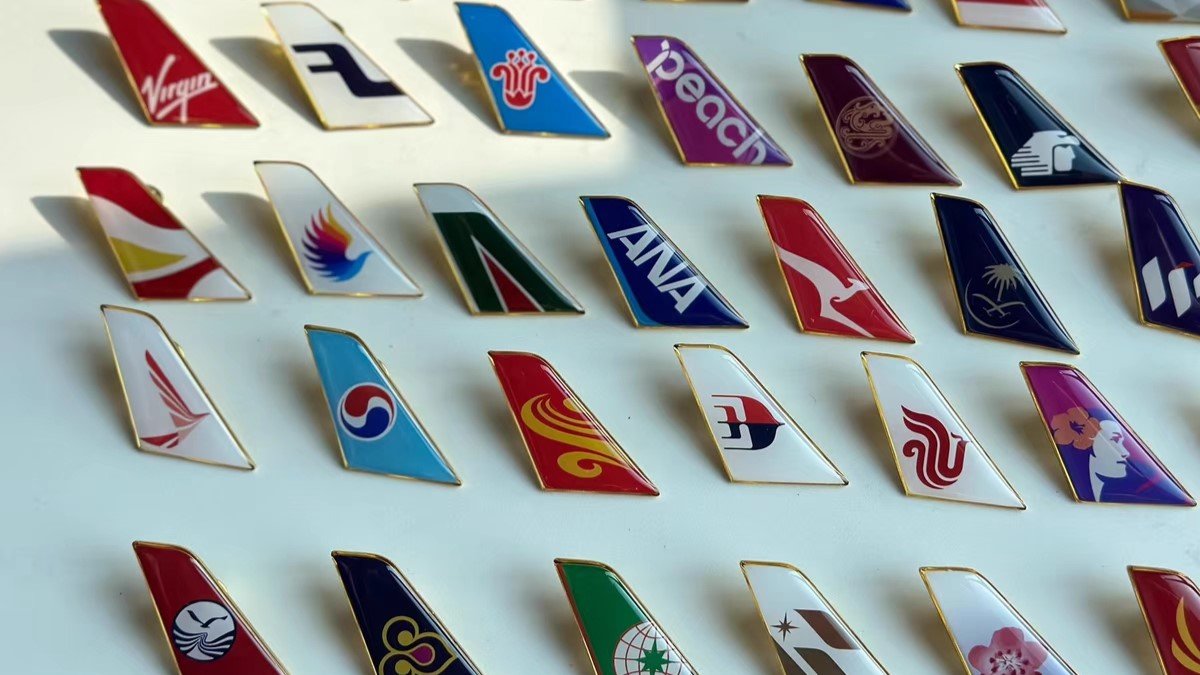
When designing enamel pins, one finishing option that often sparks curiosity is the epoxy dome. It’s a clear resin coating applied over the surface of a pin that creates a glossy, protective bubble — almost like a transparent glass layer over your artwork. While not used on high-end collector pins, epoxy dome has unique benefits and real design opportunities that every pin creator should understand.
This comprehensive guide explains what epoxy domes are, when to use them, how the production process works, the limitations you must know before ordering, and creative design tips to get the best results. We’ve included a full comparison table, a decision checklist, and answers to the most common beginner questions.
Epoxy dome is NOT the same as hard enamel or soft enamel. It is a separate clear protective coating applied on top of the pin’s surface — most commonly used over printed designs rather than traditional enamel-filled pins. Think of it as a transparent shield, not a coloring technique.
✨ What Is an Epoxy Dome?
An epoxy dome is a clear layer of two-part polyurethane or UV-cured resin applied to the surface of a pin after plating and any coloring or printing has been completed. Once hardened, it creates a smooth, rounded finish that sits slightly raised above the pin’s surface — giving it a characteristic bubble or dome appearance.
Think of it as a transparent shield that simultaneously serves three primary purposes:
Protection from Wear
Guards the enamel or printed design underneath from scratches, fading, moisture, and everyday wear and tear. This is especially important for pins used as functional items like keychains, bag charms, or zipper pulls that face constant handling and friction.
Enhanced Visual Appearance
Adds a glossy, wet-look shine and visual depth to your design. The epoxy layer makes colors appear more vibrant and saturated — giving your pins a premium-looking finish at a lower cost than hard enamel. Bold graphics especially benefit from this added richness.
Magnification Effect
Creates a slightly magnified look that can enhance certain design details. This effect works particularly well with logos, bold typography, and large solid shapes. It can make small text more legible when viewed through the dome — though very fine detail can be distorted if not designed correctly.
🏭 How Epoxy Dome Pins Are Made
Understanding the production process helps you design better and set realistic expectations for your order. Here’s how epoxy dome finishing is applied in a typical pin factory:
- Base pin production: The metal pin is stamped or cast, then plated with your chosen metal finish (gold, silver, black nickel, etc.) following standard production.
- Coloring or printing: The design is applied — either filled with enamel colors (soft enamel) or printed with UV or screen printing for full-color designs.
- Surface preparation: The pin surface is cleaned to remove any dust, oils, or contaminants that could cause the epoxy to bubble, peel, or adhere unevenly.
- Epoxy application: A measured amount of clear resin is dispensed onto the pin surface using a needle applicator or automated dispenser. Surface tension naturally pulls the resin into a dome shape.
- Curing: The pin is placed in a dust-free environment (either an oven or UV curing chamber) to harden. This takes anywhere from several hours to 24+ hours depending on the epoxy formulation used.
- Quality inspection: Each pin is checked for bubbles, uneven doming, dust inclusions, or yellowing before shipping.
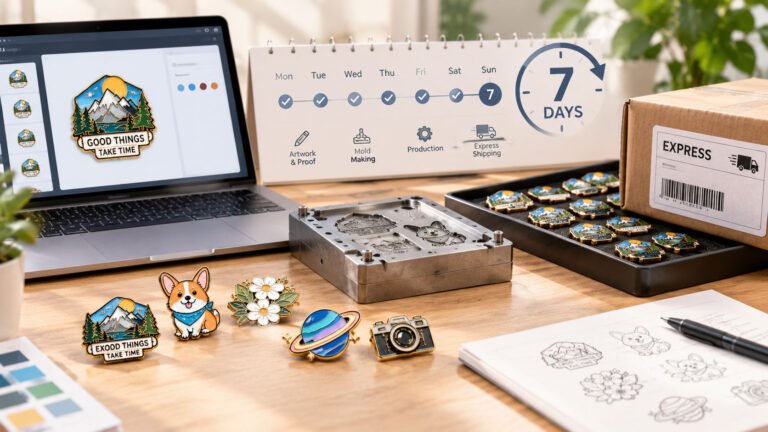
Production Timeline: Epoxy dome pins are generally faster to produce than hard enamel. Expect 1–2 weeks production time for the pin itself, plus shipping. Compare this to hard enamel which typically takes 3–4 weeks. Always confirm exact timelines with your manufacturer before placing an order.
🎨 Why Use Epoxy Dome in Pin Design?
Epoxy domes aren’t the standard choice for traditional collector enamel pins, but they work exceptionally well in specific scenarios. Understanding these use cases will help you decide if epoxy is right for your project:
Printed Pins and Full-Color Artwork
This is the most common reason to use epoxy dome. Epoxy is routinely applied over printed designs — pins that use UV printing, screen printing, or digital printing rather than enamel filling. Because printed designs are more delicate than enamel, the epoxy layer provides essential protection against scratches, fading, and color wear. It also makes the printed colors appear significantly more vibrant compared to an uncoated printed surface.
This is why epoxy dome is ideal for: photo-quality artwork, complex gradients, watercolor styles, and any design that requires more colors or tonal variation than traditional enamel can achieve.
Photography & Art Reproductions
Traditional enamel techniques are limited to flat areas of solid color separated by metal lines. If your design is a photograph, highly detailed digital illustration, or complex gradient artwork, enamel simply can’t replicate it. Epoxy-over-print preserves every detail of the original artwork, and the dome enhances the visual depth of the image.
Logo Pins, Promotional Items & Corporate Giveaways
Epoxy dome creates a clean, glossy, professional look that’s perfect for company logos and brand mascots. The shine gives promotional pins a polished, premium appearance at a cost-effective price point — making it a popular choice for corporate events, trade shows, and branded merchandise programs.
Keychains, Bag Charms & Functional Accessories
Any accessory that sees heavy daily use benefits from epoxy protection. Keychains rattle in bags and pockets; bag charms rub against fabric; zipper pulls get grabbed hundreds of times. The hard epoxy surface dramatically increases the lifespan of the printed or enamel design underneath, making it the smart choice for functional merchandise.
Budget-Friendly Starter Option
Epoxy dome is often used on less expensive base pins or promotional giveaways, since epoxy-over-print can replace the more complex enamel-filling process for simple designs. This makes it a popular entry point for creators launching their first pin line with limited funds — you get a great-looking product at a lower per-unit cost.
Special Visual Effects
The glossy dome can make logos or text appear bolder and more vivid. Some designers intentionally use the dome to create optical depth effects, especially when combined with metallic elements underneath. Holographic or glitter-effect base films paired with an epoxy dome can create striking visual results that are impossible with traditional enamel.
🛠️ Production Limits of Epoxy Dome Pins
Before committing to an epoxy dome finish, it’s crucial to understand the manufacturing constraints. These limitations will affect both your design choices and the quality of the final product. Designing without knowing these limits is one of the most common mistakes new pin creators make.
No Textural Variation
Epoxy creates a uniformly smooth dome surface. This removes the raised and recessed texture that characterises soft enamel pins — the tactile quality many collectors specifically seek out. If textural detail is important to your design or audience, epoxy is the wrong finish choice.
Fine Detail Can Blur
Epoxy works best on larger, flat areas of color. Very fine lines, intricate cross-hatching, or tiny text elements may appear slightly blurred or distorted under the dome — especially near the curved edges where the resin changes thickness. Always design for legibility at pin size before adding epoxy.
Shape Restrictions
Liquid epoxy spreads naturally and follows surface tension. Very thin protruding elements, sharp pointed edges, deep recesses, or complex cutouts can cause uneven coating, dripping, or gaps in coverage. Epoxy is best suited for standard shapes — circles, rectangles, oval, and solid silhouettes without too many narrow extensions.
UV Sensitivity & Yellowing
Standard epoxy resin can yellow slightly over years when exposed to direct sunlight or UV light. This is a gradual process and typically takes years to become noticeable in normal indoor use. However, for archival-quality collector pins, this is an important limitation. Ask your manufacturer about UV-resistant epoxy formulations if longevity is critical.
Temperature Sensitivity During Curing
Epoxy must cure in a controlled, dust-free environment at a stable temperature. Extreme heat or cold during the curing phase can cause bubbling, cloudiness, or surface imperfections. This is handled by the manufacturer, but it is a reason why quality control standards matter when choosing your production partner.
Special Effects Can Be Hidden
Glitter enamel, galaxy effects, or other textured special effects in the base pin can be muted or partially obscured by the epoxy coating. If you’re planning glow-in-the-dark, translucent, or glitter effects, discuss with your manufacturer whether epoxy is compatible before ordering.
⚠️ Important for Beginners
Many first-time pin creators assume epoxy dome is always an upgrade. It isn’t — for traditional collector enamel pins, it can actually reduce perceived quality by removing the tactile texture and creating a plastic-like bubble appearance. Always match your finish choice to your audience’s expectations and your pin’s intended use.
📊 Epoxy Dome vs. Hard Enamel vs. Soft Enamel
Use this comparison to understand how epoxy dome stacks up against the two primary enamel pin finishes. Each has strengths for different use cases:
| Feature | Epoxy Dome | Hard Enamel | Soft Enamel |
|---|---|---|---|
| Surface Texture | Smooth, raised dome (rounded bubble) | Completely flat, flush surface | Textured — metal lines raised above enamel |
| Durability | Excellent scratch resistance on printed designs | Very durable — hard, jewelry-quality surface | Moderate — enamel can scratch or chip |
| Cost | Low to moderate | Highest of the three Premium | Moderate — most popular price point |
| Design Flexibility | Best for bold, simple, printed designs | Excellent for intricate fine-line artwork Best | Great for detailed artwork with textural feel |
| Full-Color / Gradients | ✅ Yes — via printing under dome | ⚠️ Limited — solid colors only | ⚠️ Limited — solid colors only |
| Tactile Feel | Smooth plastic-like dome | Smooth, hard, flat — premium feel | Textured ridges — distinctive tactile experience |
| Production Time | Fast — 1–2 weeks Fastest | Longer — 3–4 weeks | Standard — 2–3 weeks |
| UV / Yellowing Risk | ⚠️ Can yellow over years | ✅ None | ✅ None |
| Best For | Printed designs, promos, keychains, photo art | Collector pins, premium retail, jewelry-feel | Detailed artwork, mid-range pins, fan art |
| Collector Appeal | Low — not traditional | Very high Top Pick | High — fan favourite for pin collecting |
For a deeper understanding of all enamel types and which suits your design, see our Complete Enamel Pin Design Guide (2026) and Technical Tips for Enamel Pin Design.
🌈 Design Tips for Epoxy Dome Pins
To get the most out of epoxy dome finishing, your artwork needs to be designed with the dome’s specific properties in mind. These guidelines have proven successful for pin creators working with this finish:
Choose Bold, High-Contrast Graphics
Large, bold shapes with strong color contrast look best under epoxy. Think solid fills and clear boundaries rather than delicate linework. The dome’s slight magnification enhances bold designs — but can make fine details look muddy or indistinct.
Leverage Full-Color Printing
Epoxy’s biggest advantage is its ability to protect full-color printed designs — gradients, photo-quality artwork, watercolor effects, and complex illustrations that enamel simply cannot reproduce. Design for the full RGB or CMYK spectrum and let printing do the work.
Design for Functional Use
If your pin will become a keychain, bag charm, or zipper pull, lean into epoxy’s durability advantage. Make the design bold enough to remain recognisable even after significant handling and friction wear to the dome surface over time.
Simplify Outlines & Avoid Thin Extensions
Avoid overly intricate outlines or designs with very thin protruding elements. Simple, solid silhouettes help epoxy spread evenly and create a consistent dome shape across the entire surface. Thin extensions can cause dripping or uneven coverage at the edges.
Highlight Brand Elements
Epoxy domes create a glossy, professional look that’s perfectly suited for company logos, brand mascots, and promotional pins. The shine gives even simple logo designs a premium, polished feel — making it effective for corporate merchandise and branded giveaways.
Always Test with Mockups First
Create a digital mockup of your design with an epoxy dome effect applied before ordering. Many manufacturers provide this service as part of the quote process. A mockup lets you spot potential issues — blurred details, proportion problems, edge coverage — before committing to production.
Keep Text Larger Than Normal
If your design includes text, make it larger than you think necessary. Text that looks crisp at screen size can blur or become hard to read under an epoxy dome, especially near the curved edges. A safe minimum for readable epoxy pin text is around 6–8pt equivalent at actual pin size.
Consider the Background Color
The metal backing card or background color of your pin will affect how colors look through the epoxy. Test your design against gold, silver, and black plating to see which base color makes your artwork pop the most before confirming your order.
File Format Tip: For printed epoxy dome pins, provide your artwork in the highest resolution possible — at least 300 DPI at actual pin size or larger. Vector formats (AI or EPS) are ideal because they scale without quality loss. Learn more in our guide to Best File Formats for Custom Enamel Pins.
✅ When to Use Epoxy Dome (and When to Avoid It)
Making the right finish choice depends on your specific project goals. Here’s a clear, practical breakdown to help you decide:
✅ Use Epoxy Dome For:
- Printed pins or gradient artwork that needs a protective, durable coating
- Logo pins, promotional items, or corporate giveaways where durability and shine are priorities
- Photo-quality or full-color designs that can’t be achieved with traditional enamel
- Keychains, bag charms, and zipper pulls that face heavy everyday wear
- Beginner pin creators working with a limited budget who want professional-looking results
- Event merchandise that needs to be produced quickly and cost-effectively
- Designs where glossy shine is more important than tactile texture
- Watercolor, digital illustration, or photographic art styles that don’t translate to enamel
❌ Avoid Epoxy Dome For:
- Collector-grade enamel pins where texture, premium feel, and archival quality matter
- Designs relying on fine linework or intricate detail that might blur under the dome
- Pins meant to feel jewelry-like or premium — hard enamel is far better for this
- Artwork with important textural contrast between raised metal and recessed enamel
- Limited edition or collector pins where long-term archival quality and no yellowing are essential
- Designs with metallic glitter, glow-in-the-dark, or translucent enamel effects that the dome may obscure
- Complex die-cut shapes with many thin protrusions where even coverage is difficult
💰 How Much Does Epoxy Dome Add to Pin Cost?
The epoxy dome process adds a modest cost to each pin, but it’s often offset by savings elsewhere in the production process:
Epoxy Dome Cost Breakdown
- Epoxy coating cost: Typically adds $0.05 – $0.20 per pin depending on pin size and manufacturer
- Total cost advantage: Because epoxy is most commonly used over printed base pins (which skip the enamel-filling process), the total per-unit cost can still be lower than soft or hard enamel pins
- Minimum order quantities: Most manufacturers require a minimum of 50–100 pins for epoxy dome orders, though this varies
- Sample order cost: A split-run sample batch (some with epoxy, some without) costs modestly more but is highly recommended for first-time orders
For a full breakdown of enamel pin production costs including all finish options, see our guide: How Much Do Enamel Pins Cost to Make in 2026? and Custom Enamel Pin Hidden Costs You Should Know Before Ordering.
Ready to Design Your Custom Epoxy Dome Pins?
Get a free quote for your custom enamel or epoxy dome pins — including design consultation, sample options, and production timelines. Our team helps you choose the right finish for your project and budget.
Get Your Free Custom Pin Quote →No commitment required • Sample pins available • Expert design advice
✅ Epoxy Dome Pin Pre-Order Checklist
Before placing your epoxy dome pin order, run through this checklist to make sure you’ve covered everything:
📋 Before You Order
Is epoxy dome right for my design? Bold, printed, gradient designs = yes. Fine linework, collector pieces, glitter effects = reconsider.
Have I provided artwork at 300+ DPI or in vector format? Low-resolution artwork will look blurry under the dome, especially at pin size.
Have I confirmed pin shape compatibility? Avoid designs with very thin protruding elements that could cause uneven epoxy coverage.
Have I requested a digital mockup with the epoxy effect? Always review a mock-up before approving production.
Have I asked about UV-resistant epoxy? If your pins may be displayed in direct sunlight or sold as collector items, request UV-resistant resin.
Have I considered ordering a small sample batch? A test batch of 50–100 pins lets you compare the feel and look before committing to thousands of units.
Have I factored in the production timeline? Epoxy pins typically take 1–2 weeks production plus shipping time. Plan accordingly for events or launches.
Have I reviewed the full cost including packaging? Factor in backing cards, sleeves, and shipping when calculating your total per-unit cost and retail price.
🎯 Final Decision Guide: Which Finish Is Right for You?
Your design is printed with full-color gradients, photo-quality art, or complex illustrations. You need a durable, scratch-resistant coating for functional accessories, promotional items, or affordable merch. Speed to market and cost-effectiveness are priorities.
You want the classic pin look with raised metal lines and recessed color areas. Your design has multiple solid color fills and benefits from textural contrast. You’re targeting pin collectors or fans who appreciate the traditional feel.
You’re creating collector-grade or premium retail pins where a jewelry-quality, flat surface and long-term archival quality are non-negotiable. Your target audience expects a premium, expensive feel and is willing to pay for it.
You have a multi-tier product line. Standard promotional or printed pins with epoxy dome at a lower price point, alongside a premium hard or soft enamel collector series at a higher price. This strategy maximises your market reach.
💡 Final Thoughts for Beginners
Epoxy domes aren’t for every design — but when used intentionally, they can be a powerful tool in your pin-making toolkit. They offer durability, protection, and a glossy finish that makes real sense for printed designs, logos, and everyday-use accessories.
If you’re planning a pin that needs to withstand wear and tear, or you’re working with full-color printed designs that wouldn’t translate well to traditional enamel, adding an epoxy dome could be exactly the right choice for your project.
Pro tip for new creators: Consider ordering a small test batch with and without epoxy to compare the results firsthand. Many manufacturers offer sample packs that let you feel the difference in texture and see the visual impact before committing to a large production run. The small additional cost of a sample is always worth it.
Remember — the best finish for your pin depends on your specific goals, your target audience, and your budget. Epoxy dome is one tool among many, and understanding its strengths and limitations will help you make more confident decisions as your pin business grows.
❓ Frequently Asked Questions
What is an epoxy dome on an enamel pin?
Is epoxy dome the same as hard enamel or soft enamel?
Does epoxy dome add extra cost to enamel pins?
Will epoxy dome yellow or discolor over time?
What designs work best with epoxy dome finishing?
Can epoxy dome be applied to soft enamel pins?
How long does it take to produce epoxy dome pins?
Is epoxy dome suitable for keychains and functional accessories?
What is the difference between epoxy dome and hard enamel for collector pins?
Can I order a test batch with and without epoxy to compare?
Start Your Custom Epoxy Dome Pin Order
Whether you’re designing your first pin or expanding your product line with a new finish option, our team provides free design consultation, professional quotes, and sample options to help you get it right the first time.
Get a Free Quote & Design Help →No commitment required • Sample pins available • Expert design advice • Fast turnaround