What to Do If Your Custom Enamel Pins Arrive Damaged: A Complete Guide
A clear, step-by-step guide to inspecting, documenting, and resolving damaged or defective custom enamel pins — so you can get the right fix quickly, without the guesswork.
Ordering custom enamel pins is exciting. Whether you’re preparing for a product launch, event, crowdfunding campaign, or retail sale, you expect your pins to arrive in perfect condition. But sometimes, despite careful packing, enamel pin damage in transit or with manufacturing flaws can appear in your shipment.
The single most important thing you can do is inspect your order as soon as it arrives, before pins are separated, gifted, sold, or put into storage. The sooner an issue is identified, the easier — and faster — it is to resolve. Documenting the problem with clear photos and a few details makes the entire resolution process smoother. This guide walks you through exactly what to check, what to capture, and what to expect once you report an issue.
How Often Do Enamel Pins Arrive Damaged?
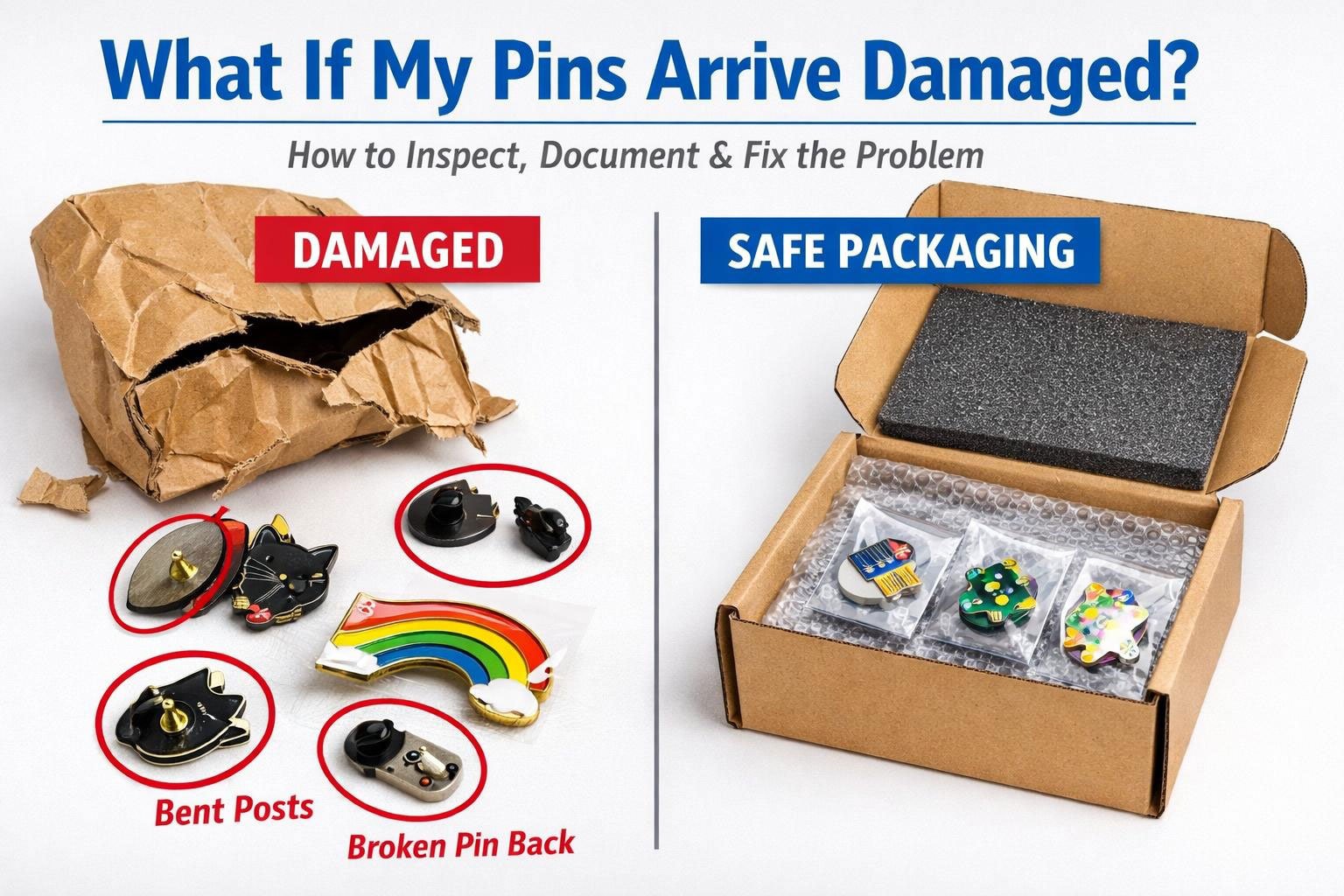
The good news: pin shipping damage during transit is genuinely rare when pins are packaged properly. Reputable manufacturers build protection into the packing process itself, not just the shipping label, using methods such as:
- Individual poly bags for each pin
- Bubble wrap layers between pins
- Foam inserts inside the shipping box
- Reinforced, corrugated shipping cartons
- Tight packing to prevent pins shifting in transit
At manufacturers like CreatePins, pins go through a quality check before they ever leave the factory — ensuring custom pins quality is maintained from production to delivery. Even so, once a package enters the wider shipping network, factors outside any manufacturer’s direct control — rough handling, compression, or an unlucky drop — can occasionally cause issues like bent pin posts or scratches. That’s exactly what this guide helps you handle.
Inspect Your Enamel Pins Immediately
As soon as your order arrives, open the package fully and check every pin before putting anything away. Look for:
- Scratches or chipped enamel
- Broken or bent metal — especially bent pin posts
- Missing or loose backings
- Incorrect colors compared to your approved proof
- Printing defects or blurred detail
- Incorrect size, shape, or plating finish
- Damaged outer or inner packaging
If you’re unsure whether what you’re seeing falls within normal manufacturing tolerances or is a genuine issue, review production expectations and tolerances first. For a deeper benchmark, this guide to enamel pin grading explains what inspectors typically check for.
Take Clear Photos and Videos
Good documentation is the fastest path to a resolution. Before contacting anyone, take:
Photos of the entire order
A wide shot showing all pins together, so the full batch and quantity are visible.
Close-ups of damaged pins
Sharp, well-lit close-up shots of the specific chip, scratch, bend, or color issue.
Photos of the packaging
Inner and outer packaging, especially if it looks crushed, torn, or water-damaged.
Shipping label
A clear photo of the shipping label and tracking number, useful if the carrier is involved.
Also note the quantity affected — this detail often distinguishes a manufacturing defect from shipping damage, and it helps your manufacturer investigate the right stage of the process.
Contact Your Pin Manufacturer
Once you’ve inspected the order and gathered your photos, reach out with the following information ready:
- Order number
- Date received
- Quantity affected
- A brief description of the issue
- Photos and/or videos
- Your requested resolution (if you already have one in mind)
Having all of this ready in your first message — rather than sending it piece by piece — significantly speeds up the review. If you ordered through CreatePins, you can reach our support team directly with these details, and we’ll take it from there. It’s also worth reviewing our Returns & Refunds Policy so you know what outcomes are typically available.
Manufacturing Defects vs. Shipping Damage
It’s not always obvious whether an issue happened on the production floor or somewhere in transit — and that’s okay. You don’t need to diagnose it yourself. Below are the most common issues customers report, followed by a quick-reference table, but your manufacturer should assess the situation.
Bent Pin Posts
The most common issue is a bent pin post, usually caused by pressure on the back of the pin during transit. This is typically an easy at-home fix — gently straighten the post with clean fingers or small, flat-nose pliers, working slowly to avoid snapping it.
Scratched or Scuffed Pins
Pins can rub against each other if they shift inside the packaging. Proper individual poly-bagging and bubble protection minimize this, but light scratches can occasionally occur if a box is heavily compressed.
Broken Pin Backs
Pin backs (clasps) can occasionally crack or detach if a box takes a heavy impact during transit. It’s uncommon, but can happen with especially rough carrier handling.
Damaged Packaging
Sometimes the pins are perfectly fine, but the outer packaging — a custom backing card, retail packaging, or subscription-box presentation — arrives crushed or torn. If presentation matters for your use case, this is still worth reporting.
| Problem | Possible Cause |
|---|---|
| Chipped enamel | Manufacturing or handling |
| Bent pin | Shipping/handling |
| Scratched plating | Production or shipping |
| Wrong colors | Artwork/proof/production |
| Missing pieces | Packing or shipping |
| Broken clasp | Assembly or handling |
For more detail on production‑side issues, see our guide to common enamel pin defects and how we prevent them.
What Happens After You Report the Problem?
A professional resolution process generally follows these steps:
Review the evidence
Your photos, videos, and description are reviewed against your order details.
Compare with the approved proof/specifications
The affected pins are checked against the digital proof or physical sample you originally approved, following the same sample approval process used before production.
Determine the cause
The manufacturer identifies whether the issue traces back to production, packing, or shipping.
Confirm affected quantity
Your reported quantity is confirmed so the resolution matches the actual scope of the issue.
Offer an appropriate solution
Depending on the situation, this might be a full replacement, a remake, a partial replacement covering only the affected units, or another resolution agreed between you and the manufacturer.
Replacement Pins
If damage is significant, replacement pins may be produced and shipped. This is common when multiple pins are unusable, the order is for retail sale, or the defect affects the overall presentation.
Partial Refunds or Store Credit
For smaller, isolated issues, manufacturers may offer a partial refund, store credit, or a discount on a future order — often faster than producing an entirely new batch.
Shipping Claim Assistance
If damage clearly occurred during transit, your manufacturer may help you file a carrier damage claim. Carriers typically require photo evidence and packaging documentation.
Quality Control Improvements
If the manufacturer finds a recurring issue on their end, they should also explain what packaging or process change they’re making to prevent it on future orders.
How to Prevent Problems With Future Orders
Most issues can be reduced significantly with a few habits before and after production:
- Carefully review the digital proof before approving production
- Confirm size, colors, plating, and backing match what you intended
- Order a physical sample when appropriate, especially for larger orders
- Use protective packaging, particularly for bulk shipments
- Inspect the shipment immediately upon arrival
- Keep photos and order documentation on file until the order is fully checked
If you place orders regularly, review our step‑by‑step ordering guide and our order process explained article, both of which cover proofing and approval checkpoints. If a pin gets damaged after delivery through normal wear, this guide to fixing enamel pin damage at home may also help.
What If Only a Few Pins Are Damaged?
This is especially relevant for bulk orders. If your shipment contains hundreds or thousands of pins and only a portion are affected, report the exact quantity that’s actually damaged rather than describing the entire order as defective. This allows for a faster, more proportional resolution — such as a partial replacement — instead of an unnecessary full remake.
Being specific (e.g., “12 out of 500 pins have chipped enamel”) also helps your manufacturer investigate more precisely, since it may point to a specific plating batch or a shipping carton that was mishandled.
Need Help With Enamel Pin Damage in Your Order?
If your custom enamel pins arrived damaged or don’t match the approved specifications, contact the CreatePins team with your order number and photos. We’ll review the issue and help determine the best solution.
Frequently Asked Questions
What should I do if my enamel pins arrive damaged?
Inspect the full order as soon as it arrives, take clear photos of the damage and packaging, note the quantity affected, and contact your manufacturer with your order number and a description of the issue. This is the most effective way to resolve enamel pin damage in transit.
Can damaged enamel pins be replaced?
In most cases, yes. Once the manufacturer reviews the evidence and confirms the cause, common resolutions include a full replacement, a partial replacement for only the affected units, or another agreed-upon solution. Custom pins quality is always the priority.
What photos should I send for a damaged pin claim?
Send a photo of the entire order, close‑up shots of the specific damage, photos of the inner and outer packaging, and a photo of the shipping label. Note the total quantity affected as well.
What if my pins were damaged during shipping?
Shipping damage is treated similarly to a manufacturing issue from the customer’s side — document it the same way with photos of the pins and packaging, and report it to your manufacturer. They will determine whether it originated in transit or production.
What if the pins don’t match the approved proof?
If colors, size, plating, or other details differ from what you approved, report it the same way as damage: with photos, your order number, and a description of the discrepancy. The manufacturer will compare the pins against your approved proof or sample to confirm the issue.
How soon should I report damaged pins?
As soon as possible after your order arrives, ideally within a few days of delivery. Reporting promptly, before pins are separated, gifted, or sold, keeps documentation accurate and makes resolution much faster.
Can I fix a bent pin post myself?
A bent pin post is the most common shipping issue and is often easy to fix at home by gently straightening it with clean fingers or small, flat‑nose pliers. Broken enamel, cracked plating, or detached backs should be reported to your manufacturer rather than repaired at home.