How to Create a Pin Collection Theme (That People Actually Love) – A Complete Pin Collecting Guide
A complete step-by-step pin collecting guide to building a cohesive, meaningful themed pin collection – from choosing your pin collection theme and visual style to displaying, sourcing, and creating your own pin collection ideas that people actually love.
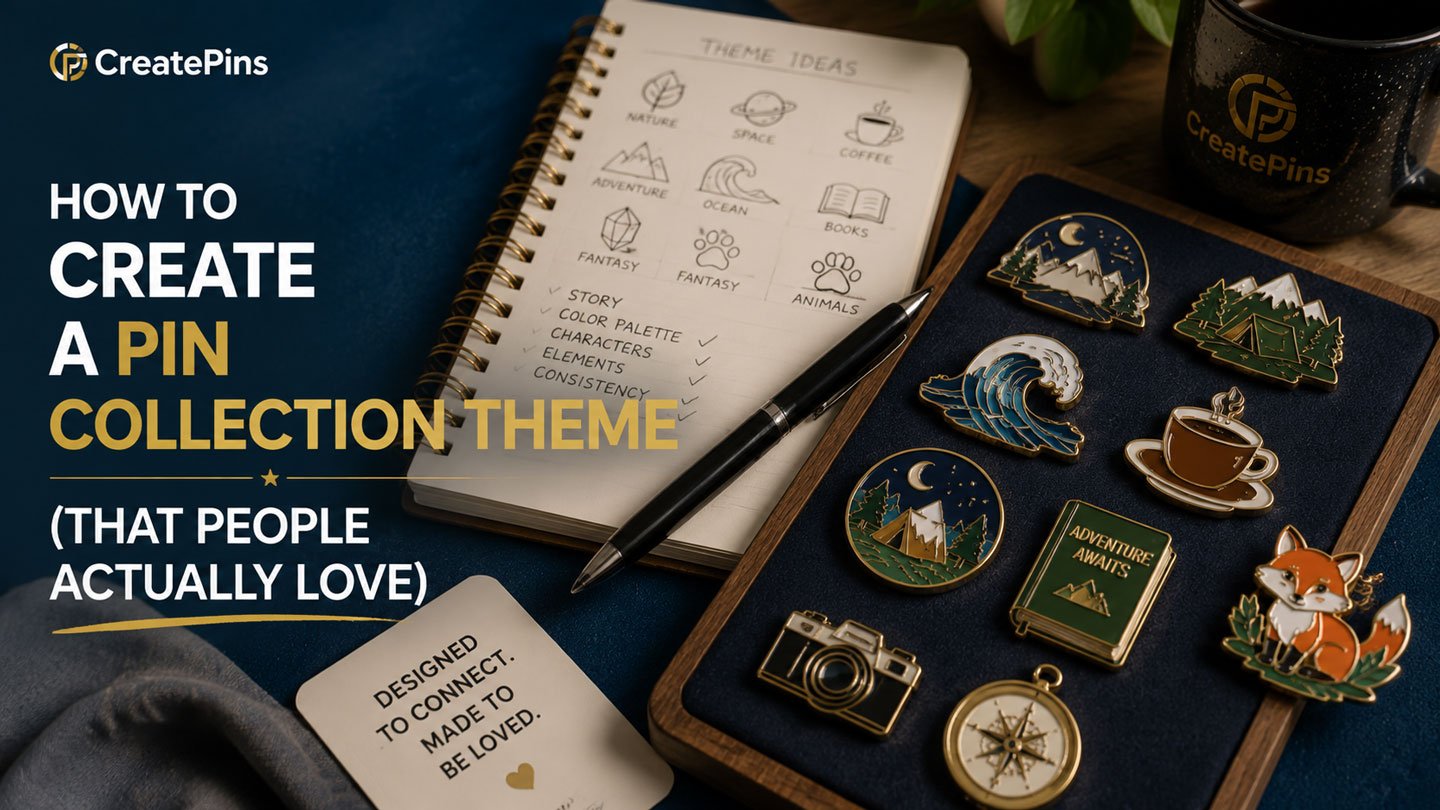
Collecting enamel pins is more than gathering designs you happen to like — it’s about telling a story. A well-thought-out pin collection theme transforms a random assortment into a cohesive, meaningful display that reflects your personality, brand, or creative vision. The difference between a scattered pile of pins and a curated collection isn’t the number of pins — it’s the intentionality behind how they were chosen.
Whether you’re a first-time collector trying to make sense of your growing pile, an artist building a series to sell, or a brand looking to create collectible merchandise that fans actually connect with, this pin collecting guide walks you through every stage of building a themed pin collection that resonates.
Why a Pin Collection Theme Matters
A themed collection does something a random assortment simply can’t: it creates a sense of world-building. Every pin becomes part of a larger story rather than a standalone object. Here’s why that matters in practice:
- Visual coherence — themed collections are more satisfying to look at and display; the eye finds a natural resting pattern across the pieces
- Easier to grow intentionally — when you have a clear pin collection theme, every new acquisition decision is guided by a simple question: does this fit?
- Increased perceived value — a curated series feels more valuable than individual pins, both for personal collections and for resale
- Community connection — themed collections are far more shareable and discoverable on social media; a “nocturnal creatures” collector will naturally attract other collectors with the same interest
- Brand identity for sellers — if you’re producing pins to sell, a consistent theme is one of the most powerful tools for building a recognizable brand that drives repeat customers
🎯 Think of it this way: a museum doesn’t display random art — it curates around themes, eras, and movements. Your collection deserves the same intentionality. A themed pin collection isn’t a limitation; it’s the framework that makes every piece more meaningful.
The 7 Steps to Building a Themed Collection
Choose Your Core Concept
Your theme is the foundation everything else is built on. It needs to be specific enough to feel intentional and curated, but broad enough to allow your collection to grow naturally over time without constantly hitting dead ends.
The best pin collection ideas come from the intersection of things you genuinely love and things that have a strong existing visual culture around them. Start by listing five things you’re passionate about — then look for overlap or interesting combinations.
Popular Theme Directions
Pop Culture
Anime, gaming, film, TV — franchises and fandoms with deep visual vocabularies and passionate collector communities
Nature & Animals
Plants, wildlife, landscapes, sea creatures — endlessly versatile with strong aesthetic range from cute to realistic
Aesthetic Styles
Pastel kawaii, dark academia, gothic, cottagecore, cyberpunk — style-first collections with strong visual cohesion
Travel & Places
Landmarks, city icons, maps, cultural symbols — personal travelogues or aspirational destination collections
Food & Drinks
Cute snacks, coffee culture, desserts, regional cuisines — universally appealing with huge design variety
Emotions & Quotes
Expressive characters, affirmation text, relatable moods — highly shareable and emotionally resonant for social media
Don’t be afraid to combine ideas — some of the most compelling collections live at unexpected intersections. “Cute food animals,” “dark fantasy nature,” “vintage video games,” and “space-themed mythology” are examples of combination themes that feel original and offer rich visual territory to explore.
Define a Visual Style
Subject matter alone isn’t enough — two collections both themed around “animals” can look completely different depending on their visual style choices. Defining your aesthetic parameters upfront is what transforms a loosely related group of pins into a truly cohesive collection.
Choose a Signature Palette
- Soft pastels — kawaii, gentle, approachable
- Bold neons — high energy, maximalist, pop art
- Monochrome — sophisticated, gallery-worthy
- Earth tones — natural, vintage, grounded
- Dark jewel tones — gothic, mysterious, premium
Choose a Consistent Finish
- Hard enamel — polished, smooth, premium feel
- Soft enamel — textured, dimensional, tactile
- Screen print — photographic detail, gradient capable
- Glitter enamel — sparkle, fantasy, eye-catching
- Glow in the dark — novelty, sci-fi, gaming
Match Your Metal Finish
- Gold — warm, luxurious, vintage-friendly
- Silver — clean, modern, versatile
- Black nickel — edgy, dramatic, bold
- Antique gold/silver — aged, artisanal, collectible
- Rose gold — soft, fashion-forward, feminine
Define Your Illustration Voice
- Cartoon / chibi — playful, accessible, community-friendly
- Realistic — detailed, impressive, nature-forward
- Line art — clean, minimalist, versatile
- Retro / pixel art — nostalgic, gaming culture
- Graphic / flat design — contemporary, bold, branding-friendly
Example: Palette for a “Midnight Garden” Theme
Set Boundaries — Avoid Theme Creep
Theme creep is the silent enemy of every pin collector. It happens gradually: you see a brilliant design that’s just slightly outside your theme — but you love it, so you add it “just this once.” Then it happens again. And again. Before long your cohesive “nocturnal forest creatures” collection has a rogue pizza slice and a vintage spaceship in it, and the story your collection was telling is muddled.
Setting explicit rules before you start — and revisiting them when you’re tempted — is how you protect your pin collection theme over time:
- Write your theme rules down — make them specific enough to make clear decisions: “nocturnal animals only, illustrated in watercolor style with a limited dark teal/gold/black palette”
- Allow yourself a wildcard quota — permit yourself a maximum of 2 pins that don’t fit the theme; this removes guilt without opening the floodgates
- Define your “adjacent” zone — some collections benefit from clearly defined adjacent categories (e.g., a “forest” themed collection might include mushrooms and woodland spirits as adjacent subjects)
- Create a wish list before buying — maintaining a curated wish list of on-theme pins you’re actively looking for reduces impulse purchases that don’t fit
- Start a separate collection — if you keep being tempted by a different theme, it might be telling you something; a second, separate collection for that theme is a better solution than diluting your first
Plan Your Display
Your display is where your collection’s theme becomes visible to the world. The right display format reinforces your theme’s aesthetic and transforms individual pins into a unified visual statement. Think of it as the frame for your art — it should enhance, not distract.
Pin Boards
Cork boards or fabric-covered boards are the most flexible option. Easy to rearrange as your collection grows, expandable, and available in many sizes. Wrap in fabric that matches your theme’s color palette for extra cohesion.
Shadow Boxes
Enclosed glass-fronted frames create a gallery-quality presentation. Ideal for premium, sentimental, or small high-value collections. The enclosed format protects pins from dust and creates a museum-case effect.
ITA Bags
Bags with a clear window panel designed specifically for pin display. A wearable, themed collection that travels with you. Especially popular in anime, gaming, and kawaii communities where displayed collections are a fashion statement.
Framed Layouts
A grid of matching frames with fabric or paper inserts creates a gallery wall effect. Works beautifully for very large collections or a museum-style home display. Best for permanent, statement installations.
Arrangement Strategies
How you arrange pins within your display affects the story your collection tells:
- Color gradient arrangement — organize by hue from warm to cool; creates a visually soothing, rainbow-like flow across the display
- Size hierarchy — place larger focal pins at the center or eye level with smaller supporting pieces radiating outward
- Narrative sequence — arrange pins to tell a story or follow a logical progression (seasons, journey, story arc)
- Symmetrical grid — consistent spacing and alignment creates a clean, editorial look; works especially well for minimalist or graphic-style collections
- Organic clustering — grouped by sub-theme or relationship; more dynamic and less rigid; works for eclectic collections with strong thematic coherence
🎨 Ready to add custom-designed pins to your themed collection? Our team can bring any concept to life in high-quality enamel.
Get a Free Custom QuoteSource Pins Strategically
Where you source your pins matters as much as what you collect. Different channels offer different advantages — from rare independent artist drops to community trade markets to custom production. A strategic sourcing approach helps you build a more interesting, varied collection while maintaining your theme.
Independent Artist Platforms
Etsy and Gumroad host thousands of independent pin makers. Search by theme keyword to find artists working in your specific subject area. Follow artists whose style matches your collection’s visual direction.
Pin Communities & Groups
Instagram, Reddit (r/pinfluencer, r/enamelpin), Discord servers, and Facebook groups are active trading and selling communities. Great for discovering independent drops before they sell out.
Conventions & Artist Alleys
Anime conventions, comic cons, craft fairs, and pop culture expos feature artist alley sections packed with themed pin collections. Excellent for finding rare, convention-exclusive designs not available online.
Custom Manufacturers
For collectors who want complete control over their theme, commissioning custom pins ensures perfect thematic and visual alignment. Ideal for building a personal or branded series exactly as envisioned.
Building Your Sourcing Network
- Follow theme-aligned artists on Instagram — turn on notifications for artists whose work fits your collection; drops sell out fast
- Join relevant Discord servers — many pin communities have active channels for specific themes (gaming, nature, food) where new drops are announced first
- Set up Etsy search alerts — Etsy allows you to save searches; new listings matching your keywords will be emailed to you automatically
- Check Kickstarter and BackerKit regularly — many independent artists fund themed pin series through crowdfunding before they go to general sale
- Trade duplicates — connecting with other collectors for trades is one of the most cost-effective and community-building ways to grow a collection
Create Your Own Pins (Optional but Powerful)
If you want complete creative control over your themed pin collection — or if you’re building a pin brand to sell — designing and producing your own pins is the most powerful step you can take. It allows you to fill gaps in your theme that no existing pin addresses, maintain absolute visual consistency, and build something genuinely original.
Benefits of Creating Your Own Themed Pins
- Perfect theme alignment — every pin is exactly what your collection needs; no compromises on subject matter, style, or color palette
- Build a recognizable series — consistent design language across a 5–10 pin series creates a powerful collector incentive; people want to own the full set
- Revenue opportunity — a well-themed original series can be sold to other collectors who share your interests; what started as a personal collection becomes a brand
- Creative ownership — there’s a unique satisfaction in displaying a collection that’s entirely your vision, from concept to final product
🗺️ Planning Your First Original Pin Series
A 3–5 piece mini-series is the ideal starting point — achievable, feels complete, and can expand into a larger collection over time.
Define your series concept — choose a tight, specific theme (e.g., “The Four Seasons as Woodland Foxes”) with a clear visual direction and a logical set size
Create or commission artwork — develop cohesive illustrations for each pin in the series; consistency in art style, character proportions, and color palette is critical
Prepare production-ready files — convert artwork to vector format, define Pantone colors for each enamel zone, and specify die lines and plating choice
Request a production quote and sample — work with a manufacturer like CreatePins to get a quote based on quantity, size, and finish; always request a physical sample before full production
Launch and document — photograph the complete series, share the story behind the concept, and build an audience before your next series begins
Showcase Your Collection
A themed pin collection is a creative work — and creative works deserve an audience. Sharing your collection on social media not only connects you with other collectors who share your passion, it documents your collection’s evolution over time and builds a community around your specific niche.
Platform-by-Platform Showcase Strategy
- Instagram — flat lay photography of your full display, individual pin close-ups, and the story behind each new acquisition; use relevant hashtags like #enamelpin, #pincollector, and your theme-specific tags
- TikTok — “unboxing” new acquisitions, “collection tour” walk-throughs, and speed-edits showing how you rearranged your display; video content outperforms stills for discovery
- Pinterest — curated boards organized by theme; Pinterest’s long content lifespan makes it ideal for discovery by collectors searching your specific theme months or years later
- Reddit — r/pinfluencer and r/enamelpin are active communities where sharing your collection gets genuine engagement, feedback, and trade opportunities from fellow collectors
Telling the Story Behind Your Collection
The most engaging collection content doesn’t just show pins — it tells stories. Share the inspiration behind your pin collection theme, the hunt for a specific rare piece, the story behind a convention find, or the creative process of designing your own additions. Collectors connect with the narrative of a collection as much as the objects themselves.
Bonus Tips for Next-Level Collections
Once you’ve got the foundations in place, these advanced practices take a themed pin collection from good to genuinely extraordinary.
Track Every Pin
Maintain a spreadsheet or use a collector app to log each pin’s artist, purchase date, price, and condition. This is invaluable for insurance, resale, and simply appreciating how far your collection has come.
Use Limited Editions Strategically
If you’re producing your own pins, limiting edition sizes (e.g., 150 units) creates genuine scarcity. Numbered editions (“47/150” on the back) drive collector behavior and elevate perceived value significantly.
Trade Duplicates Actively
Most serious collectors accumulate duplicates over time. Trading with other collectors in your niche is one of the best ways to acquire rare pieces, build community relationships, and keep your collection evolving without increasing spend.
Document the Journey
Create a dedicated Instagram highlight or Pinterest board that serves as a visual archive of your collection’s growth. Watching a collection evolve from 5 pins to 50 pins is compelling content that builds a loyal audience over time.
Create Sub-Series Within Your Theme
As your collection grows, organize it into distinct sub-themes or “chapters.” This keeps the collection manageable and creates natural release cadences if you’re producing pins — each sub-series is its own launch moment.
Collaborate with Other Artists
Bringing in a guest artist for a single pin in your series — while maintaining your visual style guidelines — adds variety and cross-audience exposure. Their followers become aware of your collection through the collaboration.
Common Mistakes to Avoid
✅ Do This
- Write your theme rules down before you start collecting
- Choose a specific concept — not just a broad category
- Define your color palette and finish before sourcing
- Plan your display format early — it shapes how you collect
- Follow theme-aligned artists for consistent sourcing
- Start your own series small (3–5 pins) and validate
- Photograph and document your collection as it grows
- Name your collection to give it creative identity
❌ Avoid This
- Collecting everything you like with no overarching theme
- Letting theme creep dilute your collection’s coherence
- Mixing too many different art styles or finish types
- Starting a collection without knowing where you’ll display it
- Chasing quantity over quality and intentionality
- Producing pins without sampling first
- Keeping your collection private — share it and build community
- Giving up after a few pins — great collections take time
Ready to Turn Your Theme into Real Pins?
Whether you’re building a personal collection series or launching a branded pin line, CreatePins helps you produce high-quality enamel pins that bring your creative vision to life — with precise color matching, clean metal finishes, and expert production from concept to delivery.
Get Your Free Custom Quote →All pin types available · Small runs welcome · Free design consultation
Frequently Asked Questions
Common questions from collectors, artists, and brands getting started with themed pin collections.
Start with something you genuinely love — a subject, aesthetic, or niche you’d be excited to build around for months or years. The strongest pin collection themes are specific enough to feel intentional (not just “animals” but “nocturnal forest creatures”) while broad enough to allow continued growth. Try writing down five things you’re passionate about and see where they overlap — that intersection often produces the most original and personal themes.
Theme creep is when your collection gradually drifts away from its original concept as you add pins that don’t quite fit. To avoid it, write down your theme rules before you start collecting and review them when you’re tempted by an off-theme pin. A useful rule: allow yourself a maximum of two “wildcard” pins that don’t strictly fit — anything more starts to dilute the collection’s coherence.
There’s no minimum, but a meaningful display typically requires 8–15 pins to feel cohesive rather than sparse. If you’re creating your own themed pin series to sell or share, starting with a 3–5 piece mini-series is ideal — it’s achievable, feels complete, and can expand into a larger series over time as you validate the concept and build an audience.
An ITA bag (from the Japanese “itai,” meaning painful — as in, painful to look at due to intensity) is a bag with a clear window panel designed specifically for displaying enamel pins and other collectibles. The clear window creates a themed display visible to others while protecting the pins. ITA bags are especially popular in anime, gaming, and kawaii communities where wearable displays are a core part of collector identity.
Both approaches are valid and many serious collectors do both simultaneously — a themed display collection and a separate artist collection. Collecting by artist builds a deeper appreciation for individual creative voices and often produces a more visually cohesive result since one artist’s work shares aesthetic DNA. Collecting by theme allows sourcing from multiple artists while maintaining unified subject matter. The choice depends on whether subject matter or visual style is more important to your collection identity.
The display method should reinforce your theme’s aesthetic. Cork boards and fabric-covered boards are the most flexible — easy to rearrange and expandable. Shadow boxes create a gallery-quality presentation ideal for premium collections. ITA bags are perfect for wearable themed displays. For large collections, a grid of matching frames creates a museum-wall effect. Organize by color gradient, size hierarchy, or narrative sequence for maximum visual impact.
Absolutely — creating a themed pin series is one of the most effective ways to build a recognizable pin brand. Start with a tightly defined concept, design 3–5 cohesive pieces, and produce a small test run (100–200 units per design). A unified theme across your series makes marketing significantly easier — each new release reinforces the established brand identity and gives existing customers a clear reason to collect the full set.
References & Further Reading
- Get a Free Custom Pin Quote – CreatePins
- Complete Enamel Pin Design Guide (2026)
- How to Order Enamel Pins (Step-by-Step Guide)
- Custom Enamel Pin Production Timeline Explained
- Best File Formats for Custom Enamel Pins (AI vs PSD vs PNG)
- Technical Tips for Enamel Pin Design (Beginner Guide)
- How to Choose Enamel Pin Colors: A Complete Color Palette Guide
- Hard Enamel vs Soft Enamel Pins: The Ultimate Guide
- Epoxy Dome Pins – Complete Guide to Finishing, Design & When to Use It
- The Beginner’s Guide to Enamel Pin Plating Colors
- How to Choose the Right Enamel Pin Backings – Complete Guide
- Complete Enamel Pin Packaging Guide: Types, Costs & Best Practices
- Back Stamps & Sequential Numbering for Enamel Pins
- Essential Criteria for Grading Enamel Pins
- Common Enamel Pin Defects & How CreatePins Prevent Them
- The Biggest Enamel Pin Design Mistakes That Ruin Everything
- How to Choose the Perfect Size & Thickness for Your Enamel Pin Design
- Why Enamel Pin Colors Look Slightly Different From Your Screen Mockup
- Want More Than Just Custom Pins?