Enamel Pin Thickness Explained: How It Affects Quality, Durability, and Cost
A beginner-friendly guide to choosing the right enamel pin thickness — so your custom pins look premium, survive years of wear, and don’t blow your budget.
If you’re new to custom merch, “enamel pin thickness” probably isn’t the first spec that comes to mind — size, color, and plating usually get all the attention. But thickness is quietly one of the most important decisions in the entire design process. It affects how your pin feels in someone’s hand, how well it survives being tossed in a backpack for two years, and how much you’ll actually pay per unit. This guide breaks enamel pin thickness down in plain language, so even if this is your very first order, you’ll know exactly what to ask your manufacturer for.
What Is Enamel Pin Thickness, Exactly?
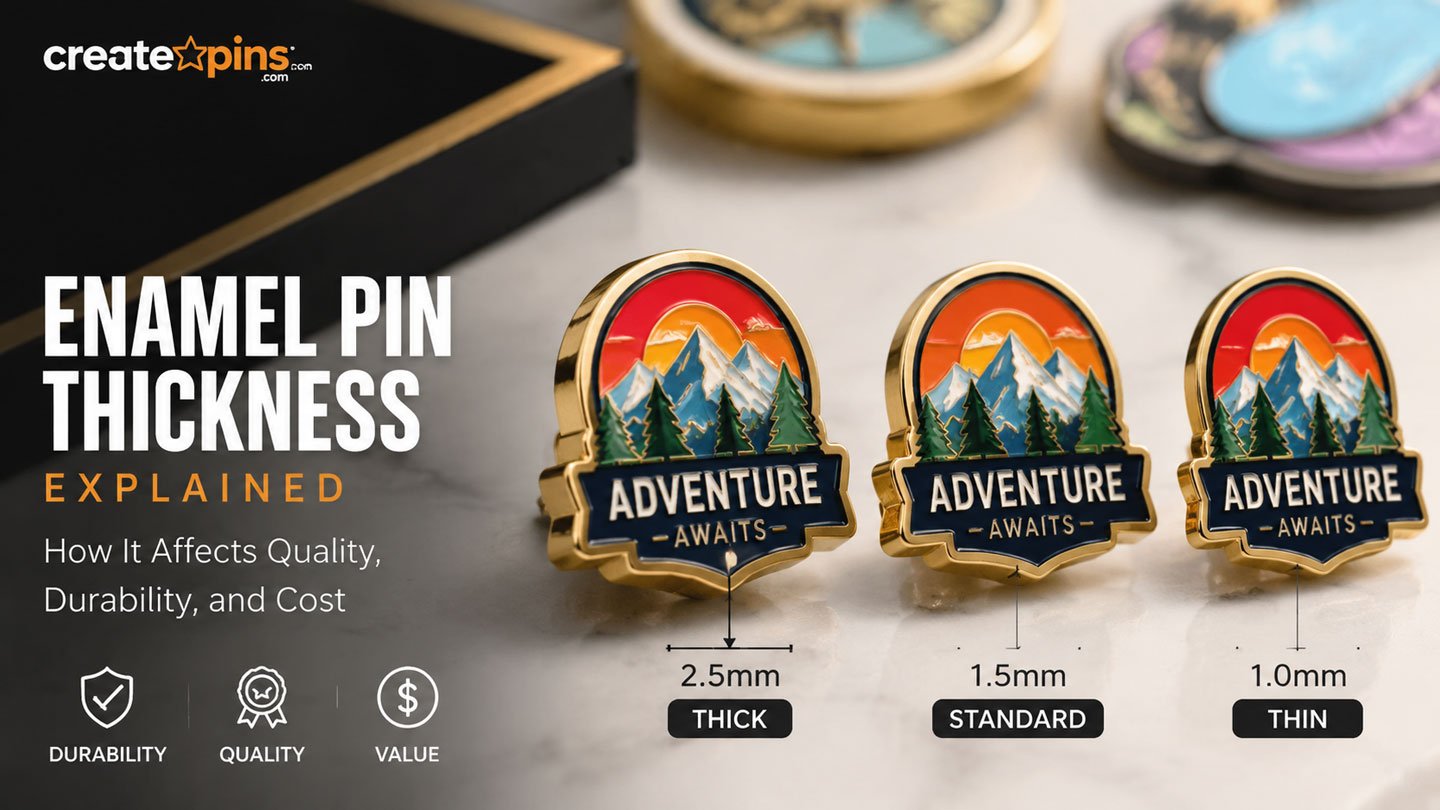
Enamel pin thickness refers to the depth of the metal base that your design is stamped, filled, and plated onto — measured in millimeters (mm). It’s easy to confuse with the overall size (width and height) of a pin, but they’re different measurements entirely. A pin can be small in diameter but thick in profile, or large but thin. Thickness is what gives a pin its “heft,” its resistance to bending, and a lot of its perceived quality when someone picks it up for the first time.
Most enamel pin manufacturing shops offer a small range of standard thickness options, and understanding this range is the first step to getting an enamel pin quality result you’ll be proud of.
Standard Enamel Pin Thickness Options
Here’s how the most common thickness tiers typically break down across the industry:
| Thickness | Feel | Best For |
|---|---|---|
| 1.2mm–1.5mm | Light, thin, budget-friendly | Small giveaway pins, simple logos, tight budgets |
| 1.8mm–2mm | Standard, balanced weight | Most custom pins — the industry default |
| 2.5mm | Noticeably heftier, more solid | Collector pins, brand merch, gifts |
| 3mm+ | Chunky, substantial, statement piece | Premium enamel pins, anniversary editions, awards |
There’s no single “correct” thickness — the right choice depends on your design complexity, your audience, and your budget. But as a beginner, 2mm is a safe, proven starting point that most enamel pin design guides recommend for first-time orders.
How Enamel Pin Thickness Affects Quality
Thickness has a direct, physical relationship to enamel pin quality. A thicker metal base gives the die-struck recess more depth to hold enamel fill, which means:
- Richer, deeper color — more enamel volume per cell means colors read as more saturated and glossy.
- Cleaner metal lines — thicker metal walls between color cells hold their shape better during polishing and plating.
- Better inspection pass rates — thin pins are more prone to warping during the firing and cooling stages, which increases the defect rate. You can see how this is graded in our enamel pin grading standards guide.
If you’ve ever compared a cheap pin to a premium one side by side and felt like “something is just different,” thickness is very often that something. It’s one of the seven factors that determine enamel pin quality overall, alongside plating and enamel fill technique.
How Thickness Affects Durability
Durability is where thickness matters most for anyone giving pins away, selling them, or wearing them daily.
- Bend resistance: a 1.2mm pin will bend if it’s caught on a zipper or squeezed in a tote bag. A 2mm+ pin resists that kind of everyday stress.
- Pin post stability: thicker bases hold the pin post (the backing attachment) more securely over hundreds of uses.
- Long-term wear: for items people keep for years — wedding favors, graduation keepsakes, band merch — a thicker build ages far better than a thin one.
If your pins are being handed out at a high-traffic event, it’s worth reading how thickness compares to other giveaway formats in our pins vs. keychains for giveaways breakdown.
How Thickness Affects Custom Pin Manufacturing Cost
More metal means more material, more press force, and slightly longer plating time — so thickness is one of the levers that moves your per-unit price in custom pin manufacturing. As a rough rule of thumb:
- Going from 1.5mm to 2mm usually adds a small, often negligible cost at standard order volumes.
- Going from 2mm to 2.5mm or 3mm can add a noticeable per-unit premium, especially on larger pins where more metal is required overall.
- Very large, very thick pins may also require a higher minimum order quantity, since the tooling investment is higher.
For a full cost breakdown across every variable — not just thickness — see our enamel pin cost guide and our pricing and profit calculator guide.
Enamel Pin Size and Thickness: Finding the Right Balance
Enamel pin size and thickness work together, not independently. A large pin (say, 2 inches or wider) needs a thicker base to stay flat during production — thin metal at that diameter is far more prone to warping under heat. Meanwhile, a small pin (under an inch) can look and feel great even at a standard 1.5mm–2mm thickness, since there’s less surface area for stress to act on.
If you’re still deciding on your pin’s diameter, it’s worth reading our full enamel pin size and thickness guide before finalizing your artwork, since changing size later often means adjusting thickness too.
When Should You Choose Premium Enamel Pins (Thicker Builds)?
Premium enamel pins — typically 2.5mm and up — make sense when:
- You’re selling directly to collectors who compare quality closely against other brands.
- The pin is a keepsake meant to last decades (weddings, retirements, memorials).
- Your design includes add-ons like glitter, epoxy dome, or spinners, which benefit from extra base depth. See our epoxy dome pins guide for how thickness interacts with domed finishes.
- You want the pin itself to communicate “premium” the moment someone holds it, even before they read the design.
On the other hand, if you’re running a large giveaway with a tight per-unit budget, a well-made 1.8mm–2mm pin is still a perfectly respectable, professional-looking product — thickness is about matching intent to product, not “thicker is always better.”
Common Beginner Mistakes with Enamel Pin Thickness
- Choosing the thinnest option purely to save money, then being surprised when pins arrive bent from shipping.
- Not matching thickness to backing type — some premium backings (like locking pin backs) perform best with a slightly thicker base. Check our enamel pin backings guide before you order.
- Ignoring how design detail interacts with thickness — very intricate line art usually needs a slightly thicker base to avoid enamel bleed between cells.
- Assuming all manufacturers measure thickness the same way — always confirm the thickness is measured at the base metal, not including plating or epoxy dome height.
Quick Thickness Cheat Sheet
- Tight budget, simple design, small size: 1.2mm–1.5mm
- Most custom orders (safe default): 1.8mm–2mm
- Collector-grade, gifts, brand merch: 2.5mm
- Statement pieces, awards, large designs: 3mm+
Whatever thickness you land on, it’s worth reviewing your final production expectations before your order goes into tooling — our production expectations and tolerances guide covers exactly what “acceptable” thickness variance looks like at each stage.
Frequently Asked Questions
What is the standard enamel pin thickness?
Most custom pins are made between 1.8mm and 2mm thick, which is considered the industry-standard enamel pin thickness for a good balance of durability, cost, and comfortable feel.
Does a thicker enamel pin always mean better quality?
Not always — but thickness is one of the strongest contributors to enamel pin quality because it affects color depth, bend resistance, and how cleanly the metal lines hold up over time. A well-made pin at 2mm can still outperform a poorly finished 3mm pin.
How does enamel pin size and thickness affect the final price?
Larger pins generally need more thickness to stay flat during manufacturing, and more metal plus more plating surface area both add to the per-unit cost. Small pins can stay thinner and cheaper without sacrificing durability.
What thickness is best for premium enamel pins?
2.5mm and above is typically used for premium enamel pins, since the extra base depth creates a heavier, more substantial feel that collectors and gift buyers associate with higher quality.
Can I mix different thicknesses in one custom pin manufacturing order?
Yes, most custom pin manufacturing shops can produce different thicknesses within the same order if your design lineup includes pins of very different sizes — just confirm this with your manufacturer before finalizing your quote.
Ready to Get Your Thickness (and Everything Else) Right?
Tell us your design, size, and where the pins will be used — we’ll recommend the ideal thickness and send you a free, no-obligation quote for your custom enamel pins.