Hard Enamel vs Soft Enamel Pins: The Ultimate Guide (2026)
Everything a first-time buyer or designer needs to know before choosing between hard enamel and soft enamel — finish, cost, durability, and which one fits your artwork.
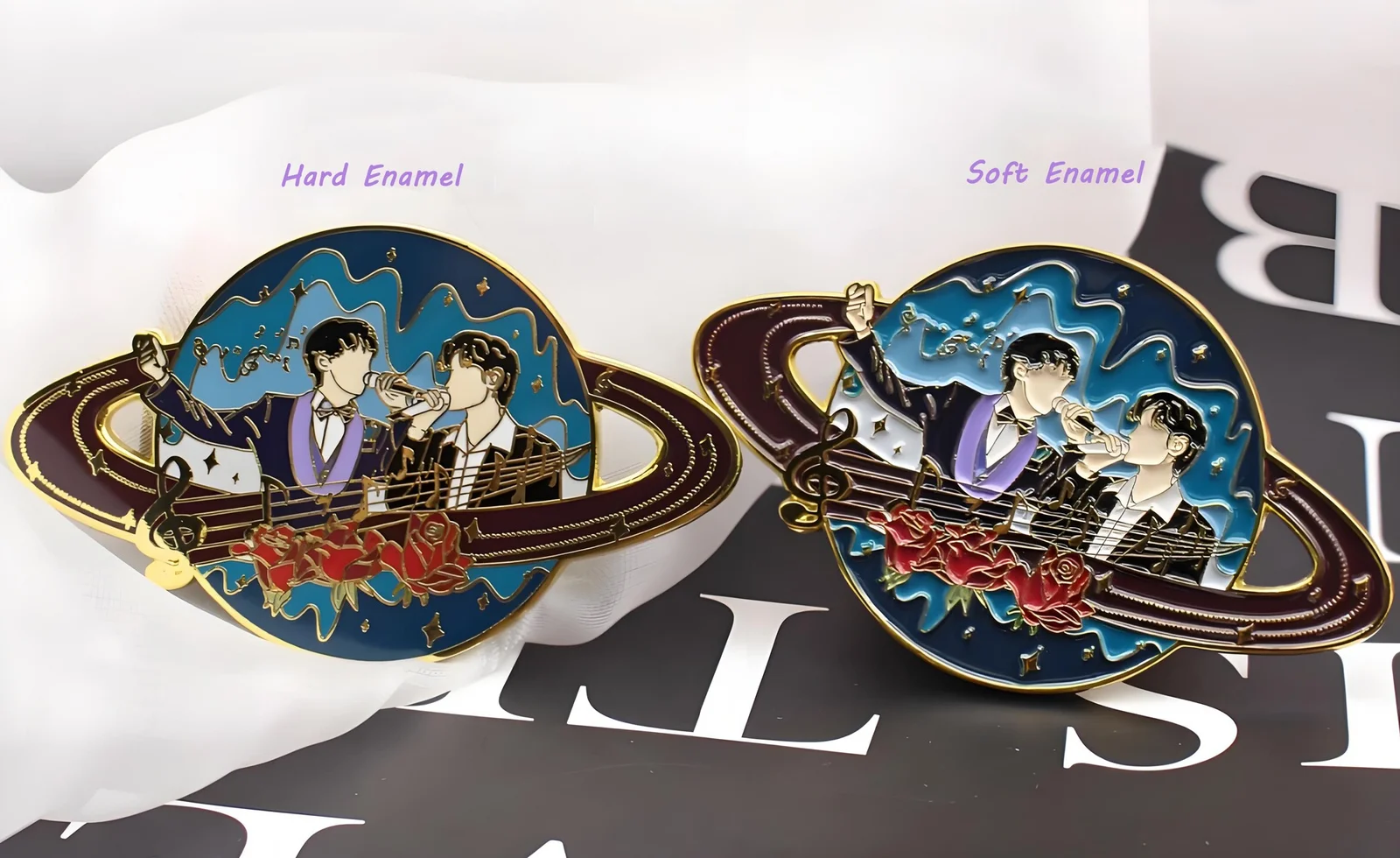
Hard enamel (smooth, flush finish) vs. soft enamel (textured, raised metal lines) — the two most common enamel pin styles.
Hard enamel pins have a smooth, glass-like surface that sits flush with the metal — polished and premium, but pricier. Soft enamel pins have enamel filled below the metal lines, creating a textured, dimensional look — faster to produce and more budget-friendly. If your design is bold and simple, hard enamel usually looks cleaner. If it has fine detail or lots of colors, soft enamel is usually the safer, more affordable choice.
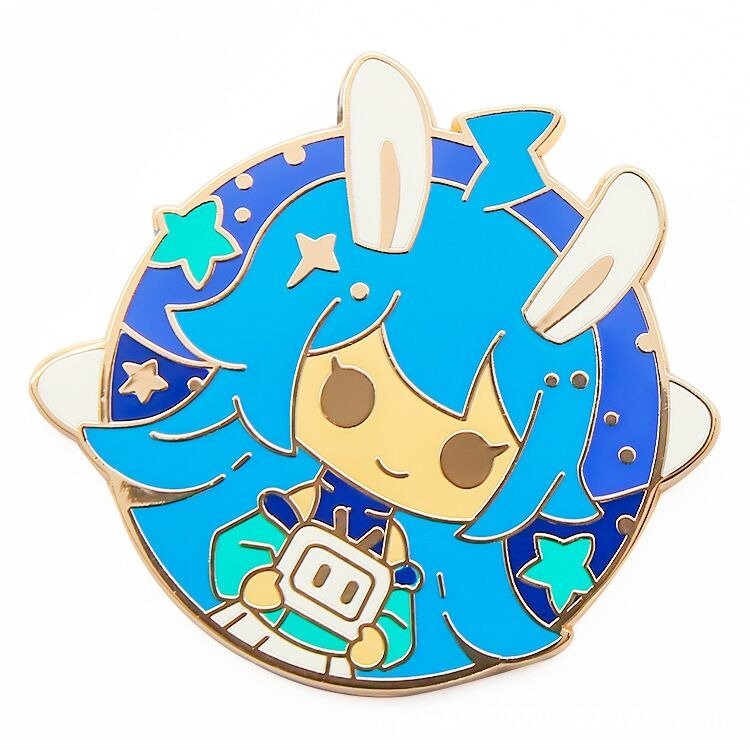
Smooth, polished surface • Enamel flush with metal lines

Textured, dimensional • Metal lines raised above enamel
Visual comparison: Hard enamel (left) has a smooth, polished finish while soft enamel (right) has raised metal lines creating texture.
- What Are Enamel Pins?
- Hard Enamel Pins — The Premium Choice
- Soft Enamel Pins — Detail and Dimension
- How They’re Made — Production Differences
- Design Considerations: What Works Best?
- Color Capabilities & Plating Options
- Cost Differences — What to Expect
- When to Choose Each — Practical Applications
- Pros, Cons & Common Risks
- Beginner’s Glossary
- Summary — Key Differences Between Hard Enamel Pins and Soft Enamel Pins
- Frequently Asked Questions
1. What Are Enamel Pins?
Enamel pins are metal badges filled with colorful enamel. They’re made by stamping or casting a metal base (usually zinc alloy, iron, or copper), filling the recessed areas with enamel paint (a mix of pigment and glass powder), baking it to harden and set the color, and finishing with plating and polish.
If you’re brand new to ordering pins, it helps to first read our Complete Enamel Pin Design Guide, which walks through the whole process from sketch to finished product.
The key distinction between hard and soft enamel is simply how the enamel finish relates to the metal surface — whether it’s polished flush (hard) or left recessed below the metal lines (soft). Everything else — cost, texture, best use cases — flows from that one difference.
2. Hard Enamel Pins — The Premium Choice
What They Are
Hard enamel pins (also called smooth enamel or polished enamel) have enamel that’s leveled flush with the metal lines. After the enamel is filled and baked — usually in several layers — the surface is hand-polished smooth, so the metal and enamel sit at exactly the same height.
Hard enamel pins feel smooth to the touch, almost like a printed or glazed ceramic surface, with no texture between the enamel and the metal.
- Glossy, glass-like finish
- Uniform, flat surface with no ridges
- More resistant to everyday scratches
- Professional, premium appearance
- Slightly heavier feel due to added polishing
3. Soft Enamel Pins — Detail and Dimension
What They Are
Soft enamel pins fill the recessed areas with enamel below the surface of the metal lines. The metal ridges sit raised above the enamel, creating texture and dimension you can actually feel with a fingertip.
The result is a tactile pin with visible metal outlines separating each color, and a slightly textured, almost topographic feel.
- Tactile, dimensional surface
- Visible metal lines separating colors
- Often more affordable per unit
- Excellent for fine, detailed designs
- Faster standard turnaround than hard enamel
4. Hard Enamel vs Soft Enamel Pins — Production Process Differences
Key differences in production: Hard enamel requires more polishing time and precision, which increases labor cost and tooling attention. Soft enamel skips most of the polishing step, making it faster and cheaper to produce — which is why it’s the more common option for first-time buyers and smaller budgets. See our Production Timeline Guide for realistic turnaround expectations, and Production Expectations & Tolerances to understand what “normal” variation looks like when your order arrives.
5. Design Considerations: What Works Best?
✔ Clean, flat areas of color
✔ Simple or geometric graphics
✔ Minimal layered depth
Best for: logos, corporate pins, collectible sets with limited detail, fashion accessories.
Limitations: very tiny recessed details may be harder to see once polished flat.
✔ Fine detail stands out (metal outlines frame the art)
✔ Multi-level texture
✔ Good for cartoons and character art
Best for: illustrations with fine lines, detailed graphics, text-heavy designs.
Limitations: enamel sits slightly lower than the metal lines, so it’s not a smooth finish.
Not sure your artwork is ready for production either way? Our Technical Tips for Enamel Pin Design and Biggest Enamel Pin Design Mistakes guides cover the most common beginner errors — like lines that are too thin or colors placed too close together — before you submit your file. If you’re still sketching, check out Choosing the Perfect Size & Thickness and Best File Formats for Custom Enamel Pins so your artwork file is production-ready from the start.
6. Color Capabilities & Plating Options
Both hard and soft enamel support the same core color palette — most manufacturers use a standard Pantone-matched enamel library, and either type can typically hold as many colors as your design needs (though very high color counts add cost either way). The real difference is how the color reads once finished:
- Hard enamel colors look richer and more saturated because the polished surface reflects light evenly across the whole pin.
- Soft enamel colors can look slightly more matte, and the raised metal lines create shadow lines that add contrast between colors.
Metal plating (gold, silver, black nickel, copper, rose gold, antique finishes) works the same way on both types, since plating happens on the metal base before or after enamel filling. For a full breakdown of finish options, read our Beginner’s Guide to Enamel Pin Plating Colors and Complete Color Palette Guide. One thing worth knowing before you order: cheaper plating can wear or discolor over time — our article on why cheap hard enamel pins turn black fast explains what to look for so it doesn’t happen to your order.
Want something beyond a standard flat finish? Add-ons like glitter, glow-in-the-dark, translucent enamel, and epoxy domes can be applied to both hard and soft enamel bases. See the Ultimate Guide to Enamel Pin Add-Ons, plus our dedicated guides on glitter enamel, glow-in-the-dark pins, translucent enamel, and epoxy dome pins.
7. Cost Differences — What to Expect
Rough example costs (varies by supplier):
📌 Soft enamel pins can cost 15–50% less per unit than hard enamel, due to faster production and less polishing.
📌 Hard enamel is more labor-intensive — especially for multi-color polishing — so it’s priced higher.
Example: A 1.25″ soft enamel pin might run around $2.15/ea at 500 pieces, while a hard enamel pin at the same size and quantity might run around $2.85/ea. Prices vary widely by supplier, plating, add-ons, and design complexity.
For a full cost walkthrough — including mold fees, plating upcharges, and add-on pricing — see How Much Do Enamel Pins Cost to Make in 2026? and Pricing Custom Enamel Pins for Profit if you plan to resell. And before you place an order, it’s worth reading about hidden costs that catch first-time buyers off guard.
8. When to Choose Each — Practical Applications
- 🎩 Corporate awards & recognition
- 📌 Premium fashion accessories
- 🌟 Limited edition collector sets
- 📈 Brand pins with strong color blocks
- 🎨 Art pins & illustration-driven designs
- 🐱 Character and complex artwork
- 🧩 Multi-color detailed projects
- 📦 Budget-conscious campaigns, events & giveaways
Ordering pins for a specific occasion? We have dedicated guides for graduation pins, custom wedding pins, and conferences, trade shows & events. If you’re comparing giveaway formats, Pins vs Keychains for Giveaways and Free vs Paid Pins at Events can help you decide what actually gets kept.
9. Pros, Cons & Common Risks
⚠ Longer production time due to extra polishing steps
⚠ Higher minimum order quantities from some suppliers
⚠ Very fine details can blur together once polished flat
⚠ Cheap plating can discolor — always confirm plating quality upfront
⚠ Enamel can chip at raised metal edges if pins are dropped or knocked
⚠ Recessed enamel can trap dirt or oils over time without care
⚠ Not ideal if you want a perfectly flat, glossy look
Whichever type you choose, common manufacturing issues like uneven enamel, pitting, or color bleed are avoidable with a good factory and clear proofing. Learn what to check for in Common Enamel Pin Defects & How to Prevent Them and Essential Criteria for Grading Enamel Pins. Once your pins arrive, proper care matters too — see our tips on storing enamel pins and fixing minor damage at home.
10. Beginner’s Glossary
New to ordering enamel pins? Here are the terms you’ll run into most often:
- Die struck / stamping
- The process of pressing a metal blank into the shape of your design using a custom mold (die).
- Recessed area
- The lowered sections of the metal base where enamel color is filled in.
- Backing
- The clasp on the back of the pin that attaches it to clothing — common options include butterfly clutch, rubber clutch, and locking pin backs. See our Enamel Pin Backings Guide.
- Plating
- A thin metal coating (gold, silver, nickel, copper, etc.) applied over the base metal for color and corrosion resistance.
- Backstamp
- Text or a logo stamped into the back of the pin, often used for numbering limited editions — see Back Stamps & Sequential Numbering.
- Mold / tooling fee
- A one-time charge to create the custom die used to stamp your design; it’s typically a flat fee separate from the per-unit pin cost.
11. Summary — Key Differences Between Hard Enamel Pins and Soft Enamel Pins
Choosing between hard and soft enamel pins depends on your artwork, budget, audience, and purpose. Soft enamel brings rich detail and affordability, while hard enamel delivers a sleek, premium feel that collectors love. Whether you’re launching a merch line, honoring your community, turning fan art into pins, or designing an art series — understanding these differences will help you make smarter design and production decisions. And if you’re ordering internationally, our Import & Customs Clearance Guide is worth a read before you place a large order.
12. Frequently Asked Questions
Is hard enamel or soft enamel better?
Neither is universally “better” — they’re suited to different goals. Hard enamel gives a smooth, glossy, premium look and holds up well to scratches, making it ideal for bold logos and collector-grade pieces. Soft enamel is more affordable, faster to produce, and better at showing off fine detail, making it the go-to for illustrated or character-based designs.
Which type is more durable?
Hard enamel is generally more scratch-resistant because the polished surface is flush with the metal, so there’s no raised edge to catch or chip. Soft enamel can be just as long-lasting with normal wear, but the raised metal lines are slightly more exposed to impact.
Can I mix hard and soft enamel styles in one design?
Most manufacturers produce a pin as either fully hard or fully soft enamel, since the polishing process is applied to the whole pin at once. If you want a mixed look, ask your supplier about combining enamel with other finishes like epoxy doming or die-struck (no enamel) sections.
How do I know which one fits my design?
As a rule of thumb: if your design has bold, simple shapes and few small details, hard enamel will look clean and premium. If it has intricate line work, small text, or many colors close together, soft enamel is usually the safer and more affordable choice.
Does soft enamel look “cheap” compared to hard enamel?
No — soft enamel is simply a different aesthetic, not a lower-quality one. Many collectors specifically prefer the tactile, dimensional look of soft enamel for illustrated or character pins, and it’s the most common style used across the pin industry.
Which one costs less?
Soft enamel is typically 15–50% less expensive per unit than hard enamel at the same size and quantity, mainly because it skips the labor-intensive polishing step required for hard enamel.
Ready to Create Your Custom Pins?
Get expert guidance on choosing between hard and soft enamel for your specific design. Our team provides a free design review, material recommendations, and competitive pricing.
Free design consultation • 5000+ happy creators • Fast production time
Want help bringing your designs to life? CreatePins.com specializes in both hard and soft enamel pins — with design advice, production support, and custom tooling. Let’s make your vision shine! ✨